How to care for an areca palm? Growing methods and points to note
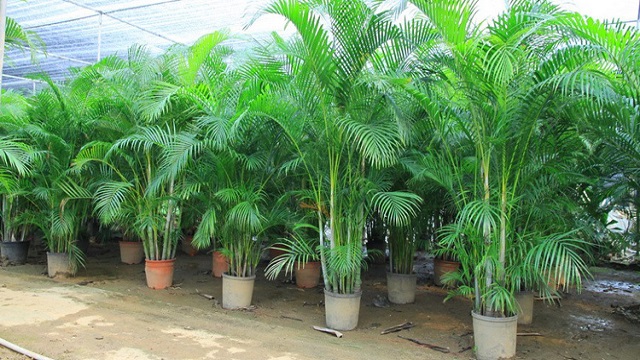
1. Growing environment
(1) Soil: The main requirements are good drainage, looseness and air permeability, and a high humus content. You can mix leaf mold and peat soil, and add a small pile of river sand and perlite. If conditions allow, you can also add a small amount of base fertilizer.
(2) Temperature: The plant likes warmth, preferably 20 to 35 degrees. It is not cold-tolerant, and below 5 degrees it will suffer cold damage. To ensure normal growth the following year, the winter temperature is best kept above 10 degrees.
(3) Light: It likes diffused light and must not be exposed to direct light. For routine care, diffused light is suitable, and when it encounters strong light, move its position promptly.
(4) Watering: Judge based on the weather; if it is hot, water a little more, and if it is cloudy and rainy, water less. You can also adjust by season: in summer, besides watering, also sprinkle water; in winter, the amount of watering should be small.
(5) Fertilizing: The fastest growth stage is in May and June, and fertilizer water needs to be applied once every one to two weeks; a compound fertilizer can be used. In addition, in summer you can apply an additional organic fertilizer containing nitrogen.
2. Repotting
It needs to be repotted once every two to three years, and the soil can be mixed according to the requirements above. Besides the soil, the pot can also be changed, preferably a clay pot or a glazed pot.
3. Pest control
Areca palms are easily affected by pests, such as red spider mites and whiteflies. They need to be sprayed with 40 percent concentration omethoate emulsifiable concentrate, and both the leaves and the roots should be sprayed. At the same time, pay attention to ventilation.