How to care for Dracaena: cultivation methods and precautions
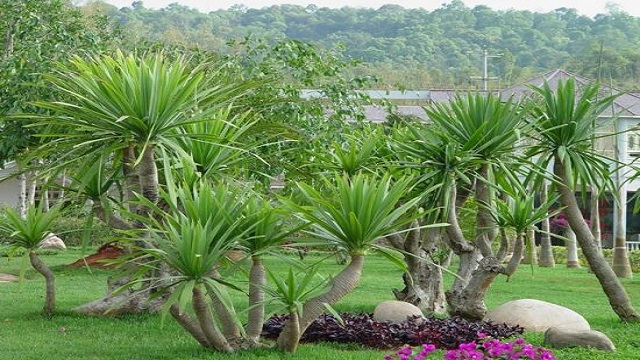
1. Growing environment
(1) Soil: The main requirements are looseness, fertility, and good air permeability. You can mix one part each of leaf mold, peat soil, and river sand evenly, or mix vermiculite, perlite, and peat soil together.
(2) Watering: It needs a lot of water during the growing season, so water every three to five days. However, during the dormant period in winter, water about once every ten days. Misting is also needed, especially when temperatures are high in summer. Generally choose to mist around 10 a.m. and after 6 p.m.
(3) Fertilizing: Mainly apply some nutrient fertilizer as a top dressing during the growing stage; a specialized nutrient solution can be used and poured evenly.
(4) Light: The plant is relatively light-loving, and the leaves will fade if there is not enough light. Therefore, except when the light is especially strong, it is best to place it in sunlight, and a light level of 40 to 50 percent is generally sufficient. In addition, even light exposure is important, so rotate its position from time to time.
(5) Temperature: The most suitable range is 20 to 28°C. In winter, below 15°C, the plant will go dormant. Generally, it can safely overwinter in winter at 10 to 20°C; if you do not want it to go dormant, keep it above 15°C.
2. Pruning
Dracaena grows quickly, so many branches will grow in a messy way, and sometimes they will even become leggy. Therefore, it is very necessary to regularly cut off branches and leaves that are too messy, too dense, affected by pests or diseases, or aged.