6 flowers that change color, looking different every day
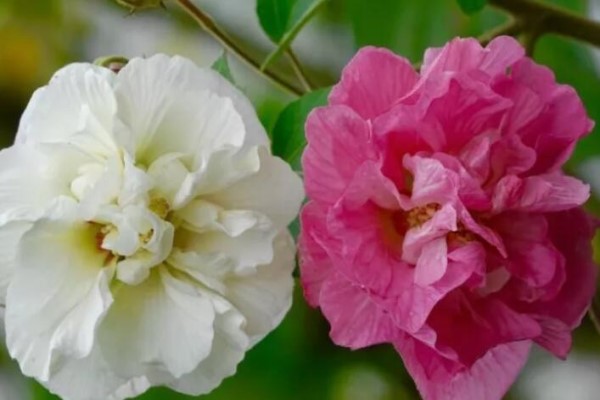
Three-Drunken Cotton Rose
"The drunken hibiscus is white in the morning, pink at noon, and bright red in the evening - it is truly excellent." - Guang Qun Fang Pu
Three-Drunken Cotton Rose is also known as the cotton rose (Hibiscus mutabilis), a type of mallow. It opens white in the morning, turns pink at noon, and becomes deep red by evening, which is why people gave it this poetic name - Three-Drunken Cotton Rose.
1. Reasons for color change
The Three-Drunken Cotton Rose changes color because the concentration of anthocyanins and acids in the petals changes with temperature. Temperature fluctuations within a single day can affect the flower color~
2. Care tips
Habits: Loves sun and moisture, slightly tolerant of shade and cold
Soil: Sandy soil mixed with garden soil, or planted in the ground in courtyards or by riversides
Water: Normally water once every 2-3 days; can be ignored if planted in the ground
Fertilizer: Apply organic fertilizer in early winter and spring
Hydrangea
I believe everyone is familiar with hydrangeas changing color. Even after buying one and caring for it for a few days, it may change color. The same plant can also produce flower balls of different colors.
1. Reasons for color change
Common hydrangeas come in three main color families: white, red, and blue. Besides different varieties having different colors, the acidity or alkalinity of the soil can also determine the color. Generally speaking, acidic soil produces blue and alkaline soil produces red.
White hydrangeas open with a hint of green, then turn white. If the soil is acidic, they take on a blue tone; if the soil is alkaline, they turn red-toned.
For red-family varieties, acidic soil shifts the color toward blue tones, while alkaline soil intensifies the red tones.
For blue varieties, acidic soil intensifies the blue tones, while alkaline soil turns them purple and then pink.
Please note that flowers on the same hydrangea plant can differ in color because they open at different times.
2. Care tips
Habits: Prefers mild conditions and partial shade, afraid of strong sun and waterlogging
Soil: Sandy soil mixed with garden soil
Water: Normally water once every 2-3 days
Overwintering: Can overwinter south of the Yangtze River; north of it, needs protection from the cold
3. Artificial color change
To change the color, do it during the growing season, just before flower buds appear. It mainly relies on adjusting the aluminum ions in the soil to control acidity and alkalinity, primarily to change blue and red.
To produce blue flowers: a. Aluminum sulfate solution (aluminum sulfate to water = 3:1000), water about 3 times a month; b. Solid aluminum powder, 2-3g each time sprinkled into the potting soil, twice a month is OK.
To produce red flowers: If you want red flowers, it is relatively simple. You can sprinkle 2-3 times of slaked lime into the potting soil, 2-3g each time. Be careful not to sprinkle it on the flowers, as they can easily be burned to death~
Water Lily
When water lilies change color, whether lightly made up or heavily adorned, they always look lovely - you can never look at them enough~
1. Reasons for color change
Water lily color changes are mostly due to internal reasons. From the first bloom to the fading of the flower, the concentration of anthocyanins and acids in the petals changes, and the color changes along with it.
2. Care tips
Pot: Choose a pot with a wide opening and outward-flaring sides
Soil: Use clay or Yangmingshan soil at the bottom
Fertilizer: Add root fertilizer twice a month in spring and summer; stop in autumn and winter
Pruning: Promptly prune flowers that bend or are half-faded to ensure reblooming
Rose (Chinese Rose)
Many gardening enthusiasts know that Chinese roses change color, but do you know why? There are many reasons.
1. Reasons for color change
Light: Chinese rose color changes are mostly due to light. Yellow Chinese roses turn red under strong light, green Chinese roses gradually turn white, or develop pink edges.
Variety: Some Chinese roses, such as Spectrum, Double Delight, and Rainbow's End, change color by nature.
Acidity and alkalinity: During the flowering process, the corolla absorbs inconsistent levels of acidity and alkalinity, causing color changes due to unsynchronized timing during blooming.
Grafting: Graft Chinese roses of different colors and varieties together, and they will produce different flowers.
2. Care tips
Habits: Loves light and fertilizer, prone to pests and diseases
Soil: Nutrient soil and leaf mold mixed with garden soil
Fertilizer: Fertilize 1-2 times a month; manure, fruit peels, and shells are all fine
Pruning: Promptly prune weak branches and blind branches in early spring and after flowering
Lantana
Lantana, also known as shrub verbena, is an evergreen shrub that can bloom almost year-round. Each flower has three or four colors.
1. Reasons for color change
Lantana's color changes evolved naturally, mainly to attract small insects for pollination and fertilization.
2. Care tips
Habits: Prefers warmth, humidity, and heat
Soil: Ordinary garden soil is fine
Scent: The smell is a bit unpleasant, but it can repel mosquitoes and insects
Overwintering: Can overwinter in the south; needs protection from the cold in the north
Dual-color Jasmine
Dual-color jasmine is also called yin-yang jasmine, named because it usually blooms in two colors.
1. Reasons for color change
The flowers open deep purple, and after two or three days, under the influence of light, temperature, and other factors, the pigment gradually fades and they become pure white. Because the flowers open at different times, the bloom colors on the same plant are not uniform.
2. Care tips
Habits: Prefers warmth and humidity, afraid of waterlogging; water again after the soil dries
Soil: Nutrient soil mixed with sandy soil and garden soil
Light: Loves light; ensure at least 4 hours of light per day
Overwintering: Can overwinter in the south; needs protection from the cold in the north
It seems that it is not only animals that can change their faces
Even flowers will change their "faces" for you to see
Gardeners who are interested
Hurry up and start growing them~