How do you tell raw stumps from established stumps? Raw stumps can survive if you grow them this way
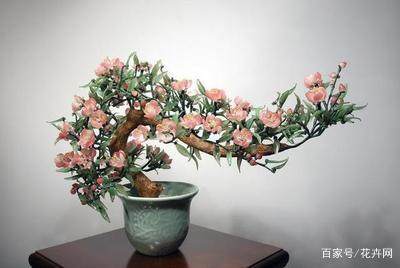
Outsiders may not know this, but people who often study and work with bonsai are certainly no strangers to these two terms. Even if you do not know them yourself, you will have heard like-minded friends mention them, and beginners who have just entered the bonsai circle will have asked about them too: raw stumps and established stumps. So if you were asked to explain specifically what a raw stump is and what an established stump is, could you give a clear account? Perhaps some people have been in the trade for years and are still not very familiar with these two terms; they usually just follow the routine when caring for bonsai and have never taken the initiative to understand them.
There are several different versions of what raw stumps and established stumps mean. Some understand a raw stump as a new stump and an established stump as an old stump. Some understand a raw stump as one newly dug from the wild and newly planted, and an old stump as one that has undergone a second planting. Of course, there are other explanations as well, and opinions vary widely, which has troubled a lot of friends who like bonsai and want to study related knowledge in greater depth. The version I want to introduce to you is, so far, the most classic and most scientific one generally accepted by people across the bonsai world.
Generally speaking, those bare stumps we see, or stumps still carrying a soil ball, are regarded by us as raw stumps, and this type of stump is usually a stump blank that has been collected from its native place and then pruned to achieve the shape we want. After a series of prunings, care and management, and so on, a raw stump forms new roots, and once the branches, buds and trunk have healed, it becomes an established stump. Now that I have introduced raw stumps and established stumps to you, do you have the sharp eye to tell them apart?
Because everyone knows that the survival rate of established stumps is generally higher than that of raw stumps, if you cannot tell them apart, you may well be fooled by someone into buying a raw stump and feel a pang of regret. So next, let me tell you how to spot a treasure with a discerning eye. There are many ways to tell them apart.
First, you can check whether the branches have become woody; if they have not yet become woody, that shows it is still a raw stump.
Second, you can look at the cut surface of the stump. If you see new roots or healed tissue on the cut surface of the stump, you can infer that this is an established stump; otherwise, it is a raw stump. These two are relatively common ways of telling them apart. Of course, there are also many summaries based on experience, and some even remain for us to discover ourselves.
Then again, what if we do buy a raw stump? Argue with the seller?
Actually, there is no need to worry too much. It is not that a raw stump is certain to die. With our careful care, improving our cultivation skills can raise the survival rate. After getting it, you can first disinfect it, and then a very important step is sealing the cuts. Next is the most important step, which directly concerns life and death: choosing the soil. Then there is moisture retention, and so on. Once this whole series of work is done, I believe that even if what you bought is a raw stump, it does not matter; it can still survive well.
After reading this article, have you deepened your impression of raw stumps and established stumps, and can you now tell others a thing or two about them?