Recommended Gypsophila potted plants: beautiful and impressive, suitable for growing at home
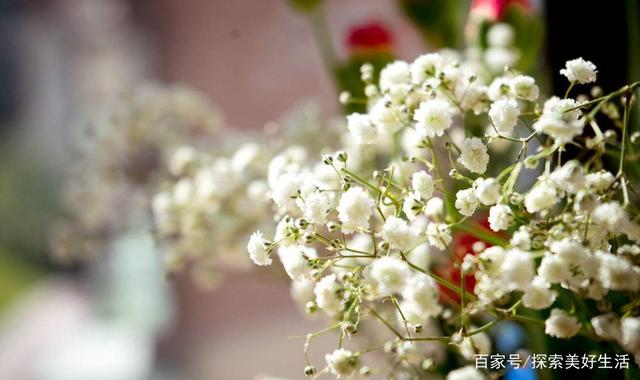
Gypsophila, also known as baby's breath, chalk plant, conical catchfly and so on, is a perennial herbaceous plant of the genus Gypsophila in the carnation family (Caryophyllaceae). The flowers of Gypsophila are small and densely packed, like stars scattered across the night sky, elegant and lovely, with high ornamental value. When in bloom, Gypsophila looks like the stars in the night sky, not only beautiful but also very brilliant. It is precisely because of this that people call it "baby's breath" (mantianxing, meaning "stars all over the sky").
But how exactly should Gypsophila be grown? Temperature: in summer the temperature should be kept below 25°C; if the temperature rises to 30°C, the plant will grow in dense clumps, the branches will stop growing, and its flowering will also be affected. In severe cases, the flowering period will disappear entirely.
Seedling-raising technique: Gypsophila is generally propagated by cuttings. In spring, select new shoots from robust plants and cut them into 10 cm cuttings; the cuttings should retain 4 pairs of leaves, and every four of them are planted as a cluster in a sand bed, sprayed with water to keep moist, with the temperature kept at 15-20°C. Once the cuttings have rooted, they can be taken out of the bed and transplanted or potted.
Pests and diseases: summer temperatures are relatively high, and with overcast and rainy days added on, if the plants are placed indoors you can choose a ventilated spot to place them, which can effectively reduce the occurrence of pests and diseases; if the plants are grown indoors, after rain they should be sprayed with chemicals to prevent rainwater from spreading pests and diseases, so as to achieve prevention in advance.