Kalanchoe is overrunning everything and taking over the bay windows; I just threw away two small seedlings yesterday
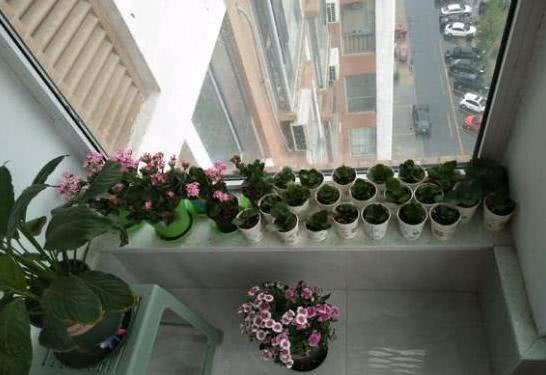
Mine has already overrun everything, taking over every bay window. I just threw away two small seedlings yesterday, and there are still five left, plus the cuttings I just took today. It gives me a headache.
I really have nothing but admiration for this variety. Cuttings taken at the same time last year, other varieties are all just tiny little things. But this one! Its descendants go on endlessly! From one cutting a year and a half ago to now, there must be at least over a hundred! Impressive or not! When offering cuttings, with other varieties every snip hurts your heart. But this one, not at all! I wish I could give away the whole plant!
Kalanchoe has a relatively weak root system, with relatively few fine roots. Repotting is fairly easy; we can repot it directly with the original soil still around the roots! You must be gentle, and whether it grows well after repotting depends entirely on how you do it!
Kalanchoe can be propagated in all four seasons. As long as the temperature is above 15 degrees, it can be done, and the success rate is higher when propagating between 20 and 30 degrees.
Kalanchoe prefers fertile, loose and airy soil. Never use garden soil directly, as this will cause the soil to compact and inhibit the roots of the kalanchoe from absorbing nutrients.
When planting, place a layer of crushed charcoal pieces or crushed hard plastic foam pieces at the bottom of the pot to improve drainage. Although kalanchoe is not very particular about soil, it easily rots in heavy clay, while it grows best in loose, fertile, slightly acidic sandy loam.
You should know that both cuttings and sowing are excellent ways to propagate flowers, but cuttings are simpler than sowing and more easily grow into plants. To achieve a high survival rate with cuttings, you must use some rooting powder to speed up root growth.
If the cut stems are stored for a few days, they are more likely to survive. As long as a stem has two leaves, it will root easily. Do not bury the leaves; you can insert them as densely as possible. After inserting, water thoroughly, and in later care keep the soil alternating between dry and moist, preferring dry over moist.
There is another kalanchoe cutting method called tip cutting, where you directly insert the pinched-off top section of the kalanchoe into the soil, just like a grown plant. Water thoroughly once the soil dries out, do not expose it to direct sun, but it needs bright indirect light. After a while you will see the leaves change, becoming glossy and plump, which means it has taken root.
After inserting, do not water the kalanchoe frequently, because kalanchoe is a succulent, fleshy plant, and too much water easily causes rot.