Remember these 3 steps for summer care of wax begonia; the first step, "two more, two less," is the key
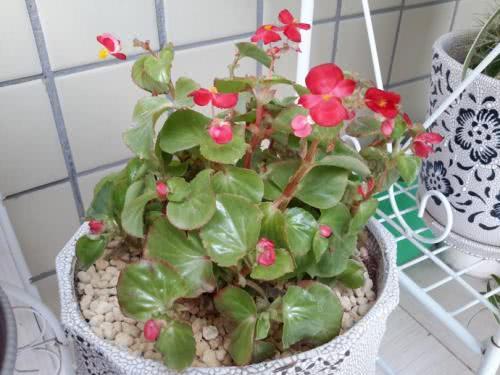
Wax begonia plants are relatively small with graceful forms, and their leaves are tender and glossy. The flowers grow in clusters and carry a delicate fragrance. With proper care, they can bloom in all four seasons, making them a favorite flower for many gardening enthusiasts.
When caring for wax begonias day to day, watering is still quite important. Hua'er will now explain how to care for wax begonias properly so they grow lush and bloom continuously!
1. Watering
Wax begonia prefers a slightly shady and damp environment, and it is quite sensitive to water. When watering it throughout the four seasons of the year, follow the "two more, two less" principle. In spring and autumn, the two main growing and blooming seasons for wax begonia, water more; while in summer and winter, because it enters semi-dormancy or dormancy, water less. In summer, the best time to water is in the morning and evening, and you can spray more moisture onto the leaves. In winter, it is best to water around noon in the sunlight.
There is no set rule for wax begonia watering such as once every few days or how much to give. When you see signs of the potting soil turning pale or cracks appearing at the edges, you can water thoroughly.
2. Light
Wax begonia likes light but does not tolerate strong sun, especially in summer when temperatures are high and sunlight is intense. If you want it to bloom all over its branches, pay attention to shading it: move it indoors, place it on a windowsill or move it to a south-facing balcony, let it avoid the midday sun, and place a basin of water nearby to lower the temperature, which will help it bloom better.
3. Fertilizing
When fertilizing normally, remember the principle of light fertilizer applied frequently. In summer, be especially careful: apply less and make it even more dilute. Hot weather easily causes root burn, and this can help avoid rotting diseases.
When fertilizing in summer, also pay attention to whether the wax begonia is a new plant or an old plant. For one about a year old, you can apply some fully rotted, diluted cake fertilizer, while for old plants or weak plants, it is best to stop fertilizing, or if needed, apply a more diluted fertilizer.
That is all for wax begonia care. If gardening friends have anything to add, you can share it with everyone in the comments section below. If you want to learn more about flower care, you can follow Hua Hua Xian Zi!