How to care for gardenia in May? Master these 9 tips and it will be covered in blooms in June
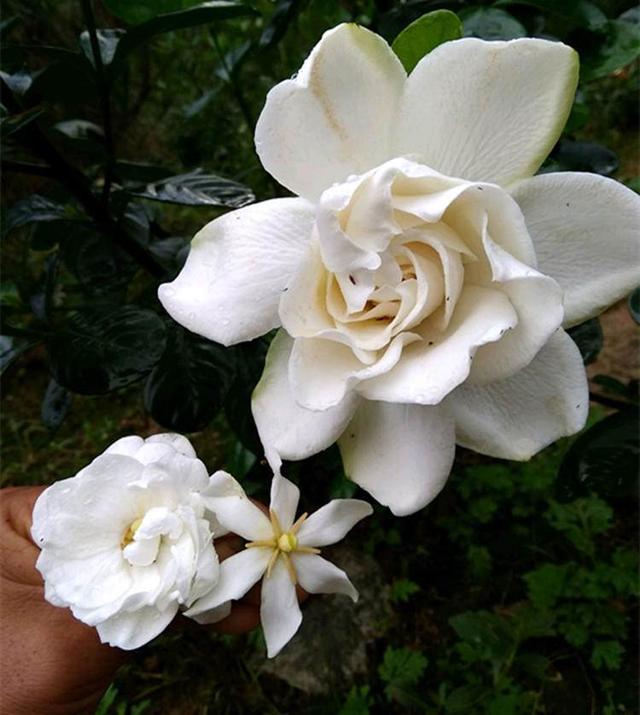
The flowering season of the gardenia is about to arrive; the flowering period is generally from May to September, with the most vigorous blooming in June. So, if you want your gardenia to do well during the flowering season and produce many flowers, you need to master the following 9 tips; the gardenias that bloom in June will be large, and everyone will praise their fragrance.
Tip one: Choose suitable potting soil
Gardenia is an acid-loving flower, and the suitable pH of the potting soil is 5~6. The potting soil can be made by mixing 3 parts leaf mold, 2 parts sandy soil, and 5 parts garden soil, with 3% decomposed cake fertilizer added as a base fertilizer; or mix thoroughly rotted pine sawdust into the soil, which also works very well; or use general-purpose flower potting soil, which is more convenient and practical.
Tip two: Water scientifically
Always keep the soil moist and increase air humidity. When air humidity is below 70%, it will directly affect flower bud differentiation and bud formation. Water whenever the surface of the potting soil looks dry; during the day, often spray the leaves and nearby ground with clean water to appropriately increase air humidity; in the evening, water the foliage. In northern areas with alkaline water, tap water can be left standing for two days before being used as watering water. Every 3~5 days, water thoroughly once with an aqueous solution containing 0.5 g citric acid and 1 g ferrous sulfate per liter, which can make the leaves glossy and emerald green.
Tip three: Fertilize reasonably
During the growing season, apply a general-purpose organic nutrient solution for flowers once a week. But you must apply light fertilizer frequently, generally diluted 500 times with water, once about every 7 days. Never apply concentrated fertilizer or raw fertilizer. For plants grown for less than three years, avoid applying human feces and urine. At the bud stage, apply 1~2 times a 0.1% potassium dihydrogen phosphate aqueous solution. When the temperature during the hottest summer period is above 35°C, and in autumn when it is below 15°C, stop fertilizing.
Tip four: Give it plenty of sun
Except for shading needed during the strong midday sun in July~August and winter dormancy, it generally needs to be kept in sunlight, maintaining 60% sunlight all day, so it can have abundant flowers and lush leaves.
Tip five: A good winter dormancy
Place the flower pot in a cold room at about 5°C to let the gardenia go dormant, or wrap the pot well with foam plastic or other insulation material and place it in a wind-sheltered, sunny spot to overwinter.
Tip six: Change the potting soil at the right time
For small gardenia seedlings, use a small pot, and gradually move them into larger pots later. Repot when the crown width is 2~3 times the pot diameter, and the new pot diameter should preferably be 5 cm larger than the original pot. For home potted gardenias, once the pot diameter reaches about 28 cm, no longer repot; only change the potting soil. You can change the soil in March in spring. After taking the plant out of the pot, cut off some old roots, shake off half of the old soil, replant with new soil, water thoroughly, and place in a warm, semi-shady spot. After new buds sprout, keep it in sunlight.
Tip seven: Prune appropriately
Gardenia has strong sprouting ability and easily develops overlapping branches, so dense that air cannot pass through, causing nutrients to be dispersed. Therefore, for large-flowered gardenia seedlings, the main stem should be pinched at 20 cm, leaving 3~4 branches. When the branches have two pairs of leaves, pinch again. After that, let it grow freely. Small-leaf gardenia does not need pinching; after flowering each year, do light pruning, cutting off inner branches and diseased or weak branches. Individual leggy branches can be shortened. But remember, in spring you must not cut back the tips of gardenia branches, otherwise it will not bloom that year.
Tip eight: Prevent leaf yellowing
The cause of leaf yellowing is iron deficiency affecting chlorophyll formation, causing the veins of young leaves to lose green. During the peak growing season, apply a 1/1000 ferrous sulfate aqueous solution or water soaked with green grass once every 7-10 days. The next cause is magnesium deficiency. You can spray with a 1%~2% magnesium sulfate solution; it is best to repot and change the soil once a year, which is more effective.
Tip nine: Prevent and control pests and diseases
The main problems are anthracnose, leaf spot disease, and pests such as scale insects and moths. Control methods are: remove diseased and fallen leaves and burn them; during the disease period, spray Bordeaux mixture or carbendazim and other agents; at the nymph or larval stage of the pests, choose and spray any one of omethoate, trichlorfon, dichlorvos, and fenitrothion for poisoning and killing.