4 plants to start growing now, they turn into a waterfall-like flower curtain in autumn
A plant expert's windowsill is always packed full of plants and flowers, big pots and big pots of plants, strings of trailing vines and branches, whether hanging down or placed on the windowsill, accompanied by sunlight slipping through the gaps between the leaves into the room, everywhere is a fresh and beautiful scent, it is really so beautiful!
“
Windowsill plants and flowers"
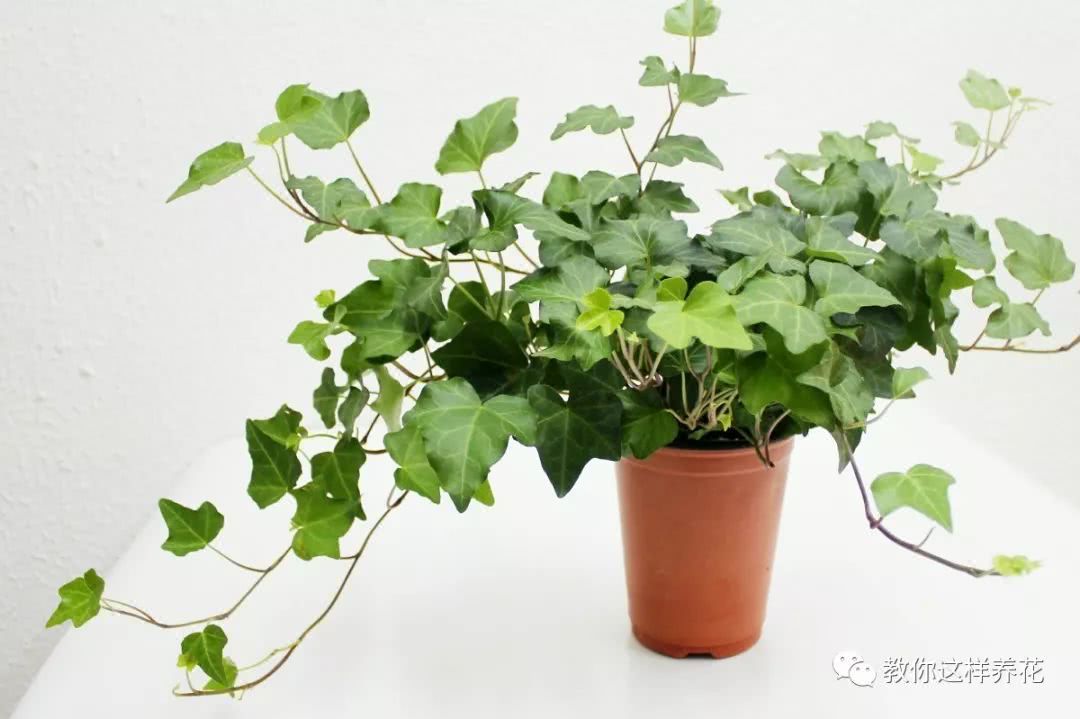
- Ivy -
Ivy is evergreen and emerald green all year round, and its color is very fresh and beautiful. Ivy has very strong vitality; whether in full sun or shady conditions, it can grow well, and it can climb walls on its own, so a patch of green can be seen very quickly. Ivy does not shed its leaves in winter either, and has greater ornamental value than Boston ivy and the like.
Not only does ivy have a good ornamental effect, it can also purify indoor air and improve the naturalness and freshness of the living environment, making it very suitable for indoor care.
Variegated ivy, with yellow, white and green mottled and interlaced patterns, elegant and graceful, is also very popular.
Variegated creeping fig is also a good choice!
You can use leaf mold soil mixed with garden soil. For watering, you can let the soil dry and then water it thoroughly. In autumn and winter, reduce the frequency of watering. Normally apply a dilute liquid fertilizer once every 2-3 weeks, but do not apply too much nitrogen fertilizer to variegated varieties, so that the patterns and patches on the leaves do not fade to green. Stop fertilizing in winter. Ivy does better when cared for in a bright place, but do not expose it to strong sun; the leaf color will be more vivid and the plant will grow faster.
- Pothos -
Pothos is very easy to care for. Just add some water normally and it grows very quickly, with leaves lush and green all year round, glossy and oily green. As long as the temperature is suitable, it is lush with branches and leaves all year round. Grow it in a hanging basket and place it hanging on a study bookshelf or windowsill, letting its stems and vines hang down like a green curtain, which has a unique charm.
Pothos is very simple to care for. The potting soil should be loose and breathable soil, and you can add more coconut coir to the potting soil. Just place it in a bright indoor spot for care, and avoid direct strong light, otherwise the leaf surface may be scorched. For overwintering in winter, a temperature above 5°C is safer. If the temperature is suitable, it can grow all year round. As long as the temperature is suitable, you can let the soil dry and then water it thoroughly. As long as there is no water accumulation, pothos grows faster when the potting soil is a bit moist. Normally you can add some all-purpose fertilizer to the water once a week, and pothos grows very quickly!
If you have rice-washing water at home, it can be used to grow pothos. After fermenting it for a few days, dilute it and water the plants with it. Some growers also use leftover beer, diluted with water, to water plants, and the effect is also very good. Pothos can grow several meters in a year, especially hanging pothos. As long as light and temperature are suitable and water and fertilizer keep up, it grows very quickly.
There is also a simpler and more direct method: you can use a bit of chemical fertilizer each time you water. The urea nitrogen content in chemical fertilizer is very high and the price is cheap. Those who grow many and large quantities of flowers, or who have a yard, can try it. Use a 1000-fold diluted urea aqueous solution about once every 10 days, and in between you can water once with clean water. But you must be especially, especially, especially careful: dilute, dilute, dilute! If the concentration is too high, it is very easy to cause root rot. In 1 month, pothos will grow like crazy.
- Inch plant -
The inch plant is one of the few plants with purple leaves. Its leaves are like bamboo strips, and its branches and leaves creep and layer over one another. Besides being beautiful, it also has a distinctive charm. The inch plant is easy to care for and grows very quickly. In one year it can fill a flowerpot and trail down more than 1 m, growing into a green-purple curtain, very stylish.
The inch plant has very low soil requirements, but it is best to care for it in well-drained soil. Normally do not place it in direct sunlight, but with some light, the leaves will have a sparkling purple color. In long-term shade, the leaves will turn green. The inch plant has relatively high humidity requirements. In dry air, the leaf tips often dry out and the edges scorch, so normally you can spray water mist on the leaves more often to increase air humidity.
If you have aquarium water at home, you can use it to water the inch plant. No dilution is needed. The food residue and fish waste in the aquarium water, after decomposition, can be absorbed and used by the inch plant, and the concentration is also low so there will be no fertilizer burn. Soon the inch plant will grow like crazy. If there is no aquarium water, you can also add a little all-purpose fertilizer to the water, and the effect is also very good.
There are some inch plant varieties whose leaves are entirely purple, very beautiful.
- Hoya -
The hoya's shape is adorable, and its flowers are like a flower ball, strange and elegant, with a charming fragrance. Keeping one pot at home can make the home environment fresher and more elegant. Moreover, hoya likes semi-shady environments, unlike most flowering plants, so if an indoor balcony does not get much light, you can still grow hoya. Especially some north-facing balconies can be fully put to use!
Hoya likes a warm, semi-shady environment. Choose well-drained potting soil, and do not place it in a place with too strong sunlight. Especially in summer, the leaves will turn yellow from sun exposure and become dull and lusterless. Generally, 3-4 hours of light a day is enough for it to bloom.
Hoya also belongs to the succulent group and is relatively drought-tolerant. Do not let water accumulate in the pot, so as to avoid root rot. For watering, it is best to let the soil dry and then water it thoroughly, because if it is too dry, the leaves will also lose their luster, and it will also affect flower bud formation, and the flower buds will also be affected and unable to open. When it is dry, in addition to watering thoroughly, also spray water mist on the leaf surface. In autumn and winter, keeping the potting soil a bit dry makes overwintering easier.
Keep one pot on the windowsill
and soon you will see vitality filling your eyes
Show it to flower lovers who need it too!