What is the Crested Echeveria? Let's get to know this succulent plant
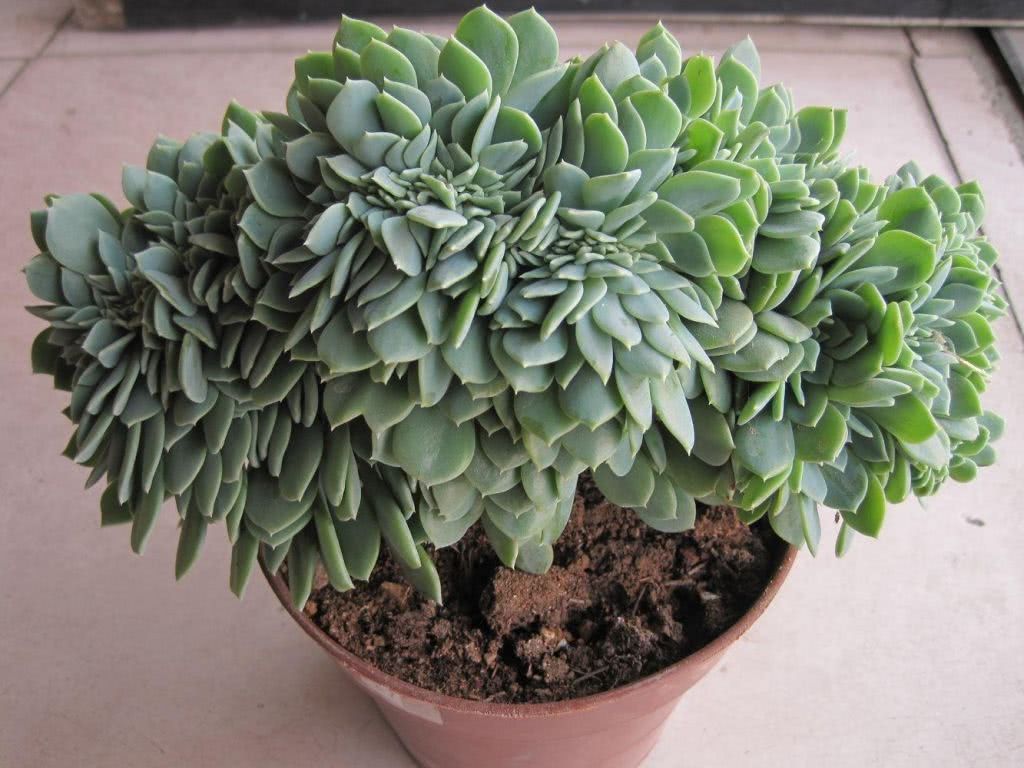
Crested Echeveria is a plant in the Crassulaceae family, Echeveria genus, also known as cockscomb echeveria, and is a cristate mutation of Echeveria peacockii. It is a perennial herbaceous succulent plant; its leaf shape is no different from ordinary echeveria, except that because the growth cone at the stem tip divides in a horizontal band, the entire plant takes on the shape of a cockscomb.
Crested Echeveria
Distribution:
Native to Puebla, Mexico, and now widely cultivated around the world.
Growth habits:
It likes full sunlight, and once sunlight is insufficient it quickly reverts to its ancestral form. Plant it in plain sandy soil that does not contain excessive nutrients; there is no need to apply fertilizer, but it grows robustly when potassium fertilizer is present in the soil.
Crested Echeveria
Plant morphology:
The original species has no stem or a short stem, and the leaves are tightly arranged into a rosette. The leaves are long spoon-shaped, blue-gray-white, covered with a thick white powder, narrow at the base, thin in texture, and with a small point at the tip. The leaves are 3-7 cm long and 2-4 cm wide. The inflorescence is 15-35 cm tall, and the small flowers are bell-shaped, 0.9-1.2 cm long, and red. Crested Echeveria consists of countless overlapping leaves that are noticeably smaller than those of the original species, forming a cockscomb-shaped plant.
Crested Echeveria
Propagation method:
It is best to cut open the old plant in spring for cuttings; the new plants are more resistant to summer. Be careful to guard against the harm of aphids and scale insects.