The flower language of the globe amaranth is undying love; its flowers last long without fading.
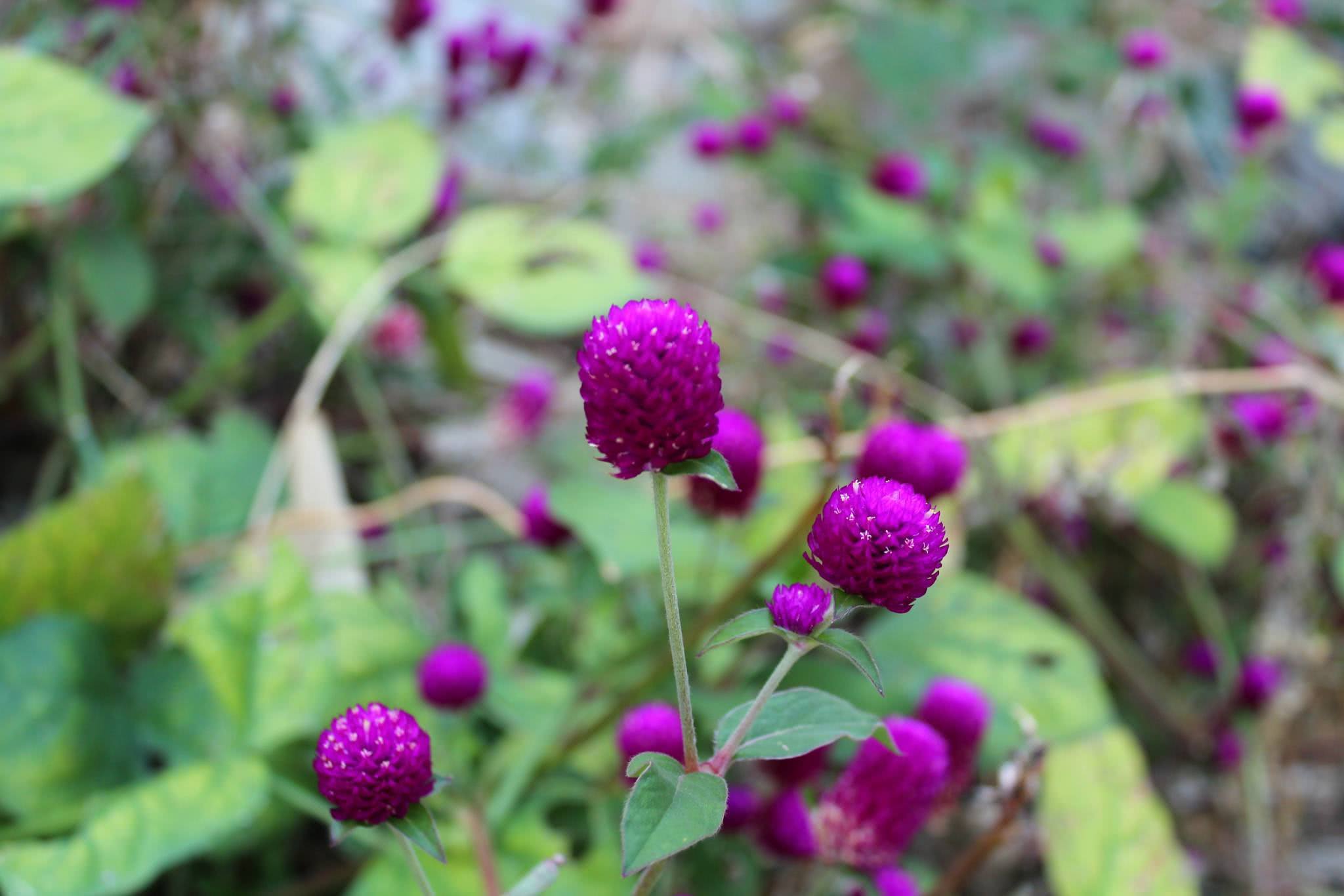
Globe amaranth, also known as bachelor's button and fireball flower, is an annual upright herbaceous plant in the amaranth family (Amaranthaceae) and the genus Gomphrena, growing 20-60 cm tall; its flowering and fruiting period is from June to September. Its flowers are brightly colored and glossy, and after drying they do not wither and remain unchanged for a long time, which is why it is named globe amaranth.
Globe amaranth loves sunlight, tolerates dry heat, and is highly vigorous by nature. It is native to tropical America and is a common flower in tropical and subtropical regions. It is grown for ornament; its flower heads remain unchanged for a long time, and besides being used in flower beds and as potted plants, it can also be made into decorative items such as wreaths and flower baskets.
Globe amaranth
Annual upright herb, 20-60 cm tall, with a stout stem that is branched, the branches slightly four-angled, covered with gray rough hairs that are denser when young, and the nodes slightly swollen. The leaves are papery, oblong or oblong-obovate, 3.5-13 cm long and 1.5-5 cm wide, with an acute or rounded-obtuse apex that is mucronate, a gradually narrowed base, and wavy margins, with small spots, white long soft hairs, and marginal hairs on both surfaces; the petiole is 1-1.5 cm long and covered with gray long soft hairs.
Globe amaranth
The flowers are numerous and densely arranged, forming terminal spherical or oblong flower heads, solitary or in 2-3, 2-2.5 cm in diameter, usually purplish red, sometimes pale purple or white; the involucre consists of 2 green opposite leaf-like bracts, ovate or heart-shaped, 1-1.5 cm long, with gray long soft hairs on both surfaces; the bracts are ovate, 3-5 mm long, white, with a purplish red apex; the bracteoles are triangular-lanceolate, 1-1.2 cm long, purplish red, concave on the inner surface, with a gradually pointed apex, and the dorsal keel has a finely serrate margin; the perianth segments are lanceolate, 5-6 mm long, not spreading, with a gradually pointed apex and densely covered with white cottony hairs on the outside, and they do not harden after the flowering period; the stamens have filaments united into a tube, with 5 shallow lobes at the apex, and the anthers are borne on the inner side of the lobes and protrude slightly; the style is linear, shorter than the stamen tube, and the stigma is 2, forked and branched. The utricle is nearly spherical, 2-2.5 mm in diameter, and the seeds are kidney-shaped, brown, and glossy. The flowering and fruiting period is from June to September.
Globe amaranth
Ornamental use:
Globe amaranth has a long flowering period and bright flower colors, making it an excellent ornamental garden flower. It is a commonly used material for flower beds and flower borders, and the flowers do not fall after blooming and their color does not fade, remaining bright. It is cultivated in all provinces of northern and southern China. It is grown for ornament; its flower heads remain unchanged for a long time, and besides being used in flower beds and as potted plants, it can also be made into decorative items such as wreaths and flower baskets.
Medicinal use:
The flower heads are used as medicine and have the effects of relieving cough and reducing phlegm, calming asthma, and soothing the liver and improving eyesight. They are mainly used to treat bronchial asthma, acute and chronic bronchitis, whooping cough, hemoptysis in pulmonary tuberculosis, and other conditions.
Plant culture:
Flower language: undying love
The lovely purplish red, pink, and white "flowers" that people usually see are actually small bracteoles; the true flowers are very small and buried among the bracts, making them very inconspicuous. The dried bracts can remain unfaded for a long time. That is why the flower is called globe amaranth. Its flower language also comes from this characteristic of not easily fading.