Wisteria bonsai is elegant and beautiful, but how do you care for it? Keep these points in mind
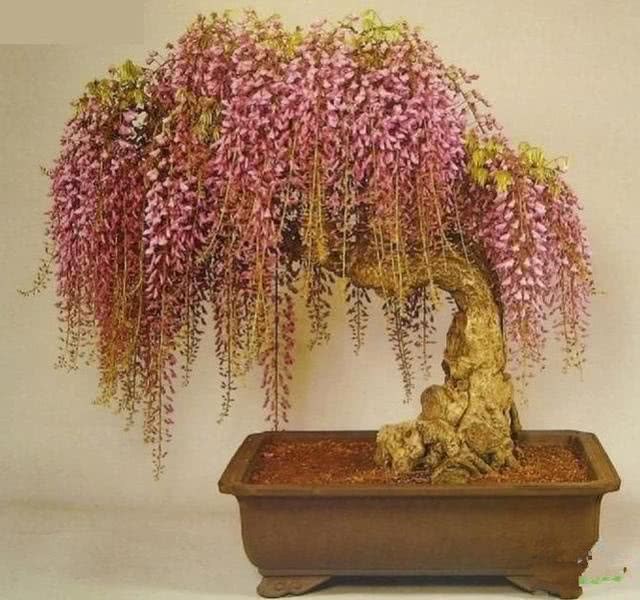
Wisteria is a climbing plant with an extremely strong climbing ability, and it also has many alternative names. For example, Zhuteng, Gehua, and so on. It has white fuzz that falls off over time, which is one of its major characteristics. Because of its climbing ability, when it blooms it often winds around the branches and trunks of trees, and the purple flowers make it look especially elegant and beautiful, so it is often used to make bonsai.
Generally, in spring when it has not yet sprouted is the best time to transplant wisteria. "Growing the rootstock" is the first step, and it is usually planted in a clay pot; on the eve of planting it, there is another very important step, which is pruning the plant. The characteristic of herbaceous plants is that the main trunk is longer than that of other types of plants, so it should be cut at a suitable place, keeping only the parts that are beneficial to the bonsai shape. In addition, its main root also needs to be pruned; it generally tends to grow long, so it can be trimmed a little, while the fibrous roots should be kept as much as possible.
After planting is completed, you must pay attention to where the potted plant is placed. Generally, right after planting, it is best to place it in a spot with less wind and no direct sunlight. As for water, you must water frequently, usually at the trunk, because this helps the adventitious buds sprout on the old roots. After some time, new branches and leaves will grow; for the sake of future shaping, some unneeded ones can be pruned away, but special attention must be paid to the transitional branches of the bonsai and they must be well cultivated, so that the overall bonsai will be more harmonious.
Wisteria is a plant that prefers sunlight, so the light duration must be sufficient, though it can also tolerate slightly shady and cold places, so it is generally best to place it outdoors, but be careful not to let it be exposed to harsh sun. Whenever you see the soil is a bit dry, then you need to water it, and watering is generally done thoroughly, but here is a little tip: in order for it to bloom more beautifully and produce more flowers the next year, after August each year you should reduce the amount of watering.
As for fertilizing, generally its growing season is the best time to fertilize, and applying phosphorus fertilizer is more common, but after August you should also reduce and stop it.
As for pruning, winter is the best time to prune. After its leaves have all fallen, cut off all the branches that are dead or damaged by insects. Otherwise, on the one hand it affects the beauty of the bonsai, and on the other hand it will make the potted plant grow poorly the next year; if the pest damage is severe, it may even cause the potted plant to die. Wisteria has a certain cold tolerance, so in winter it can be moved indoors or to a sunny and windless place outdoors. There is one more point: there must not be standing water in the pot during winter, otherwise the plant will be damaged by freezing.