How to grow a Chinese juniper 'Kaizuka' bonsai? Detailed care and management methods
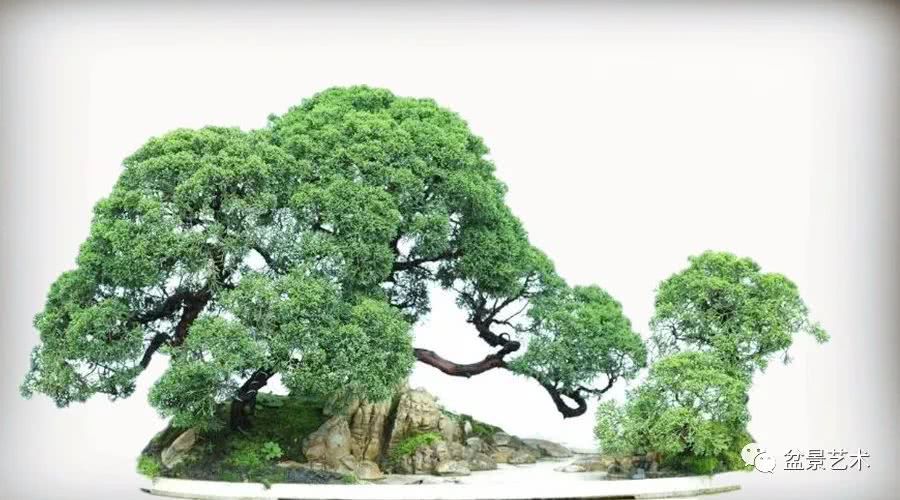
Chinese juniper 'Kaizuka' is a variety of Chinese juniper, native to China and Japan. Grafting propagation of Chinese juniper 'Kaizuka' bonsai is very simple. Below we share the care, shaping, cultivation and management methods for Chinese juniper 'Kaizuka' bonsai.
Chinese juniper 'Kaizuka' is an evergreen tree. The crown of Chinese juniper 'Kaizuka' is narrowly rounded-cylindrical or narrowly spire-shaped. The trunk of Chinese juniper 'Kaizuka' is upright and straight, the bark is black, with flaky peeling. The tree form is slender and upright, and the side branches grow spirally upward, clasping the main trunk. The leaves are densely borne,
without spines; Chinese juniper 'Kaizuka' is entirely scale-like, light green when young and emerald green when old. The cones are blue-black, with the surface slightly covered in a waxy bloom.
Chinese juniper 'Kaizuka' likes high, dry, fertile, deep soil and requires good drainage; otherwise, if water accumulates, Chinese juniper 'Kaizuka' easily drops its leaves. Generally, Chinese juniper 'Kaizuka' grows slowly when young, grows faster once it reaches about 1cm, and then gradually slows down again.
The habits of Chinese juniper 'Kaizuka' are similar to those of Chinese juniper.
Care
1. Chinese juniper 'Kaizuka' bonsai can generally be fertilized in spring and autumn; alternately applying organic fertilizer and chemical fertilizer 2-3 times is enough.
2. Chinese juniper 'Kaizuka' bonsai should have its buds pinched regularly to prevent the terminal buds of the Chinese juniper 'Kaizuka' bonsai from growing too fast.
3. Chinese juniper 'Kaizuka' bonsai requires sufficient light and needs to be placed in a sunny, warm, humid, well-ventilated spot.
4. Generally, every two years the soil of a Chinese juniper 'Kaizuka' bonsai should be turned over once, replacing some of it with new nutrient soil.
Propagation methods for Chinese juniper 'Kaizuka' bonsai
Chinese juniper 'Kaizuka' bonsai generally uses grafting propagation and cutting propagation to raise seedlings.
The grafting rootstock used in the grafting propagation method for Chinese juniper 'Kaizuka' bonsai is mostly Chinese arborvitae (Platycladus orientalis). For the scion, generally a strong-growing mother Chinese juniper 'Kaizuka' plant is chosen, and the leading shoot on a side branch is preferable. After grafting, the branches of the young seedling can cling tightly to the main trunk and grow spirally upward, giving a better form. If a non-leading small side branch is used for grafting, the branches will be loose, the terminal branch growth will be inconspicuous, and the form will be poorer.
The grafting time for Chinese juniper 'Kaizuka' bonsai is generally February to March each year, carrying out branch grafting near the roots of the Chinese juniper 'Kaizuka'. During grafting, the main trunk of the rootstock is not removed; if the main trunk is too long, part of the tip can be pinched off. Be careful to prevent the cut surface from getting damp; otherwise, it will dilute the sap, making it hard to heal and affecting survival.
When transplanting and digging up grafted seedlings, it is best to keep a soil ball or dip a mud ball. When planting, slant the tip of the rootstock so that the scion is straight, and cover with soil up to below the terminal bud of the graft. Fertilize only half a year after transplanting and survival; in the second year, cut off the rootstock above the graft union and remove the covering soil, letting the scion part grow fully.
Cuttings are taken from late March to mid-April. For the cuttings, also choose the leading shoot on a side branch of Chinese juniper 'Kaizuka', cut to about 15cm long, remove the lower 1/2 of the leaves, and insert into mountain soil or sterilized yellow sand. To increase the survival rate, first dip the base of the cutting in mud slurry, then insert it into the soil. The part inserted into the soil should not exceed 1/2; insert at a slant, and planting them densely can prevent wind from breaking them. Water immediately after inserting, and water thoroughly. Build a shade frame; afterward, except on cloudy days, generally water once in the morning and once in the evening each day. Use slightly more water in the morning and less water in the evening.
Chinese juniper 'Kaizuka' is relatively difficult to root; some root in 1 year, some in 2 years. After rooting, plant out in a permanent position, generally in March to April each year or in autumn in October. When planting out, bring a mud ball and set up a stake for support, so that the Chinese juniper 'Kaizuka' sapling is straight and avoids being broken by wind.
Shaping
In landscaping, Chinese juniper 'Kaizuka' is used as an ornamental tree species, mostly planted as a landscape tree, and can also be pruned into Chinese juniper 'Kaizuka' balls. For the shaping of Chinese juniper 'Kaizuka' bonsai, you can first carry out planting-out shaping, doing the initial pruning first and giving the Chinese juniper 'Kaizuka' bonsai a reasonable, rough pruning and shaping. After one or two years, then carry out mature-blank shaping on the Chinese juniper 'Kaizuka' bonsai, reasonably speeding up the sideways-growing branch nodes of the Chinese juniper 'Kaizuka' bonsai. After waiting another one to two years, you can then carry out finished-product shaping on the Chinese juniper 'Kaizuka' bonsai. At this point the shape of the Chinese juniper 'Kaizuka' bonsai is basically set, and you only prune the unsuitable places.