How to mix succulent potting soil? Learn to make fertilizer from discarded waste
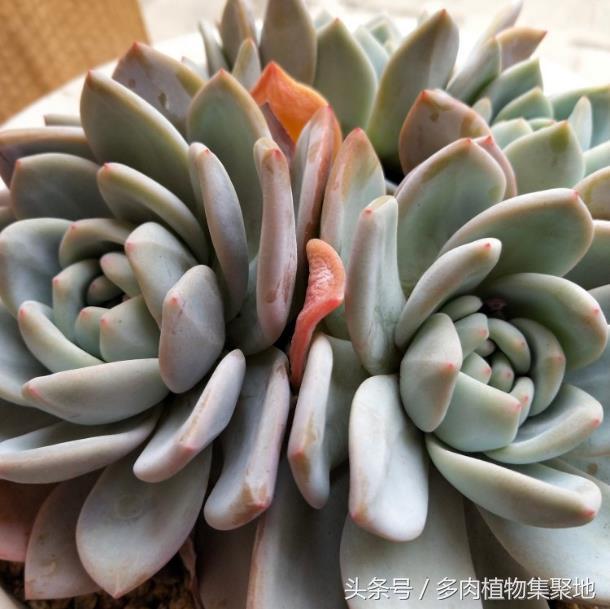
More and more people are growing succulents now, and the price of potting soil is not low either. Now I will teach you a way to make succulent potting soil yourself without spending any money. The quality of flower soil is directly related to whether it easily becomes compacted. Peat, bark, wood shavings, rice husks, sawdust, and perlite, vermiculite, clay pellets, volcanic cinders and the like can all be mixed and blended together. The resulting potting soil is both breathable and good for absorbing organic fertilizer.
First go to a construction site and get some river sand, but it must not be sea sand. The simple way to tell sea sand apart is to check for yourself whether there are small shells or similar things in the sand. Then go to the flowerbed downstairs or the fields and get some garden soil. The topsoil under trees is best, rich in organic matter, light brown in color, and do not dig too deep. Put the river sand you brought back in a basin and wash it several times with water, then put it in the sun to bake for a few days.
Garden soil does not need washing, just sun it directly. If you want to do it quickly, steaming it in a pot for 20 minutes also works. The purpose of doing this is to kill harmful bacteria in the soil. Put the treated river sand and soil in a basin at a ratio of 6:4, and stir evenly. In this way, our homemade succulent potting soil is ready. River sand is produced when natural stone, under natural conditions and through the long-term repeated impact and friction of water, forms; its composition is relatively complex. Generally speaking, the main component is silicon dioxide, and the surface has a certain smoothness. The sources of river sand are relatively broad. In addition, some coarse sand formed from weathered rock in the mountains can also be grouped into this category. Usually the color of river sand is white with a yellowish tint, and using it as a top dressing for succulents can also look quite nice.
Clay pellets are very breathable and drain well, hard in texture and do not crumble, and can be reused. They are generally very effective for use as a bottom layer. ?? Coconut coir is a pure natural organic medium that falls off during the processing of coconut shell fiber. It retains water and allows air through, and is very suitable for rooting. Most importantly, it is usually sold as compressed blocks, so storage takes up no space. A small piece can produce ?? a large amount, and using it to replace peat soil as the main substrate for succulent soil is both environmentally friendly and economical.
For the discarded coal briquettes you pick up, find a way to break them up. Here, crush them by stepping on them, put them in a container, and you can harvest a full big tray. Use a sieve to filter and separate by size. After sifting, put them into different containers according to the size of the coal cinder soil. Pour the coal cinders into a basin and soak them in water. Next, the potting soil is ready, and you can pot it up to grow succulents. If you want to do pure granular controlled growing, it is recommended to use a mix of maifan stone + green zeolite, and then add a few slow-release fertilizer granules. In fact, no matter what materials are used to mix succulent soil, the only standard is to ensure the soil is loose and breathable and drains well. ??
What should you do if you find the soil has become compacted? After the soil becomes compacted, you must repot it in time, replace the original potting soil, and put in fresh fertile potting soil again. This can quickly alleviate soil compaction without affecting the growth of the potted plant. Secondly, loosening the soil regularly in daily care can also maintain the breathability of the potting soil and improve the absorption capacity of the root system.
This is a gathering place for succulent lovers, sharing succulent care tips. You are welcome to follow and exchange ideas.