3 orchid care tips - master any one of them and your orchids will bloom nonstop
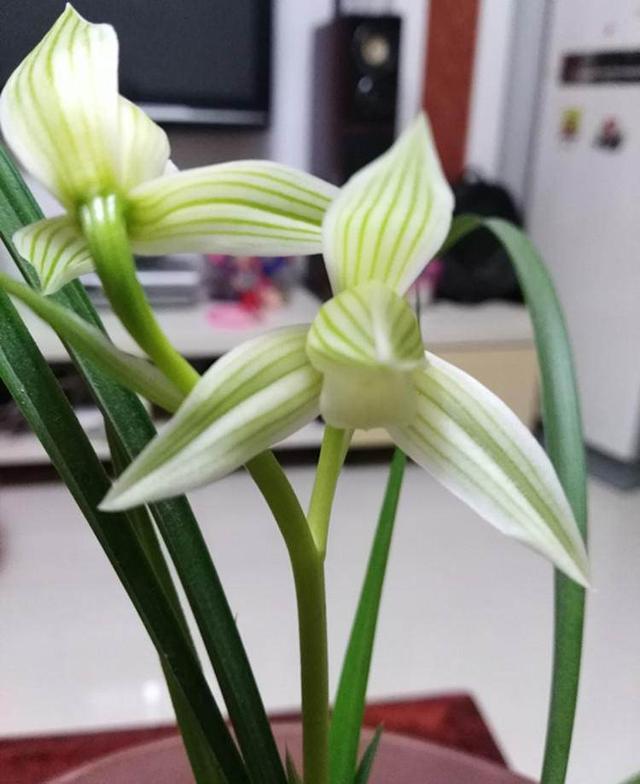
The orchid is a flower that combines all "three beauties" of bloom, fragrance and foliage, and its greatest hallmark is the word "elegance." It has a graceful bearing, a commanding presence and a lithe, charming form. When a breeze blows, it stands tall and upright, full of vitality, and it is deeply loved by flower enthusiasts.
So for such a beautiful orchid, what does it take to grow it well and have it bloom beautifully? Today, I will share with you the 3 keys to growing orchids. Master them well, and your orchids will bloom without stopping.
The first key: strict soil requirements
The soil used for cultivating orchids must be strict: avoid stickiness, avoid alkalinity, and avoid compacted sand or compacted mud; it is suitable to grow them in a breathable, fertile, loose, slightly acidic soil. In general orchid growing, light media such as coconut coir, peat and fired soil are used, and some flower enthusiasts also grow orchids in soilless substrates such as vermiculite and expanded clay pellets. Or the orchid-specific soil on the market is also a fairly ideal choice.
The second key: reasonable watering
Watering should vary according to factors such as weather, season and variety. Cymbidium goeringii (spring orchid) tolerates moisture, Cymbidium ensifolium (summer orchid) tolerates sun, Cymbidium kanran (cold orchid) tolerates dryness, and Cymbidium sinense (ink orchid) likes shade; furthermore, in spring they fear drenching, in summer they fear scorching sun, in autumn they fear dry drought, and in winter they fear wind and frost. Therefore, you must adapt to local conditions and control watering carefully.
As the saying goes: "Orchids are drowned, never droughted to death." When watering, according to the orchid's characteristics of "liking moisture but fearing waterlogging, liking dryness but fearing drought," use the amount of water skillfully and achieve "moisture as the main thing, combining dry and wet." During the growing season, orchids like moist soil and relatively high air humidity; during the semi-dormant season, they like slightly dry soil. So when growth is vigorous, water in time, follow the principle of watering when dry and letting dry between waterings, and water again after the potting soil dries.
The third key: scientific fertilizing
Orchids have different fertilizer requirements in each growing season. In the spring and autumn growing seasons, avoid the period before and after flowering; apply a top dressing of decomposed organic nutrient solution, or orchid-specific liquid fertilizer, diluted 500-800 times, once every half month or 3 weeks. Fertilize in the evening and water the next morning. Do not splash the fertilizer solution on the leaves or pour it into the leaf rosette, to prevent rot. During high temperatures in summer and low temperatures in winter, stop fertilizing.