Graptopetalum 'Grape' is a plant in the Crassulaceae family, genus Graptopetalum
Body text
Images and text: Zhijiansha
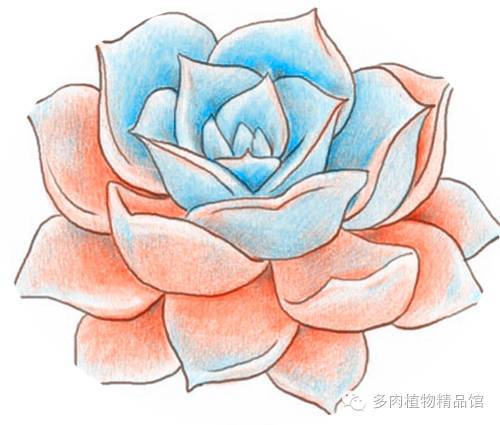
Grape, a succulent plant in the Crassulaceae family, genus Graptopetalum, also called Purple Grape or Red Grape, is a perennial fleshy herb, a small to medium-sized variety. Grape looks a bit like a round-leaved Graptosedum 'Little Beauty', with thicker and fleshier leaves than 'Little Beauty'. It readily sends out creeping stems from the base, lying semi-prostrate on the soil surface, with small rosette leaf clusters at the tips of the stems.
Its fleshy leaves are arranged in a rosette, the leaves short and spoon-shaped, the leaf surface flat, the leaf underside convex with dense small purple-red dots, the leaf tips with a small point, the leaf color light gray-green or light blue-green, the leaf surface smooth with a waxy layer, not afraid of water. Grape's cymes are axillary, the flowers blooming in an inverted bell shape, with 5 lobes at the front. Red, with yellow tips, flowering period June to August.
Care
During the growing period, it should receive full sunlight. Because when the plant lacks light it easily grows tall, and the leaves also become rather fragile, and may drop at a touch. When summer temperatures exceed 35 degrees, it easily gets sunburned, so appropriate shading or half-day sun is fine, avoiding direct light at noon.
Grape is relatively drought-tolerant; generally watering when dry and letting it dry out between waterings is enough. In the rainy summer season, water less to prevent water accumulation in the pot soil, which causes root rot; in winter, at low temperatures, just keep the pot soil dry.
The growing soil should mainly be loose and breathable. You can mix cinder with peat, then spread pure river sand or other granules on top as decoration.
Propagation uses leaf cuttings, beheading, and division, and can also be done by sowing. Beheading can be done all year round and is relatively fast. After beheading, first place the leaf rosette in a shady spot to dry for 3 to 5 days, and once the cut is slightly dry, insert it into the seedling bed. For leaf cuttings, it is relatively slow; in the growing season, take thick fleshy leaves from a healthy plant, put them in a cool environment to dry for a few days, and once the wound is slightly dry, place them on the slightly moist soil surface, water a little, and just keep the pot soil slightly moist. When the cutting's roots reach 2-3 cm, move it into a small pot for cultivation.
In addition, under strong light and large day-night temperature differences or during low winter temperatures, the leaf tips will turn slightly red; Grape needs sufficient sunlight for the leaf color to be vivid, for the plant shape to be more compact and attractive, and for the leaves to be thick and fleshy. With too little sunlight, the leaf color is pale, the leaves are loosely arranged and elongated, and the leaves become thin and brittle.
The article was compiled by the Succulent Boutique Hall; copyright belongs to the original author. For some articles the source cannot be identified, and they are marked as from the internet. If there is any infringement, please contact us immediately, and we will handle it promptly.