Care for your clivia like this, and it will bloom dozens of flowers at once, growing even better than a Chinese cabbage
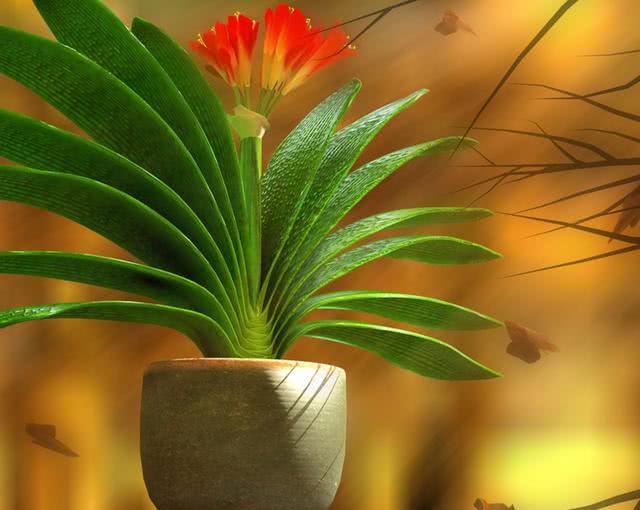
Today I will share some methods for growing clivia. Learn the secrets of clivia care, and it will bloom dozens of flowers at once, growing even better than a Chinese cabbage!
1. Soil is the foundation of growing flowers. The bottom of the flower pot is best lined with tiles, which helps with drainage. There is a certain art to choosing a flower pot; you can choose a well-aerated purple clay pot, because for clivia roots, aeration is the most important thing.
2. Clivia potting soil should be fertile, loose, rich in organic matter, well aerated and drained, with comprehensive and sufficient nutrients. A commonly used potting soil formula: 20% conifer needle soil, 20% garden soil, 20% compost, 20% cake residue, 20% river sand. Insist on repotting and changing the soil once a year to ensure sufficient nutrient supply and promote early growth and rapid development.
3. Grown clivia should have their soil changed once a year, best done in spring and autumn. When changing the soil, cut off rotten roots and dry roots. Use soil to fill in around the roots firmly, otherwise water and nutrients will have difficulty reaching the roots. After changing the soil, water thoroughly.
4. Clivia roots are fleshy, and standing water in the flower pot easily causes root rot. In winter, water evaporates less, so reduce the frequency of watering appropriately. Usually it is recommended to use a spray bottle, which cleans the leaves, increases humidity and waters the plant, achieving three things at once. During the flowering period, use the method of watering the roots, but the flower pot must never hold standing water.
5. For watering, rainwater or snow water is best; you can place a large vat on the balcony on rainy days to collect it. Tap water and well water are lower in temperature, so they should be stored for a few days before being used to water flowers. Storing tap water can also remove the chlorine in the water. Also, water from a fish tank is the very best for watering flowers.
6. The principle of watering is: do not water until the soil is completely dry, and when you do water, water thoroughly. Clivia has well-developed roots, and combined with reasons such as soil compaction, it is sometimes hard to water thoroughly. You can place the entire flower pot into a bucket or laundry basin and take it out after about 1 minute.
7. In summer, when watering, there is one more thing to pay attention to, and that is the phenomenon of water vapor isolation: the soil on the surface of the flower pot looks dry, but in fact the soil at the roots is still very wet. If you water at this time, it is very easy to cause clivia root rot.
8. Watering and fertilizing are best done at the same time. During the vigorous growth period, apply fully fermented fertilizer water or rice-washing water once every 15 days to 20 days. When clivia is forming buds and flowering, its demand for phosphorus and potassium fertilizer is relatively large; if lacking, the clivia will not have enough strength to push out its flower stalk, resulting in the phenomenon of the flower stalk being trapped.
9. Pay special attention: if you find that the clivia has begun to push out its flower stalk, give it a large amount of water. When watering, be careful not to pour water into the center of the leaves, because when clivia pushes out its flower stalk it needs a large amount of water. If the water does not keep up, the flower stalk will be unable to emerge and will stay in the center of the leaves, and the flowers will not be able to bloom.