How to Grow Ixora as a Bonsai and Tips for Disease Prevention
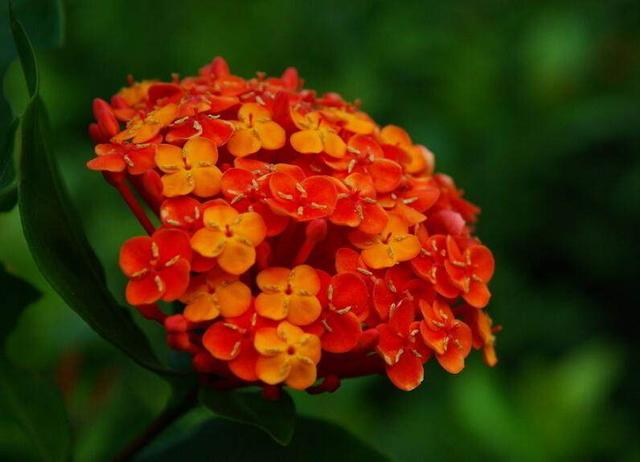
The Ixora has an elegant columnar form, beautiful leaves, rich flower colors, and dense blooms that are terminal, so when an Ixora is in bloom, the flowers sway on the branch tips, and if a breeze blows, a cluster of flowers on the branch looks just like a smiling face, which has a very unique charm, making people linger and not want to leave, so there are especially many people growing Ixora. So how do you grow Ixora?
Ixora likes a high-temperature, humid environment with plenty of sunlight. When planting, it is best to place it outdoors where it can receive sunlight. After the soil surface in the pot is noticeably dry, you can water it. When the weather starts to turn cool in late autumn, you can move the Ixora indoors to grow it, preferably by a window, and the temperature should be kept at least above 7°C.
Soil
For the Ixora's growing medium, well-drained, slightly acidic, organic-rich sandy loam or humus loam is best. Before transplanting, deeply turn the soil layer, break up large clods of soil, and according to the soil structure, mix in river sand and organic fertilizer soil and stir thoroughly to achieve soil conditions suitable for Ixora growth; for the nutrient soil used in pots or bagged seedlings, thoroughly mix 1 part garden soil, 1 part river sand, and 1 part organic fertilizer soil, or prepare it with pond mud, river sand, and coconut coir in a 1:1:0.5 ratio.
Light and temperature: Ixora likes light, but avoids direct strong light. In spring and autumn, it should be placed in a wind-sheltered, sunny spot; in summer, it needs shading; in winter, the Ixora can be given full light. Ixora likes a warm environment, and indoors in winter it should be kept between 12-18°C. In spring around Qingming, the Ixora can be placed outdoors; in autumn, when the temperature drops below 15°C, the Ixora should promptly be moved indoors.
Watering and fertilizing: Ixora likes a humid environment, but fears waterlogging. In spring and autumn, watering once every 3 days for the best aeration; in summer, water once in the morning and once in the evening, and at the same time, in order to maintain high humidity, also spray the leaves frequently in summer; on rainy days, do not water the Ixora. Ixora likes fertilizer, but avoid heavy fertilizer and raw fertilizer; during the growing season, apply decomposed organic fertilizer once every half month.
Repotting and pruning: Ixora is generally repotted once every 2 years, and the best time for repotting is in early May. When repotting, some old roots should be appropriately trimmed off. Ixora is generally pruned after being moved outdoors in spring, mainly by appropriately thinning the branches to facilitate ventilation and good growth; if there are few branches, the main branches should be heavily pruned so that the Ixora produces more side branches.
Ixora can be propagated by sowing, layering, or cuttings. Cuttings can be taken during the growing season, especially in June-July. Take 2-3 nodes of full 1-year-old branches, insert them into sand, shade them and keep them warm, and they will root in about 50 days. Layering is done in early spring. For newly propagated small seedlings, after potting, place them in half shade for care; after they survive and send out new shoots, apply a thin fertilizer once every 10-15 days. When the weather is dry, pay attention to spraying water to increase humidity. When the seedlings grow to about 15 cm, pinch off the growing tips to promote side branches and make the plant shape fuller.
Disease control
Leaf spot disease
This disease is caused by Fusarium. The pathogen overwinters on diseased flowers or falls into the soil with diseased leaves, and in the second year spreads through wind and rain or watering.
Control methods
Horticultural control: Meet the Ixora's growing conditions of liking light, a warm and humid climate, and loose, fertile acidic soil.
Chemical control: Start spraying at the early stage of the disease. The agents can be 50% thiophanate-methyl·sulfur suspension concentrate at 800 times dilution; or 50% carbendazim wettable powder at 500 times dilution; or 10% antibacterial agent 401 acetic acid at 1000 times dilution for spraying.
Anthracnose
This disease mainly harms the leaves. The pathogen overwinters on diseased parts or diseased leaf residues, and when conditions are suitable, spreads through wind and rain, invading through wounds to cause initial infection.
Control methods:
Horticultural control: Remove diseased leaves to reduce the source of infection. Keep appropriate spacing between flower pots or plants to ensure good ventilation and light transmission.
Chemical control: Spray before the disease occurs. The agents can be 1:1:200 Bordeaux mixture; or 50% carbendazim wettable powder plus 75% chlorothalonil wettable powder at 800 times dilution; or 25% tantelin wettable powder at 500 times dilution. Spray the above agents once about every 10 days, for 3~4 consecutive treatments.
Pest control
Scale insects
Once scale insects appear, the harm is great, so prevention should be the main approach. Once scale insects are found, they should be controlled promptly without delay. Scale insects not only hinder plant growth and trigger other diseases, but also affect its ornamental value.
Control methods
Horticultural control: Prohibit bringing in or taking out seedlings carrying insects, and apply organic fertilizer and compound fertilizer in a timely manner to strengthen seedling vigor and improve insect resistance.
Chemical control: Apply systemic granular insecticides to the roots, such as 3% carbofuran granules. The dosage is 0.5~1 g buried in flower pots within 20 cm in diameter, increased as appropriate for large pots, and the effective period can reach 40~60 days. Spray promptly at the peak of egg hatching. The agents can be 40% omethoate emulsifiable concentrate at 1500 times dilution plus 50% menazon emulsifiable concentrate at 1000~1500 times dilution.
Aphids
When aphids harm young tender stems and leaves, spray with 2.5% rotenone emulsifiable concentrate at 1200 times dilution to kill them.
Ixora is also known as Yingdan, Xiandan flower, and hundred-day red. It is a plant of the genus Ixora in the family Rubiaceae. The plant is low-growing, with beautiful flowers and leaves and rich flower colors, including red, orange, yellow, white, and bicolor, etc. It has a beautiful plant shape, dense blooms, and rich flower colors. It is an important potted woody flower and is the national flower of Myanmar. In southern Guangxi Province, China, people habitually call it water hydrangea. Ixora has a relatively long flowering period and can bloom from March to December every year.