Floating-sand winter cutting propagation of rose branches: reduce secondary damage, increase utilization rate, and just wait for the flowers to bloom
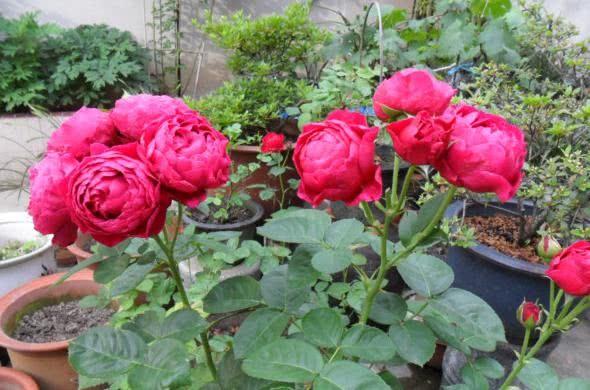
The winter pruning of rose branches is the largest of the whole year, and it is a great pity and very wasteful to throw away so many branches of European roses. In the past, I always stored them in river sand and dug them out the following spring for cuttings, with mediocre results. Last year, I tried half soil and half sand, that is, floating the sand on top of the soil, arranging them in place all at once, saving the work of starting over the following spring, reducing secondary damage, and greatly improving the utilization rate of the branches.
1. Prepare the cutting bed. Put soil at the bottom of the pot and float sand on top of the soil.
As shown in the picture:
2. The floated sand should not be too thick, about 3 to 4 cm thick.
3. Make small furrows, with the standard being that no soil is visible at the bottom of the furrow.
4. The branches are 15 to 20 cm long.
5. Arrange the branches densely, in a back-and-forth pattern. The standard is that they do not touch the soil layer.
6. Finally, sprinkle some river sand on top to cover most of the branches.
The work after that is simple: leave them outside all winter, pay attention to shading after they sprout the following spring, and spray water when dry. In the second half of the year there will be flowers to see. The flower quantity in that same year will not be too much, but the seedlings will already be quite strong after growing for a year. The advantages of this method are that it is convenient and quick, good for large quantities, simple and extensive in management, and no repotting is needed.
For those that have survived, of course, in winter you can also use vermiculite semi-hydro sunlight cutting propagation. It is best to include a leaf. The survival rate is very high, higher than sand cuttings. I will not introduce them one by one here, and will share next time. If you like it, you can click to follow!