How to shape a Chinese arborvitae (Platycladus orientalis) bonsai? Detailed care methods
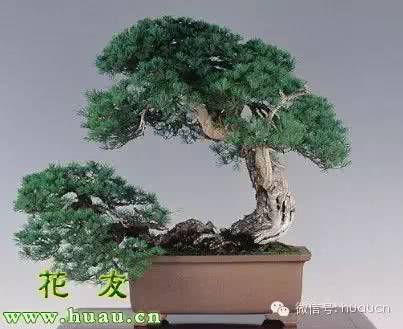
In recent years, Chinese arborvitae bonsai has developed rapidly, and both its specifications and quality are remarkable. The Chinese arborvitae has an extraordinarily long lifespan because it fears no erosion by the years. To this day, ancient arborvitae trees that have weathered a thousand years of vicissitudes yet still stand with lush charm and towering strength can be found all over the country. However, Chinese arborvitae mostly grow into dense forests, straight and without "scenery." Some grow on overhanging cliffs and precipices; though they have a rugged, wondrous appearance, they are not easy to extract and are extremely difficult to keep alive. How to find good stump material suitable for potting and capable of being shaped into a scene is the primary subject of making Chinese arborvitae bonsai.
1. Material selection
When searching for scenic stumps in the mountains, you must have poetic and painterly feeling in your heart, and in your eyes should dance many beautiful artistic images, artistic poses, artistic combinations, and the exaggeration and freezing of artistic lines. You must be good at seizing form from the formless and finding scenery amid chaos; otherwise it will be difficult to recognize which material is worth taking. Furthermore, you must have a sense of quality: when you find a good stump, treat it as worth ten, regarding it as a rare treasure. Look for mutated stumps with straight roots, clumsy trunks, a spirit of bowing and raising, and great potential for scene-making. Steep slopes produce dragon-claw forms, and wind gaps produce phoenix-branch forms; both are the work of nature. And the thick, short, ancient, and clumsy mutated stumps are often the result of villagers cutting and grazing year after year. As long as you have a discerning eye, good stumps can be found on mountain tops, at their feet, by streams, and beside roads.
The Chinese arborvitae sprouts multiple times a year, and can be collected in spring, summer, autumn, and winter. But it is best after winter dormancy; March and April each year can be regarded as the golden season. Before collecting, you should prune and cut on site, remove the superfluous, retain the essence, and, on the premise of fully keeping reserve branches, decisively alter and organize the chaotic stump. When collecting, you should obtain permission from the relevant authorities, and must never disregard the protection of mountain forests and take by force.
2. Processing
The operation must be slow and meticulous. The size of the soil ball should be determined according to the thickness of the base. When digging trenches and grooves, cut as soon as roots are seen; the cuts on thick roots should be flat, and you must not let them split bark or rot from injury. The dug soil ball must be strictly protected from drying in the wind; it should first be wrapped with wet grass or fresh arborvitae leaves, and only after being tightly wrapped and bound can it be transported. The scenic stumps brought back are best first potted in clay pots. Large scenic stumps should be planted in a soil bed raised above the ground. Spread river sand at the bottom, and on top use slightly alkaline loess; sandy loess that has been fertilized by water running off a sunny earthen cliff is best.
3. Planting
Before planting, clean the dirt and grass roots from the surface of the soil ball, remove exposed stones, seal and coat the cuts on thick roots and dry branches with latex, then spray carbendazim or potassium permanganate, place the scenic stump in the correct position, fill with soil and tamp it firm, and finally water again and again until the entire clay pot is soaked through. After the first thorough watering, the old accumulated bark on the trunk and thick branches should all be scraped off. This can remove dirt, remove bacteria, and destroy eggs, ensuring the stump scenic is clean and hygienic, and at the same time it also benefits the metabolism of the epidermal tissue and the display of the beauty of the surface texture.
4. Watering
After the scenic stump is potted, water must be strictly controlled. Arborvitae belongs to yin, pine belongs to yang. The saying "dry pine, wet arborvitae" indeed contains the principle of yin and yang, but it does not mean that pine trees tolerate dryness and arborvitae tolerates wetness. Generally speaking, newly planted Chinese arborvitae is especially afraid of waterlogging; waterlogging causes root rot and death. Controlling water means watering less and misting more, with no standing water on the pot surface, and it is best to see moisture and dryness every day. On especially dry days or days with strong wind, you may appropriately mist and water a little more. In rainy seasons, you can prop bricks under the bottom of the pot; when the pot soil is found to be too wet, you can add dry soil to absorb water, or switch to a new pot with good drainage.
5. Pest and disease control
Chinese arborvitae scenic stumps generally will not die from local damage, but medicine should be applied promptly for disinfection. The fatal natural enemies of Chinese arborvitae scenic stumps are especially longhorn beetles and bark beetles. The most common are the star longhorn beetle and the cloud-patched longhorn beetle; their antennae are extremely sensitive, and upon emerging they seek mates and copulate, then lay eggs in the bark of the Chinese arborvitae. After the eggs become larvae, they bore under the bark, gnaw the growth layer, and their feces and gnawed wood shavings are expelled from the bore holes. The feeding tunnels of longhorn beetle larvae are mostly horizontal and slanting, and can cut off the water-conducting line and cause the scenic stump to die. Because after the larvae become adults they still overwinter hidden in the bark, and only crawl out from the bore holes in warm spring, you must seize the opportunity to capture the longhorn beetles when they leave their holes; before and after they leave the holes, you may also spray dichlorvos, fenitrothion, and other medicines to kill them. The longhorn beetle is nicknamed the "tree sawing lad," while the bark beetle is called the "wood-eating insect." Bark beetles are extremely small and mostly breed in mixed wood and garbage; once they invade the cortex of a Chinese arborvitae scenic stump, they will also gnaw away all the growth lines of the stump wood. Frequently cleaning up sanitation, removing miscellaneous wood, and diligently spraying medicine on scenic stumps are the best ways to prevent bark beetle damage.
Bonsai: Six measures for dwarfing flowers and bonsai
6. Key points of scene-making
After the Chinese arborvitae scenic stump survives, it must undergo at least one or two years, or even longer, of careful cultivation: let the top branches grow vigorous, the side branches grow strong, the leaves grow plump, and build up branches and roots to make it luxuriant, only then can it be wired and pulled. Chinese arborvitae can be made into various forms of scene-making, but scene-making requires insight and figurative thinking. The Huangling arborvitae of Shaanxi and the Han arborvitae of the Dai Temple are both regarded as national treasures for their unique individuality, natural charm, and rich historical and cultural connotations; their solid and heroic image is precisely our model and good teacher for shaping and scene-making. Image is individuality, is strength of character, is charm. In making Chinese arborvitae scenes, one must respect the tree nature of the Chinese arborvitae and respect its image. High-level Chinese arborvitae bonsai mostly have trunks that are twisted and powerful, ancient, clumsy, and peculiar; roots extending in four directions, with a nature for entering the earth; leaf form in clusters; and crowns either like clouds congealing rain or like layered green peaks, mostly triangular and scalene triangular. Chinese arborvitae shaping is extremely suited to a solemn appearance, containing movement within stillness, with a far-reaching artistic conception. Its style should emphasize a scholarly air. Techniques should exploit strengths and avoid weaknesses; absorb both north and south, and be flexible and varied.
7. Shaping techniques
Picking tips and making shari are important techniques that must be mastered in making Chinese arborvitae bonsai. Picking tips is actually pinching leaves. Because the young branches of the Chinese arborvitae develop and grow from scale-like small leaves, pinching off the young tender branches and leaves can control rampant growth. At the same time, tips are also the only choice for organizing leaf form, standardizing tree appearance, and beautifying the landscape; this is usually carried out on the basis of trunk chopping and branch building, and interacts with wiring.
Shari and jin give the Chinese arborvitae more connotation, and can fully display the towering strength of character and the heroic spirit standing in the firmament after undergoing a hundred calamities in the baptism of nature. Many Chinese arborvitae scenic stumps have dead tops above, scars below, and rot holes at the base; or the growth layer has been eaten to death over a large area, or the trunk has many knife wounds and axe cuts and the cut ends are too exposed. You can follow their nature and use shari techniques to turn ugliness into wondrous beauty. Shari can be applied to parts that are already dead and parts that can be allowed to die, and can also be applied to twisted yet beautifully spiraling dry branches, or applied due to the need for contrast in line body and color. Bark stripping is best in mid-spring, carving is best in winter, and jin is best made by twisting. You must grasp the contrast between the dead and the flourishing, and grasp the viewing side. However, doing shari should proceed from reality; the key is to examine the scenic stump and see whether it is necessary and possible. Shari techniques must not be overused, otherwise you will be too clever by half. The art of bonsai has no fixed method and no fixed style. Authors differ in cultivation and styles vary. Every move and every posture must be completed by the author's inspiration and inner impulse. In shaping Chinese arborvitae bonsai, you should expand exchanges in practice, improve yourself, sum up experience well, and constantly innovate.
·END·
An interactive platform for enthusiasts of flower growing, flower planting, and green plants to exchange ideas, show off, and be a bit cheeky. An online home for sharing flower cultivation methods and household flower-growing tips. A fresh flower subscription platform.
Fresh flowers: hyacinth|stock|plum blossom|carnation|camellia|kalanchoe|jasmine|gardenia|peach blossom|balloon flower|osmanthus|calla lily|lily|forget-me-not|clivia|apricot blossom|honeysuckle|milan|peony|sunflower|chrysanthemum|serissa|crown of thorns|tulip|narcissus
Green plants: poinsettia|money tree|pothos|spider plant|peace lily|lucky bamboo|asparagus fern|aloe|English ivy|anthurium|monstera|bougainvillea|silk tree|spathiphyllum|schefflera|boxwood|sago palm|rubber tree|maidenhair fern|snake plant|
huau.cn
……
Search the public account "Hua You" or "huaucn" to get the latest information
Business cooperation, promotion. Please contact WeChat private ID:ihuaucn