Fertilize succulents this way, and they will grow plump and fill the pot
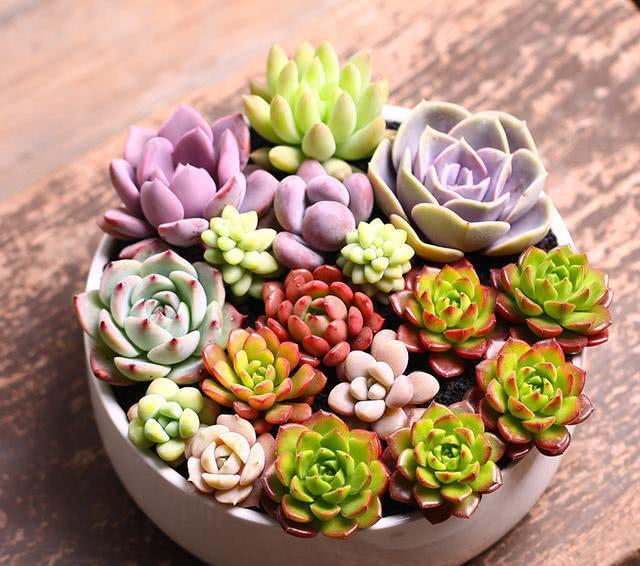
There are so many friends who love growing succulents, and during the care process they also encounter various problems here and there, for example, succulents grow slowly and do not seem to grow. Should we fertilize them? What kind of fertilizer should we apply? Today let's talk about it
Succulents are foliage plants, but they should not be allowed to grow too fast. If they grow too fast and too tall, they lose their ornamental value. So, ordinarily, should we... it is best to use organic fertilizer with relatively balanced nitrogen, phosphorus and potassium. If too much nitrogen fertilizer is applied, succulent leaves will turn into ordinary green leaves. If too much phosphorus and potassium fertilizer is applied, succulents tend to bloom, and the leaves will wilt and turn yellow in large numbers.
You can use self-fermented cake fertilizer or purchased compound fertilizer. During the growing season, the amount must be small, just enough for the roots to slightly sense the fertilizer. If too much fertilizer is applied, it not only easily causes leggy growth with no shape, but also easily burns the seedlings
For succulents generally grown at home, mostly loose and breathable soil is used. If the soil contains relatively abundant nutrients, there is no need to fertilize, because succulents grow relatively slowly, the plants are not very large, and the nutrients in the soil are already enough for their growth. Because we do not need succulents to grow too large and lose their ornamental value. If we feel the succulents are growing too slowly, then we can apply some fertilizer
How do we judge whether succulents need fertilizer?
1. For relatively large succulent plants with a relatively fast growth rate, appropriate fertilization can be given during the growing season. For example, Green Bear, Guanyin Lotus and so on will grow very quickly with a little fertilizer in spring. But for succulents like Lithops and Haworthia cooperi, which barely grow much in half a year, fertilizing will only kill them.
2. For succulents that grow slowly during the growing season, have not been repotted for a long time, or are in soil with too many granules, appropriate fertilization can be given during the growing season. If your succulents have no problems with watering, light or temperature and still do not grow, and it has been more than two years without repotting, you can fertilize.
3. When succulents bloom, appropriate fertilization can be given. If a succulent has grown a flower stalk and you do not want to cut it off, pay attention to fertilizing. Because blooming consumes a lot of nutrients, and when nutrients are insufficient, in order to bloom it will consume the nutrients stored in the leaves, which easily causes the leaves to dry up and fall off from bottom to top. Sometimes all the leaves fall off, and then the succulent dies. So applying more fertilizer when it blooms can alleviate the yellowing and withering of succulent leaves.
When fertilizing succulents, apply thin fertilizer frequently, using multi-element fertilizer or fertilizer specially made for succulents. When fertilizing, generally choose spring, which is more suitable for succulent growth. If you fertilize in summer when growth is slow, the succulents are dormant, and fertilizing instead has a bad effect and burns the seedlings
Directly applying chemical fertilizer to succulents is the least recommended. On one hand, the amount is hard to control, and succulent roots are all very fragile and easily burned. On the other hand, the fertilizer effect is released too quickly. Chemical fertilizers are all like a gust of wind; for fast-growing plants, they are absorbed quickly and the effect is good. But for succulents that grow at snail speed, too fast a fertilizer effect is often a burden.
To sum up: whether to fertilize succulents should be decided according to the specific situation. What fertilizer to apply: mainly organic fertilizer liquid and fertilizer specially made for succulents. When to fertilize: the growing season!