Succulent root care methods: simple planting makes succulents more colorful
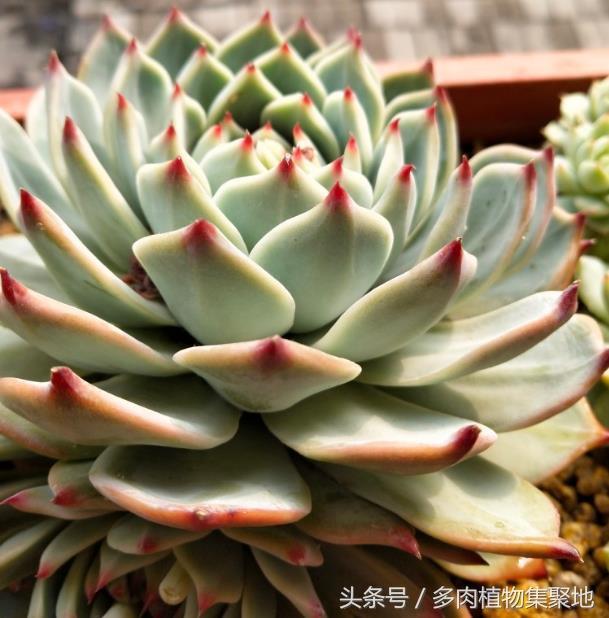
Grow the roots first before growing the plant - this is the consensus among flower lovers. Whether it is succulents or other plants, the roots are always the most important place for all nutrient supply. The thick root system that an old plant spends many years growing is certainly something a succulent that has just rooted cannot compare with. So, if your succulent is only a few months old, there is no need to think about any thick root system - it definitely does not have one. What you need to look forward to is a more developed root system; the best state is when the roots look like a clump of messy whiskers.
The amount of water given to succulents has an important relationship with their root growth. When the succulent's roots are strong and it is watered heavily, the succulent will grow leggy like crazy; when the roots are strong but it is watered little, it will grow toward being plump and thick; if the roots are relatively small but it is watered heavily, what grows first is the roots; if the roots are already very weak and it is not watered diligently, the succulent may only be able to barely hang on by entering a dormant state. In fact, it is not only reasonable watering - suitable soil, regular fertilizing and repotting are all factors that make succulent roots strong.
In a ventilated, low-humidity environment, such as a balcony or windowsill, it is recommended to use soil containing fibrous peat and water-retaining media, and not to remove the dust, because these tiny dust particles are the best things for root hairs to attach to. Removing them easily causes the root hairs to dry out, and the plant enters a repeated cycle of rooting again and again, making it impossible for it to grow well.
Many flower lovers habitually think that the larger the pot, the better the root system develops. That is indeed so. But in our actual cultivation process, it often turns out the opposite: the larger the pot, the easier it is to rot the roots, and the key still lies in the imbalance between water retention and aeration. At this point, in order to better suit our daily cultivation situation, we should choose a pot that matches the plant. The safest approach is to choose a pot slightly larger than the plant. For Lithops and Haworthia truncata, a deep pot is a must. If cultivating in a stuffy, hot environment, it is best to use a pot with holes in the walls or choose a pot made of breathable material, such as a sand pot.
When some flower lovers plant tall-stemmed succulents, such as the various Aeonium cultivars, in order to plant them more stably, they often bury the stem deep - this is not a very good habit. Burying the stem deep makes the root system lose its original pulling tension, and instead makes the succulent's root system weak and prone to breaking. The correct approach is to use an external force (such as copper wire) to fix the plant's main root to the bottom of the pot, and then use the fixed root system to hold the tall stem. This pulling tension is very beneficial to root growth.
Generally speaking, for a stuffy, hot environment, large granules of drainage stone should be placed at the bottom of the pot, and the soil surface should be covered with large breathable akadama granules. For open environments such as ventilated balconies and windowsills, it is best to separate the bottom of the pot with only a layer of paper towel and not put in too much drainage material, otherwise the lower part of the pot will always be very dry, and it is precisely many root hairs that are in the lower part of the pot. The surface of the potting soil should use a less breathable granular material, such as small stones. The core of this treatment is still to ensure the balance of moisture retention and aeration, and to extend the life of the root hairs.
This is a gathering place for succulent lovers, sharing succulent care tips. You are welcome to follow and exchange ideas.