Water your succulents with this kind of water from home; it is rich in nutrients, so do not pour it out.
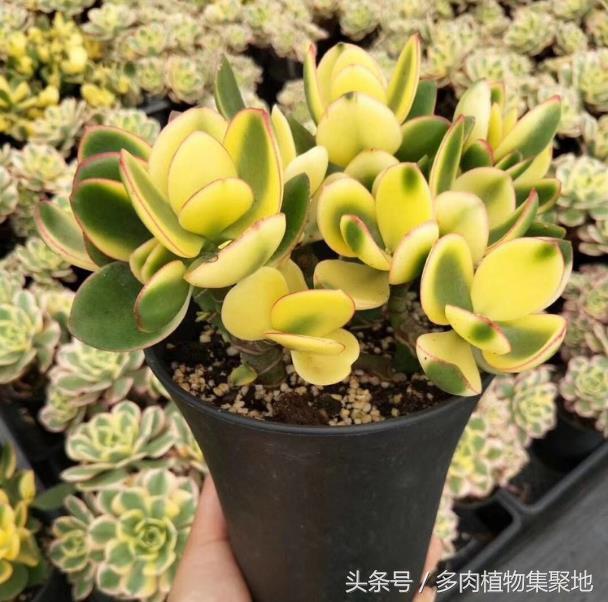
Many gardening enthusiasts are skeptical about using rice-rinsing water to grow succulents. In fact, rice-rinsing water can be used to grow succulents, because rice-rinsing water itself is rich in nutrients, and it is precisely because of its rich nutrients that, if it is not specially fermented and diluted, it easily breeds many small insects, such as fungus gnats. Therefore, the prerequisite for using rice-rinsing water to grow succulents is that it must be fermented and decomposed, and it can only be used after dilution.
The fertility of rice-rinsing water is not very strong, so it can be used directly to water and drench the roots. If you want to use it after letting it stand, it must be mixed with more than 50 percent clear water. Rice-rinsing water that has been left to stand is fairly acidic, so the acidity needs to be diluted before use. Some gardening enthusiasts do not particularly like using rice-rinsing water, because succulents are not so lacking in fertilizer; ordinary tap water and rainwater are enough. During the flowering season, a little monopotassium phosphate can be added during watering. Rice-rinsing water is probably more suitable for plants that will not thrive without fertilizer, such as jasmine.
Rice-rinsing water is the water left after washing rice. This water is alkaline, and because it has washed away the nutrients from the surface of the rice, it can be used to irrigate plants with good results. Succulents refer to a class of plants in which some part of a vegetative organ, such as the stem, leaf, or root (a few species have two or more such parts), has well-developed parenchyma tissue used to store water, making them appear thick and juicy in appearance. Most of them grow in arid regions or regions with a dry period at some point in the year. For much of each year, their roots cannot absorb water, and they rely only on the water stored in their bodies to sustain life.
The requirements of succulents for growing medium are that the soil be loose and breathable, with good drainage, but with a certain water-holding capacity, and neutral or slightly acidic. For highland globular types (the genera Aztekium, Obregonia, and Strombocactus) and the genus Ariocarpus, a little rice-hull ash and small weathered rock particles can be added. Tall columnar types can be mixed with coarse quartz sand to stabilize the plants.
Cacti and succulents generally prefer warmth and a relatively large day-night temperature difference. Except for epiphytic cacti and species of the genus Haworthia, light should be ample but soft. For this reason, apart from a few flat-stemmed jointed species, tall columnar species, and certain Agave species, they should generally be cultivated in a greenhouse year-round. Most terrestrial cacti grow most vigorously under conditions of 28°C to 35°C during the day and 10°C to 15°C at night. When indoor temperatures are often above 35°C to 38°C, growth stalls, and some species of highland globular types and woolly columnar types are also very prone to rot.
The prevention and control of pests and diseases in succulents is mainly based on prevention. First, the environment must be clean and tidy. Strict checks must be carried out on introduced plants, and they can only be placed in the shed once it is confirmed that there are no pests or diseases. Concentrated pesticide spraying in the shed during the three periods of early winter, early spring, and before the plum rain has a multiplied effect with half the effort. In addition, disinfecting the growing medium has a very good preventive effect.
This is a gathering place for succulent enthusiasts, sharing succulent care tips. You are welcome to follow and exchange ideas.