Succulent leaf cuttings turning black during propagation? A simple drying period is all it takes for healthy sprouting
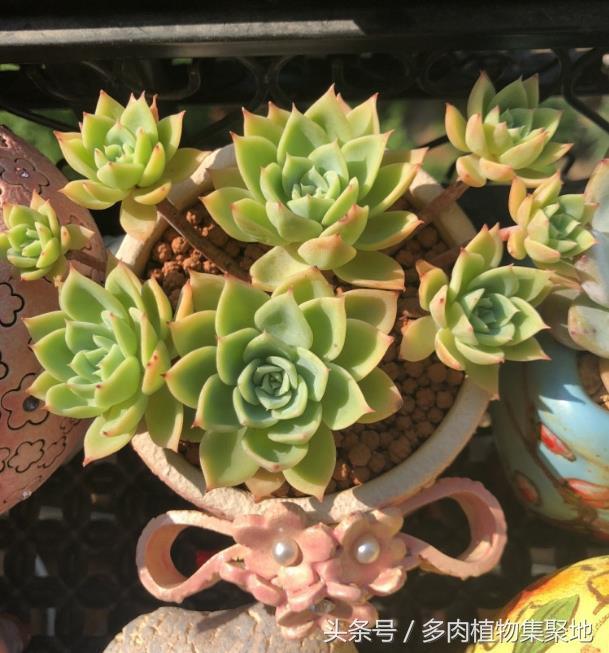
Succulent leaf cutting propagation looks simple, but if you try it directly without understanding the techniques, methods and precautions, it will affect the survival rate. On the contrary, as long as you are attentive, combining theory with practice, successful leaf propagation is by no means difficult. The fun of the leaf propagation experience cannot compare with the ornamental pleasure of buying a ready-made potted succulent.
Some flower lovers have asked, why do succulent leaf cuttings turn black in just two days? When leaf cuttings turn black or turn to mush in two days, there are generally just two reasons. One is that the leaf itself already has problems, for example the plant itself has a disease that has already shown itself, such as black rot, black spot disease, leaves turning to mush and so on. At this point the leaf that is twisted off may look normal, but in fact it is "on duty while sick", and in two days it turns to mush or goes black.
The second problem is that the succulent leaf has become infected. If it is a leaf that has been twisted off the succulent, there is a wound, which is very easily infected. If the wound has not dried and is placed directly on the soil surface where it touches water or other pathogens, it can also turn to mush or develop black rot, especially in a stuffy, humid environment, at the wound, which is also the leaf base growth point of the succulent.
So succulent leaves for leaf cuttings cannot be planted directly after being twisted off; placing them directly on the soil makes them prone to rotting. After twisting off the leaves and placing them on the soil surface, the soil surface should not be too moist, the growth point should not come into contact with water, and during the leaf cutting period they should not be exposed to blazing sun. For leaf cuttings you cannot water, but rather mist; keeping the soil surface moist is enough, and try not to spray the leaves. Water freshly drawn from the tap should be left to sit for a day to let the chlorine dissipate before use.
What kind of container should be used for leaf cuttings? Liking succulents is not only because they are cute, but even more because of their strong vitality and easy propagation. Ceramic pots, plastic boxes and foam boxes are the three commonly used containers for leaf cuttings, and whether the bottom of the container has holes or not is fine either way. Propagating leaf cuttings in an environment with too high a temperature makes the leaves prone to rotting; propagating leaf cuttings in a low-temperature environment means the small shoots are less likely to rot but grow slowly. Generally leaf cuttings are done in spring or autumn.
What kind of soil should be used for succulent leaf cuttings? First line the bottom of the flower pot with a layer of mesh, then spread a layer of ceramic granules. For the soil, mix two parts peat soil with one part akadama soil and one part kanuma soil, and spread 2cm of relatively soft peat soil on the surface layer. Mist the surface layer of soil until wet; the first time, mist to roughly half the depth of the soil. With a terracotta pot this is more obvious to observe, as the pot wall will darken. Lay the leaves flat on the soil. Put the pot in a place without direct sunlight, but not in complete darkness, and with good ventilation. On sunny days, mist the soil surface once a day; it is enough for the top 1cm of soil to be wet. On rainy or cloudy days there is no need to mist. Many flower lovers grow them this way, and in about a month they sprout. After the seedlings emerge, bury the roots into the soil, and they can gradually be exposed to sunlight.
This is a gathering place for succulent plant enthusiasts, sharing succulent care tips. You are welcome to follow and exchange ideas.