A city dweller's farm dream, he made it come true in a shopping mall
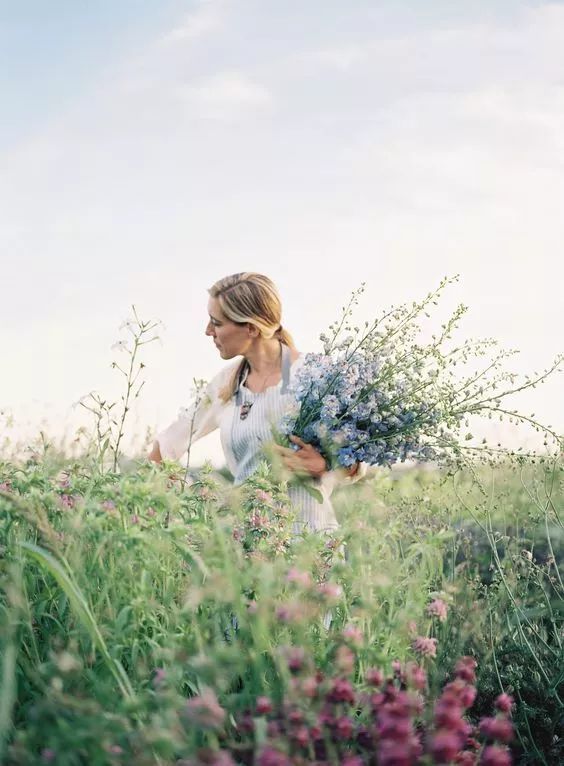
A while back, Shaoyao recommended the BBC classic documentary "The Edible Garden" to everyone. The host, Alys Fowler, grows vegetables the way she grows flowers, tending her small vegetable plot so that it looks as beautiful as a garden.
After watching it, many readers said they wanted a small vegetable garden of their own, so they could eat melons and vegetables they grew themselves. Setting aside the pleasures of daily life, at least the melons and fruits you grow yourself are safe to eat.
It was also out of worry about what he ate that the farmer "Tang Zhong" rolled up his pant legs and cultivated his own farm.
Today, he wants to take us to see the lovely fresh fruits and vegetables on his farm.
{Miss Shaoyao Vol.737 }
x
A city dweller's farm dream
In the city, the change of seasons goes from floral skirts and parasols to scarves, hats and down jackets. On a farm, it is rows upon rows of green, tree after tree in bloom, trellises full of melons and fruits, and a ground covered in fallen leaves.
If you had a farm, you would never have to worry about what takeout to order each day; when mealtime comes, you just take a look in the garden or on the farm.
The peas are ripe, the potatoes have rounded out
The loofah stretches out its body, calling you over
Pick a few leaves of greens at random, and you eat a meal full of green
I want a small farm, with melons and vegetables in every season. If I could, I would also keep two chickens, clucking and chasing them around all day.
The city dweller's farm dream has been turned into reality by the "farmer" Tang Zhong. His farm has not only fresh fruits and vegetables, but also cute little rabbits, oinking pigs...
Tang Zhong is a new Shenzhen resident. On social media, his name is "Farmer Tang Zhong," which accurately sums up his current situation.
Seven years ago, Tang Zhong founded Liangshi Network and stepped into agriculture, hoping to start from the basics, such as soil, air and water, to solve the problem of "eating."
To many people, this venture of his crossed over into something quite different.
Because before that, for 15 years, the achievements he made in the internet industry had nothing to do with agriculture.
He helped found "Shenzhen Hotline," one of China's earliest portal websites;
He served as vice president of "A8 Music Group," China's first listed digital music company;
He created "Aicai Network," one of China's first internet lottery websites??
Farmer Tang Zhong on the farm
After 15 years of battling in the internet industry, he experienced many aspects of the world and also achieved personal financial freedom.
As he grew older, his state of mind changed along with it, and he began to long for the pastoral life of "farming at Liangshi Farm, drinking tea while talking about mulberry and hemp."
The restaurant on the farm
Eight years ago, one day, he gathered a group of old friends for a meal.
At that meal, a group of middle-aged people chatted about everything from Sichuan hot pot to Xiamen seafood, from Guangzhou roast meats to Shaanxi noodles, and finally got onto pesticide residues in vegetables, hormones in poultry meat, toxic rice, gutter oil??
The more they talked, the heavier the topic became.
In the middle of the meal, one friend suddenly suggested, "Old Tang, aren't you free right now? Why not just solve the problem of what we eat for all of us."
This idea, which sounded unreliable, actually received an enthusiastic response from everyone. The key point was that even he himself thought the idea seemed pretty good.
In 2010, he began traveling all over the country to investigate and look for sources of high-quality ingredients.
Wuchang rice from Heilongjiang
Under the ample sunlight of 45 degrees north latitude, it nourishes fertile organic black soil. The Wuchang rice grown on this land has had the reputation since ancient times of "Wuchang rice, emperor's grain."
He found that rice cooked from Wuchang rice had plump grains, was translucent and glossy, and was springy and chewy. Before the pot was even uncovered, the rice fragrance already filled the room.
Selenium-rich black pigs from Hainan
Hainan's selenium-rich black pigs grow in an original ecological environment nestled by mountains and water. They are fed local feed such as green vegetables and coarse grains and grow naturally for one year. They get a lot of daily exercise and are not stimulated by lean meat powder additives.
He found that the black pork that grows slowly and naturally has evenly distributed fat and lean meat, firm texture and a springy bite, with a rich, fresh aroma. At the same time, it is high in selenium and more nutritious.
Guangxi ecological Yaoshan phoenix chickens
A 2000-mu forest farm at an altitude of 1350 meters, with highly mineralized mountain spring water flowing endlessly. The chicks are raised free-range in the mountain forest, sometimes catching fish among the bamboo, sometimes running through the wetlands.
They eat insects and grains, drink mountain spring water, and breathe the air in the woods, bringing together nutrition and deliciousness in one.
Two years later, the first season of "A Bite of China" aired, and many of the scenes and settings in it looked incredibly familiar to Tang Zhong. To find high-quality ingredients, he had run through many of those places too.
After a year of traveling, he came back with a little more confidence. In 2011, he gathered four other partners and together founded in Shenzhen"Liangshi"。
In addition to providing the highest-quality ingredients from all over the country, Liangshi also has its own fresh vegetable selections.
At first, they rented nearly 100 mu of farmland on the Nanao Peninsula.
They standardized vegetable varieties, planting and raising plans, planting and raising standards and product sales, while also providing research and development and quality control.
Harvested on schedule, with self-built logistics, and delivered to homes according to user needs.
A year later, market demand exceeded supply, so they contracted more farmland at Jinguo Bay in Huizhou.
At the same time, they added sightseeing experiences to the farm, so that every user would know how the safe food they usually eat is grown.
Theorganic farm + e-commercemodel established by Liangshi, in its small and beautiful state, gradually gained recognition from more people.
But the longer you work in agriculture, the more you feel the weight of responsibility, and the less you dare to be careless. As Liangshi's users grew, they realized they had to do even better.
In 2016, Liangshi reached a strategic cooperation with COFCO Womai, sharing its global product supply chain advantages.
After that, Liangshi entered the Guangzhou market, joining hands with Poly and Evergrande to move into communities, while achieving fresh delivery in both Shenzhen and Guangzhou. By the end of 2017, it even brought in the world's largest property management company, Colour Life, as a strategic shareholder.
In seven years, they expanded from a patch of farmland to12 organic farms nationwide, 30,000 members, and over a thousand corporate subscribers.
The products supplied by Liangshi cover the daily necessities of life, including firewood, rice, oil and salt, fruits and vegetables, meat and poultry.
Connecting thousands of households through the internet is only one aspect. In order to give more people the chance to come into contact with the farm and truly see the ingredients, Liangshi also established offline community stores and shopping mall flagship stores.
Shenzhen Jiufang · Liangshi Organic Farm is their flagship store, centered on theagronomy parent-child experience + fresh product retailconcept. It is both a wonderland of curiosity for children and a one-stop ingredient shopping service for parents.
The flagship store is located in Jiufang Shopping Center
What Liangshi wants to do is not just solve the problem of eating, but also connect the bond between children and nature in the city.
American author Richard Louv first proposed in "Last Child in the Woods""nature-deficit disorder."
This is not an illness, but rather it means that children in cities spend less and less time in nature, become unable to tell one grain from another, and do not know the changes of the seasons or the withering of grass and flourishing of trees.
They moved the entire organic farm into an urban shopping mall. In a space of nearly 400 sq m, multiple experience scenes are divided. Right at the entrance are two cute pigs, oinking and asking you for food. These are two healthy pigs raised on organic vegetables.
Adorable little rabbits,
children feed them lovingly with vegetables,
and while playing, they learn to care for small animals.
Children experience feeding milk fish,
learning patience and love.
Grinding soy milk with a small stone mill,
listening to grandma tell stories of the past.
The store has an organic kitchen area, offering a buy-and-eat, pick-and-eat service:
Pick fresh vegetables at the plant factory, blanch a small hot pot, or have a glass of nutritious freshly squeezed juice;
You can also take part in DIY baking, using your own hands and organic ingredients to make healthy desserts and cookies??
Liangshi brings together play and shopping, learning and entertainment.
While parents accompany their children through parent-child time, they can also complete their daily ingredient shopping.
Liangshi's shopping area focuses on high-quality natural organic vegetables, eggs, meat and poultry, dairy products, fruits, and dried goods, grains and oils that families need as basic necessities, meeting one-stop shopping needs, so that every family can eat natural organic ingredients and enjoy true peace of mind and safety.
In more than a year since opening, Shenzhen Jiufang · Liangshi Organic Farm has welcomed on average more than a hundred families with children almost every day.
Seven years after Liangshi was founded, by building an online home delivery network, community stores and flagship stores, it has helped more people understand healthy organic living.
Liangshi's community store
Living in the city, it is unlikely that we can have a complete natural life, because we cannot leave technology behind, and cannot give up our careers and human connections, but we can approach nature in a simpler and more direct way.
What Tang Zhong wants to do is create for city dwellers a natural habitat for both the stomach and the soul, staying innocent and staying sharp.
He knows that being a "farmer" leaves no room for impatience, nor for slackness, but if you sow carefully, you will eventually wait for the melons to ripen and fall from the vine.