Succulent plants have peculiar shapes and extremely high ornamental appeal.
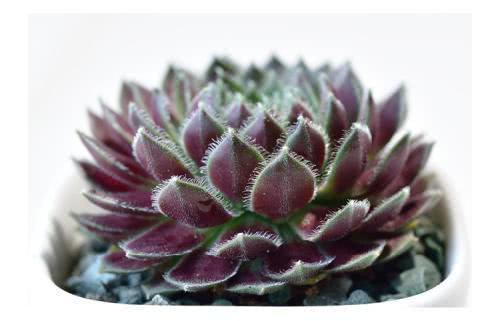
Succulent plants are truly fascinating and deeply loved by gardening enthusiasts. As long as they are cared for properly, succulents easily develop their best coloration, and the sense of achievement is tremendous. Of course, many succulents have relatively vivid colors and are also fairly easy to bring into their best state.
1. Purple Peony (Graptoveria 'Titubans')
Purple Peony (Graptoveria 'Titubans') is a very easy-to-care-for succulent with strong drought and cold tolerance. During care, avoid frequent watering; it needs ample light, and the growing environment should have good ventilation, avoiding enclosed conditions. Once it develops its best coloration, the leaves turn an enchanting red, with the center of the rosette green and the outer part red, giving it very high ornamental value.
2. Kalanchoe thyrsiflora 'Tang Yin Jin'
Kalanchoe thyrsiflora 'Tang Yin Jin' has very large leaves that are flat and round. Under ample light and large temperature differences, they can turn red and look truly spectacular. It generally also produces small white flowers in winter and spring.
3. Ice and Fire
Ice and Fire has a wavy shape, with red leaf edges and a green leaf center, just like the shape of a lotus, looking very enchanting. In backlit conditions, its leaves also have a neon-like glow, possessing a different kind of beauty.
4. Little Red Lips (Conophytum)
The succulent Little Red Lips (Conophytum) is quite peculiar in appearance, with a plump, round body and a charming little red mouth, which can be said to be its most distinctive feature. Little Red Lips can also absorb radiation, so it can be placed next to a TV or computer, and it can also play a certain role in purifying the air.
5. Monilaria obconica
Monilaria obconica looks like two little rabbit ears and is highly favored by succulent enthusiasts. When young, Monilaria obconica takes the form of a soft, adorable little rabbit, with two translucent, tender green ears that have a granular texture and are very cute. People say that Monilaria obconica looks less attractive once it grows up, but that is not necessarily true; every year it goes through a growth process in which its leaves go from short to long.