A Complete Guide to Kiwi Vine Pruning, Fertilizing, and Pest and Disease Control in June
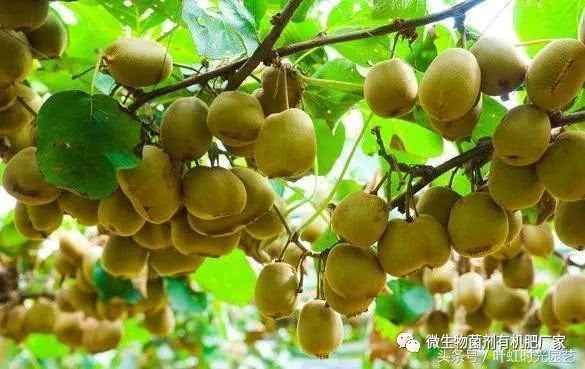
Growers who cultivate kiwi vines all know that June is the fruit enlargement period for kiwi vines, as well as the second peak period of fertilizer demand and the time when pests and diseases are most rampant. Therefore, doing a good job of orchard management in June is very important for achieving high quality and high yields of kiwi later on. This month, the main work focuses on the following five aspects:
1. Timely fruit setting and scientific summer pruning:
In June, kiwi orchards need to determine a reasonable fruit load and carry out fruit thinning in a timely manner to avoid nutrient consumption. Deformed fruit, flat fruit, damaged fruit, small fruit, and fruit damaged by pests and diseases should be thinned out promptly, while well-developed and vigorous fruit should be retained.
When determining the fruit load, the number of fruit retained can be adjusted according to the vigor of the fruiting branches. For large-fruited varieties such as Xuxiang and Hayward, vigorous long fruiting branches should retain 4 to 5 fruit, moderate fruiting branches should retain 2 to 3 fruit, and short fruiting branches should retain 1 fruit.
At the same time, pay attention to controlling the total fruit load of the whole tree. For a delicious kiwi orchard with a plant and row spacing of 3 m x 4 m, the fruit load per plant is about 400 to 450 fruit, with a single fruit weight of about 100 g, and the yield per mu is controlled at 2250 kg; for a Chinese kiwi orchard with a plant and row spacing of 2 m x 3 m, the fruit load per plant is about 100 to 150 fruit, with a single fruit weight of about 70 g, and the yield per mu is controlled at 750 to 1000 kg. For Huayou and Zaojin, the yield per mu is controlled at about 1500 kg.
The vigorous growth in the earlier period makes the kiwi canopy rather dense, which affects the light and heat conditions the fruit receives and is unfavorable for the accumulation of nutrients. At this time, scientific summer pruning is needed to improve ventilation and light penetration.
2. Reasonable application of fruit enlargement fertilizer:
From late May to early June is the critical period for fruit cell division and rapid enlargement. At this time, sufficient nutrient supply must be ensured. A compound fertilizer with medium nitrogen, high phosphorus, and low potassium can be used, applied in the ratio of (N 18% : P (P2O5) 25% : K (K2O) 10%), with 100 kg of compound fertilizer and 50 kg of fermented oil residue applied per mu. After fertilizing, irrigate promptly.
After June, spray foliar fertilizer once every 10 to 15 days, alternating biogas slurry, rare earth micro-fertilizer, organosilicon micro-fertilizer, and so on, to enhance leaf photosynthetic efficiency and promote the formation of fruit dry matter, thereby achieving the goals of increasing sugar, firmness, and color. This can improve photosynthetic efficiency, promote the formation and accumulation of fruit dry matter, and thus increase sweetness, firmness, and fruit coloration.
3. Timely irrigation to lower temperature and increase humidity:
June is the critical period for kiwi water demand. In order to meet the vigorous growth of the fruit, sufficient irrigation must be guaranteed. The timing of irrigation can be determined according to soil moisture conditions. Be careful not to irrigate at noon, so as to avoid a rapid drop in low temperature that causes plant dehydration and wilting.
As temperatures continue to rise, be on guard against the damage to the tree body and fruit caused by sunburn and dry hot winds. Irrigation or spraying water can be used to lower temperature and increase humidity to prevent high-temperature scorching. In addition, bagging the fruit for shade and setting up shade nets can both reduce sunburn damage and resist dry hot winds.
4. Integrated pest and disease prevention and control:
In June, kiwi orchards are mainly harmed by pests such as stink bugs, red spider mites, and small bark beetles. If found, insecticides should be used immediately for control. Biological control methods can also be used to control red spider mites by releasing predatory mites throughout the orchard in mid-to-late June, hanging one bag per tree at the branch fork, and the effect is also very ideal.
After fruit setting, pay attention to preventing brown spot disease and gray mold in advance. A microbial agent can be applied regularly throughout the orchard to prevent disease occurrence. If disease has already occurred, suitable fungicides should be selected immediately and applied according to the dosage to prevent a decline in fruit quality.
5. Reasonable management of field weeds:
When the grass or weeds growing in the orchard exceed 30 cm, mowing should be carried out with stubble retained, generally leaving a stubble height of 10 cm, and the cut grass should be spread over the tree basin.