6 insect-eating flowers: grow a pot and you can even skip the mosquito coils
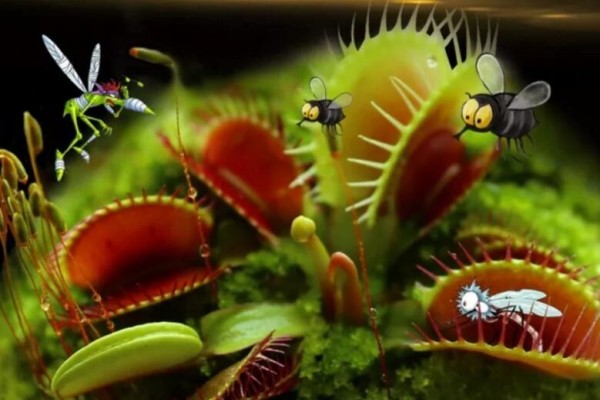
Venus flytrap
The Venus flytrap is a famously big name among carnivorous plants. It looks like a tiny bean pod, and it snaps shut when stimulated.
1. Prey
The Venus flytrap mainly preys on small insects, which serve as an important source of nitrogen and phosphorus nutrients for it. Bees, flies, mosquitoes, small moths, mantises, grasshoppers, and even frogs can all be its food.
2. How it preys
Its leaf traps, which look like mouths, are its weapon. When an insect accidentally crawls onto them, the two leaf lobes snap shut, and the leaves secrete digestive fluid to kill the prey.
3. How to care for it
The Venus flytrap likes hot, humid conditions. It can be kept on a balcony or windowsill, misted with water daily to add humidity, or have moss laid over the surface of the pot to retain moisture.
4. Whether it harms people
Venus flytraps generally sold on the market are fairly small, their leaf surfaces are still quite soft, and their bite force is not enough to hurt a person, so everyone can rest easy.
Pitcher plant
The pitcher plant gets its name from its shape. A single plant can produce red, green, and yellow "pitchers," and the vivid colors make it look adorable.
1. Prey
Besides catching flying insects such as mosquitoes, flies, and ladybugs, the pitcher plant can also prey on small crawling bugs like spiders, ants, and earthworms.
2. How it preys
The "pitcher body" of the pitcher plant is its trap. Once a little bug crawls into its "pitcher," it is hard for it to escape disaster.
3. How to care for it
The pitcher plant likes sun and moisture. Plant it in ordinary flower soil mixed with sand, and cover it with a bit of moss to retain moisture. It can be planted freely in a yard or on a balcony, and misting it with water every day is all it needs.
4. Whether it is harmful to the human body
Some gardening friends may be frightened by the pitcher plant's vivid patterns, but it is actually very gentle, has little smell, and is harmless to the human body.
Sundew
The sundew is the beauty queen among carnivorous plants. Each little flower is covered with crystal-clear droplets, fresh and beautiful.
1. Prey
The sundew preys on moths, rove beetles, mosquitoes, moth flies, and so on, mainly small winged insects.
2. How it preys
Every tendril of the sundew is covered with glandular hairs. The sticky mucus secreted by the glandular hairs looks like "dew." When a small insect comes near, it gets trapped by the "dew," and the tendril curls up when stimulated, holding the prey tightly.
3. How to care for it
The sundew loves humid environments very much. It is best to grow it in crushed moss and place it in a shady spot such as an indoor bathroom. If the weather is dry, cover it with a bag to keep it enclosed and humid, ensuring that "dew" forms on its hairs.
4. Whether it is harmful to people
The hairs and "dew" of the sundew are non-toxic and harmless to the human body, so everyone can grow it to their heart's content.
Butterwort
It looks quiet and elegant, yet it is actually a carnivorous plant too, which is truly jaw-dropping.
1. Prey
The butterwort mainly preys on small flying insects such as flies and flying ants. It has little interest in mosquitoes. It seems plants can be picky eaters too.
2. How it preys
The leaf surface of the butterwort secretes mucus. Insects are easily stuck to it and then slowly digested by the plant.
3. How to care for it
It likes moisture, so keep the potting soil moist. You can also plant it together with plants that easily attract insects, placing it in a corner of the flowerpot, and do not expose it to sunlight.
In summer, it must be placed in a shady spot to avoid heat damage. Actually, it can be placed in a bathroom or bedroom, and the key is that it also kills insects, achieving two things at once.
Bladderwort
The bladderwort looks very much like the common little creeping wildflowers we see, and you would never guess that such a frail-looking plant can eat insects.
1. Prey
The bladderwort is fairly small and mainly preys on microorganisms. Hydroponically grown bladderworts can prey on mayflies, water mosquitoes, and other insects in the water.
2. How it preys
The bladderwort's method of preying is rather hidden. Its roots and stems are very well developed and covered with many small bladders, and it relies on these bladders to suck up insect eggs and microorganisms in water and soil.
3. How to care for it
The bladderwort is fairly small and is suitable as an accompanying plant in bonsai. Use moist sandy soil mixed with seaweed soil or moss soil, and mist with water daily to retain moisture. In summer, when it is too dry, it also needs to be covered with a lid or bag to keep it enclosed and humid.
Pitcher plant (Nepenthes)
These days more and more gardening friends are growing Nepenthes. The first time I saw one, I thought it looked strange, and only after looking at it several more times did I get used to it.
1. Prey
Nepenthes is not very "picky": it can eat flies, mosquitoes, flying ants, and spiders. Judging by its big mouth, it must be a big eater.
2. How it preys
The inner wall of Nepenthes' pitcher can secrete sweet juice to attract small insects. Once a bug crawls in, it cannot get out and is then digested by the plant.
3. How to care for it
Plant it in leaf mold mixed with garden soil and sandy soil. It needs watering and misting every day to retain moisture, and it can be placed on a balcony or in a spot with scattered light indoors. Nepenthes has quite a few pitchers, so it is suitable for hanging cultivation or for setting up a support for the vines to climb.
For adorable Nepenthes, in places like yards, balconies, and windowsills where insects cannot otherwise be kept away, growing a few pots is more effective than anything else!
It turns out these ordinary flowers can also be used as medicine
What other "medicinal herb" flowers do gardening friends have around them
Be sure to share them more