A Record of Growing Bonsai: An Art of Time
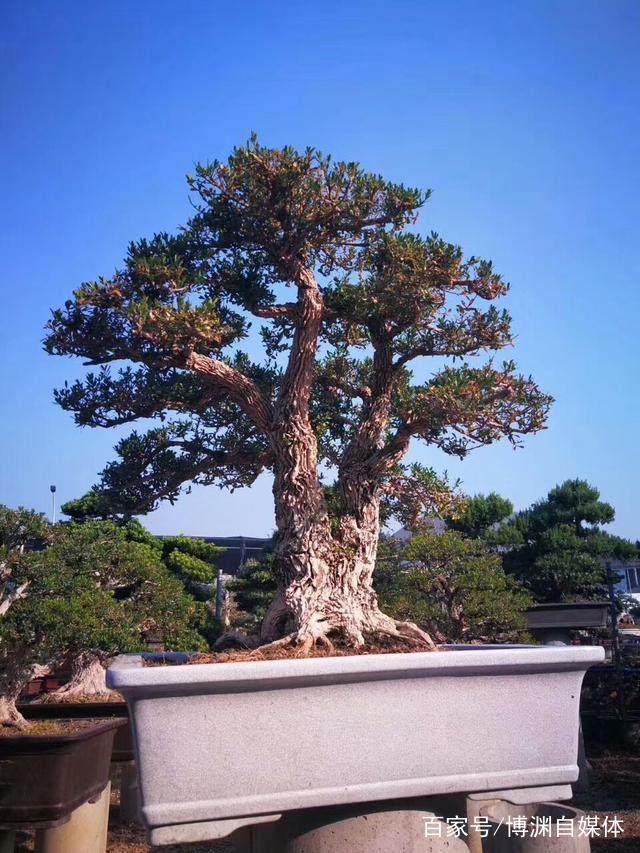
This article comes from Hongdou Xiaopu's understanding of bonsai. Time is the art of bonsai; time can turn a poor stump into a fine specimen, and time can also turn a good stump into waste. Hold your heart steady, control your hands, stay true to your original intention, keep moving forward without giving up, and let time bear witness to your efforts. Perhaps a miracle lies in some future day. Enough idle talk, let's go straight to the pictures and see examples!
Too many friends are unwilling to use time to accumulate results (I was once the same), but later I discovered that a tree stump I had spent several years on had become a chicken rib. If those years had been spent waiting patiently, the outcome would have been completely different. From the examples below, let's see how bonsai are grown. A very ordinary tree stump, a very ordinary tree species. Perhaps you cannot grow it into a decent bonsai, but others have done it. What was missing? What was missing was time, and patience.
Example One:
This is a tree stump from 2000. Tree species: Tangli pear (Pyrus betulifolia).
Its appearance at the end of 2006.
Styling began in early 2007.
The base was hollowed out to add a sense of age.
This is how it looked in 2012.
Example Two
A tree stump from 2001, already grown in a pot for 1 year. Tree species: Shanlihong, also known as wild hawthorn.
Tree appearance in 2003.
Tree appearance in 2006.
Tree appearance in 2009.
2017.
Example Three
This stump shows its appearance after 2 years of pot cultivation. Its initial collection from the mountain was in 2005. Tree species: Shanlihong. (If grown in the ground, one year can be shortened.)
Pruning and styling began at the end of 2008.
Spring 2009.
Late autumn 2010.
May 2011.
The cultivation of stump bonsai condenses countless efforts and long stretches of time. Many bonsai enthusiasts obtain a collected mountain stump and cannot wait to ask someone to design its styling, yet the branches a stump produces often will not be as ideal as you imagine. Therefore, bonsai styling should change according to changes. Bonsai design can only be a reference. Following a diagram to seek a horse, proceeding step by step, often makes the path narrower and narrower, wasting precious time in vain.