Is it really unfair when succulents die from scorching sun exposure?
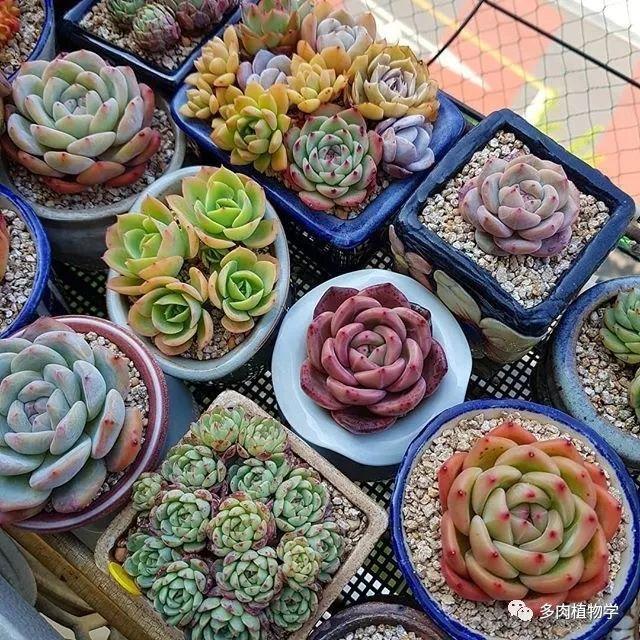
When spring has just arrived, many succulent growers are already starting to worry about getting through the summer.
The season when the most succulents pass away in a year is - summer.
First, we need to understand what scorching sun exposure is.
Literally, it means: exposing to intense sunlight, leaving something exposed under the sun to dry.
Placing an object under the sun to dry it.
Succulents do indeed love sunlight. Under intense sunlight, the leaves of succulents appear crystal clear, and their colors become very bright and vivid, so we mistakenly think that exposing succulents to such sunlight is a way to make them feel comfortable.
Many succulent growers calculate how long their succulents are directly exposed to the sun, and even move their succulents to follow the sun.
Succulents exposed to scorching sun in summer either get sunburned or die, because it really is too hot!
Not all succulents are as heat-resistant and sun-resistant as the Cactaceae family. Many Crassulaceae succulents are native to highlands and mountains where it is not so hot.
In late spring, summer, and early autumn - these three seasons are when succulents are most likely to be injured or killed by scorching sun exposure.
Summer, because of the hot weather and strong sunlight;
Late spring and early autumn, because most succulents have gone through summer and winter shade and indoor treatment, and when they suddenly receive overly intense sunlight, they easily get sunburned.
When summer comes, even those experienced growers who keep their succulents outdoors year-round may run into problems, let alone those succulents spending their first summer at your home this year.
Avoid the following 4 situations, and your succulents will not die from scorching sun exposure:
1. Provide shade at the right time;
2. Do not let water get on the leaves when watering;
3. Do not let water accumulate between the leaves, as it easily leads to sunburn spots;
4. Do not let the soil stay moist, as it easily leads to waterlogging and even black rot.
After scorching sun exposure, the soil has already dried out, and the succulent enters a state of water deficiency, then photosynthesis weakens.
After photosynthesis weakens, sunlight becomes something superfluous for the succulent.
The succulent will consume nutrients to do things to resist sunlight.
If there is no sufficient water replenishment coming in, the succulent's cells will rapidly lose water, causing the succulent's leaves to shrivel.
At this point we will find that a strong root system is used to ensure the speed of water supply.
Sufficient water ensures the roots have water to drink.
Loose soil ensures the roots breathe smoothly and provides enough energy supply for cellular life activities.
Lush branches and leaves ensure the succulent can collect enough carbon dioxide at night.
Good ventilation ensures that when the succulent cools down through transpiration, water can smoothly evaporate out.
Which succulents should not be exposed to scorching sun?
Succulents with poor roots or those currently rooting should not be exposed to scorching sun (eg. succulents in the rooting or acclimation stage);
Succulents with very dry soil should not be exposed to scorching sun (eg. succulents lacking water);
When the soil is too wet and not breathable, do not expose to scorching sun (eg. succulents that have been overwatered);
Succulents with few leaves should not be exposed to scorching sun (eg. succulents that have just had leaves removed or old-stem succulents);
When air humidity is very high, do not expose to scorching sun (eg. after rain).
·END·
"Succulent Botany" - the most academic WeChat public account in the succulent field
Cute succulent news | Rare succulent photos | Succulent care tutorials | Disease research | Leaf propagation exploration
Cooperation WeChat ID 343660451