Grow your rubber plant this way for glossy, thick, vivid green leaves
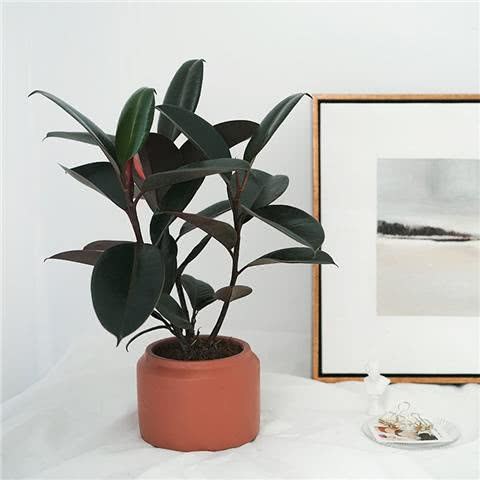
The rubber plant has thick, broad leaves in a deep green color that evokes a tropical feel, and it looks great when used to beautify indoor spaces. Let's take a look at how to grow a rubber plant!
Rubber plant care methods:
(1). Flower pot
You can use a clay pot, as clay pots have the best water permeability and breathability. For home greening, purple clay pots, plastic pots, ceramic pots, or clay pots with a decorative outer pot are commonly used.
(2). Potting soil
Choose loose, fertile sandy soil; avoid sticky soil, and it does not tolerate poor soil or drought.. You can use a potting mix of leaf mold, river sand, and garden soil in a 1:1:1 ratio. You can add a small amount of cake fertilizer at the bottom of the pot as a base fertilizer.
(3). Light
The rubber plant needs to receive sufficient light as it grows, and it is also fairly shade-tolerant. Generally, place it in a spot with plenty of sunlight.
(4). Fertilizing
For a normal plant, fertilizing 2 to 3 times a month is enough, but stop fertilizing in winter. The rubber plant is sensitive to nitrogen fertilizer; too much nitrogen fertilizer will cause the stem nodes to grow leggy and the leaf spacing to widen. During the peak growing season for young plants, apply a compound fertilizer once every 20 days, and add a small amount of potassium dihydrogen phosphate solution.
(5). Temperature
The most suitable growing temperature is 20~25°C; in winter, 5°C is enough for it to overwinter safely. If the temperature drops below 10°C, move it indoors promptly for care.
(6). Watering
The rubber plant likes moisture and does not tolerate drought, so there should be no standing water in the pot. For routine watering, just keep the soil moist, and mist frequently to maintain a certain humidity in the air. In winter, do not let the soil become too wet when watering; keep it slightly moist, otherwise root rot may occur. In summer, the water demand is high, so water once a day and also mist frequently. Rubber plant leaves easily collect dust, so the leaf surface needs to be wiped frequently; this cleans the leaves and keeps them vividly green.
(7). Pruning
Pruning can generally be done in spring. Cut off diseased and weak branches as well, to avoid nutrient consumption and also to help with ventilation, so the plant grows better.