Succulent blooming is not necessarily a good thing; improper handling can easily cause the entire plant to wither and die
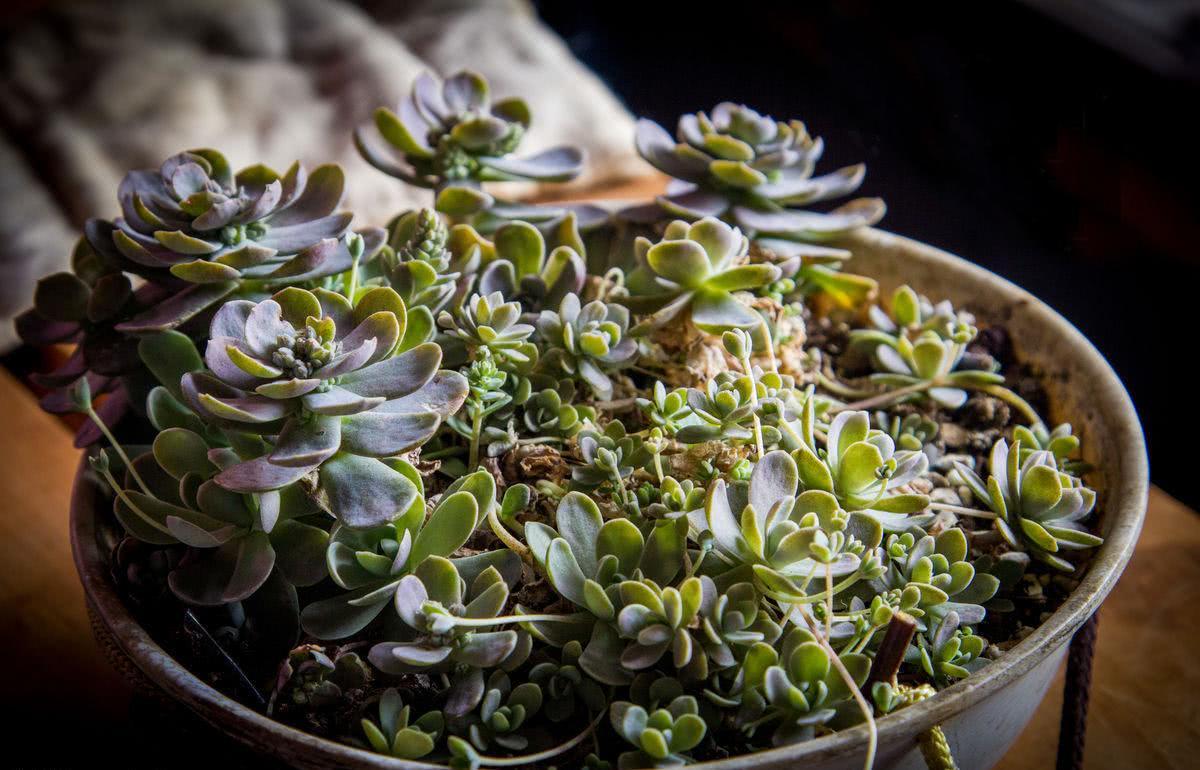
Succulent babies are deeply loved by everyone because of their cute and adorable appearance. But some succulent babies also bloom fairly pretty little flowers, yet do not think this is a good thing; some succulents blooming merely consumes the mother succulent's nutrients and does not threaten its life. However, some succulents die after blooming, so you must pay close attention when succulents bloom.
Those that die as soon as they bloom
There are not many succulents that die as soon as they bloom. Species such as Suxin Lotus (Sinocrassula indica) and Fuji are all types that die as soon as they bloom. Take Suxin Lotus for example: its leaves are arranged in a rosette shape, with a layer of vigorous white powder on the surface, and the leaf tips are pink, so plump and pink that people want to take a bite just looking at them. If you want to prevent death from blooming, you must immediately behead it when the flower buds grow out.
Blooming branches die
For succulents of the genus Aeonium such as Black Mage, when they bloom, they consume the succulent's own nutrients, and after the flowers fade the succulent becomes thin and weak, and the blooming branches gradually wither, but the death is limited only to the branches. So for succulents of the genus Aeonium, you can simply cut off its flower buds.
Blooming absorbs part of the succulent's nutrients
Succulents of genera such as Echeveria, Aizoaceae, and Pachyphytum all bloom very beautifully. Take Black Prince for example: when it blooms, it grows a long flower stalk and then blooms fairly gorgeous flowers, very pleasing to look at, and their blooming only consumes part of the succulent's nutrients, so it is still recommended to let them bloom and show off their beauty.