Water your gardenia with a little soy sauce water, and its leaves will stay emerald green while it blooms nonstop
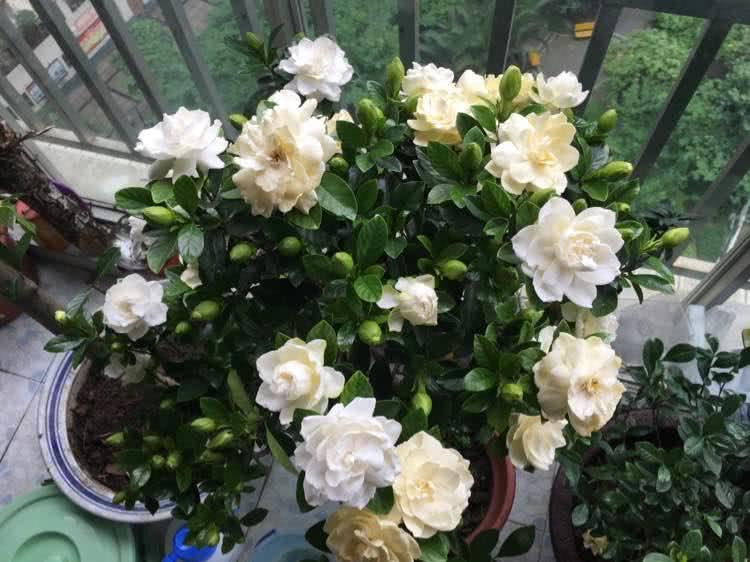
Gardenia, the birth flower of those born on March 19, has long been loved by flower growers for its pure white blooms and faint fragrance. Its flowering season is in summer and autumn, and it has strong resistance to harmful gases such as sulfur dioxide, chlorine and hydrogen fluoride, and can absorb sulfur from the air, so placing one in a corner of the kitchen to purify the air is quite a good idea.
For beginners, gardenia is not that easy to grow: either the leaves turn yellow, or the leaves are plump and green but it simply will not bloom. I think that to grow gardenia well, the following points must be done well.
1. Pot. Do not underestimate this flower pot: 50% of flower growers kill their plants because they do not know how to choose a pot, and every plant they grow dies. For gardenia, an unglazed clay pot is usually chosen, as it has good breathability and strong water permeability; the commonly used diameter is 12-25cm, and depending on the size of the plant, the pot should be changed every spring.
2. Soil. Fertile, loose, well-drained acidic soil is suitable; you can use a mix of potting soil, peat soil and sand, and add 10% decomposed cake fertilizer as a base fertilizer.
3. Watering. For potted gardenia, watering is the key point of care, and many people's gardenias either die of dryness or die of waterlogging. When you buy flowers, the flower shop owner will say "it is fine to water it every day" - that is just tricking you!
From April to September, water by the see-dry-see-wet rule; do not water every day, so as to avoid water-yellowing of the plant and yellow leaves. In July and August the weather is dry, water evaporates relatively quickly, and the soil tends to dry and harden, so depending on the soil condition you can water every day. When the summer temperature is very high, after getting home from work in the evening you can spray water on the leaf surface; when spraying, note that the nozzle flow should be a bit larger, do not use a mist spray, and do not spray onto flowers that have already opened; after spraying, make sure there is good ventilation.
If the clay soil is very hard to soak through, you can use a shower head to water slowly, or use a bottle and pour a little every 1-2 minutes until the water seeps out naturally. Or use the soaking method, placing the plant in a basin and letting the water soak in naturally. However, it is not recommended to use the soaking method for a long time, as it will cause the plant to lack oxygen, the salinity and alkalinity in the pot to rise, and the flowers are prone to flooding damage and the whole plant may die.
The most noteworthy point is to be clear about what kind of water to use. Rainwater is best; if there is no rainwater, use tap water. When watering, you can add a little vinegar or citric acid, which can strengthen the acidity of the soil, especially for friends in the north, since water in the north is alkaline. Gardenia is a typical acid-loving soil plant and grows most luxuriantly in slightly acidic soil.
4. Fertilizing. From April to October, aside from the flowering period, just topdress once a month. When fertilizing, note that if too much nitrogen fertilizer is applied, the branches will be thick, the leaves large and deep green, but it will not bloom; when phosphorus and potassium fertilizer are lacking, it will also fail to bloom or the flower buds will wither and drop. For gardenia, it is best to choose an acid-loving liquid fertilizer, which looks just like "soy sauce", all dark and murky.
In fact, this acid-loving liquid fertilizer is fermented from sugarcane molasses and is rich in nitrogen, phosphorus and potassium elements, which can promote flowering, and its trace acidic elements can also increase the acidity of the soil. If the soil is neutral or alkaline, the leaves will gradually turn yellow, affecting growth and flowering.