Grow jasmine in this kind of soil, and it will thrive with lush branches and leaves, blooming twice a month
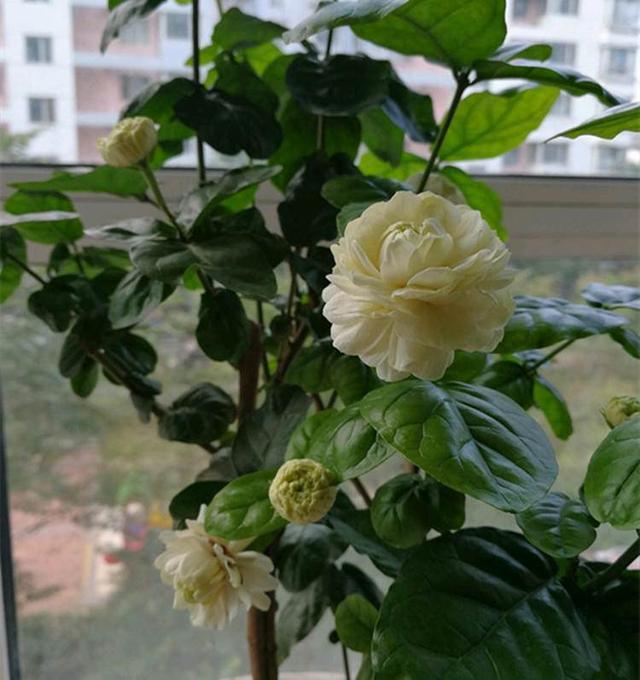
Many gardening enthusiasts report that jasmine is difficult to grow: some jasmine only grows branches and leaves without blooming; some jasmine is often in a state of thin branches and yellow leaves; some jasmine has branches that mysteriously wither and die. In fact, jasmine has strong adaptability and is not difficult to grow. The above problems are all caused by poorly mixed soil.
Growing soil is the foundation for jasmine's growth and blooming. Since potted jasmine is planted in potting soil, and the nutrients in potting soil are limited, this requires that the soil for potted jasmine contains rich organic matter; according to jasmine's habits, the soil also needs good water retention, drainage, and loose breathability. Gardeners can mix this kind of soil themselves:
The first type of soil
Place soil and plant-based materials (such as fallen leaves, vegetable peelings, fruit peels, green grass, rice husks, etc.) and animal-based materials (such as chicken and duck manure, barnyard manure, animal innards, feathers, fish scales, fish intestines, bone meal, water from washing meat and fish, etc.) in layers (that is, one layer of soil, one layer of plant and animal materials) in a jar, and compact it. After more than half a year of fermentation and decomposition, it can be used. If the soil feels too sticky and heavy, an appropriate amount of fine sand can be mixed in. The proportion of growing soil components is generally 4 parts soil, 4 parts compost, and 2 parts fine sand.
In addition, to satisfy jasmine's characteristic of liking fertilizer during growth, the fertilizer in the soil must be sufficient, and liquid fertilizer is also needed for topdressing during normal care. Generally, use an organic nutrient solution diluted 500 times, watering it once every 7 days. Just dilute it well and pour it directly onto the soil, and the jasmine will get comprehensive nitrogen, phosphorus, and potassium, growing rapidly.
The second type of soil
In winter, take the surface soil from rice paddies or vegetable garden soil, ditch mud, etc., subject it to freezing and sun exposure for a period of time, then crush it finely and mix it with rice husk ash. Use 7 parts soil and 3 parts ash. If gardeners do not have the conditions for this, they can use ready-made flower nutrient soil.
The third type of soil
Mix 7 parts scorched soil ash (that is, turf mud that has been piled up and smoked or burned) thoroughly with 3 parts clean water sand.
Among the above three types of growing soil, the first type, humus soil, has the best texture. If the latter two types of growing soil are used to cultivate jasmine, it is necessary to water the jasmine once every 7-10 days with an organic nutrient solution diluted 500 times to supplement the organic matter in the soil as a topdressing.
In addition, once the soil is properly mixed, growing jasmine also requires attention to pot selection. The size of the flower pot should be chosen according to the size of the jasmine plant. Do not use a large pot right from the start; instead, as the plant grows, switch to larger pots in sequence. Generally speaking, it is advisable for the pot diameter to be slightly smaller than the tree crown.