Why the name of the wolf's bane flower inspires fear
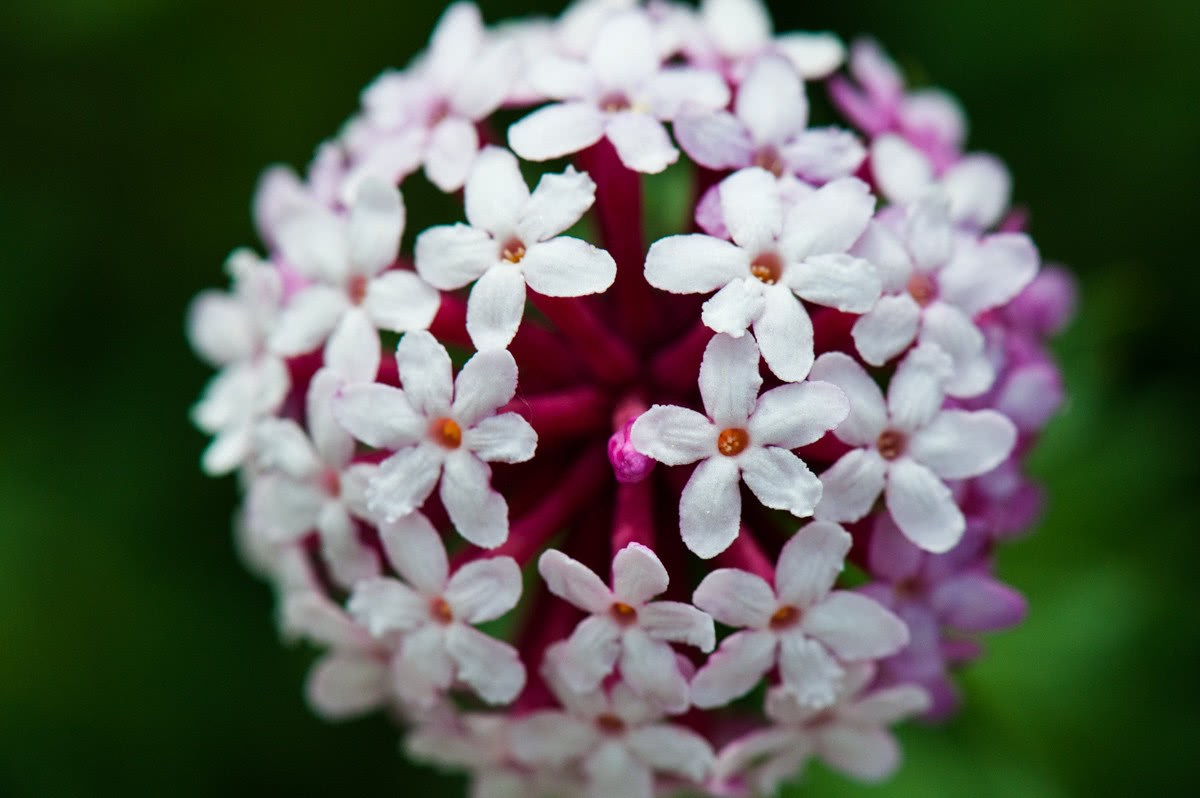
Stellera chamaejasme is a perennial herbaceous plant in the family Thymelaeaceae, genus Stellera. It can reach 40 cm in height. The root is cylindrical. The stems grow in clumps, smooth and hairless, the lower part nearly woody, brownish or pale red. The leaves are alternate, fairly densely arranged; narrowly ovate to linear, hairless on both surfaces; the petioles are very short. The capitulum is terminal, with numerous flowers; the calyx is often petal-like, white or yellow, tinged with purplish red, the calyx tube slender and tubular, the lobes spreading, oblong to obovate; the stamens are inserted at the throat; the ovary is superior, densely covered with fine hairs in the upper part, the style short, the stigma capitate. The fruit is ovoid, enclosed by the base of the perianth tube. It flowers from May to June. It grows in high mountains and grasslands. It is distributed in Northeast China, North China, Northwest China, Southwest China and other regions.
Stellera chamaejasme
Morphological characteristics:
Perennial herb, 20-50 cm tall; rhizome woody, stout, cylindrical, unbranched or branched, brown on the surface, pale yellow inside; stems erect, clumped, unbranched, slender, green, sometimes tinged with purple, hairless, herbaceous, woody at the base, sometimes with brown scales.
Leaves scattered, rarely opposite or nearly whorled, thinly papery, lanceolate or oblong-lanceolate, rarely oblong, 12-28 mm long, 3-10 mm wide, apex acuminate or acute, rarely obtuse, base rounded to obtuse or cuneate, green above, pale green to grayish green beneath, margin entire, not revolute or slightly revolute, midvein flat above, raised beneath, lateral veins 4-6 pairs, the 2nd pair extending straight to 2/3 of the leaf blade, conspicuous on both surfaces; petiole short, about 1.1 mm long, with a joint at the base, flat or slightly grooved above.
Stellera chamaejasme
Flowers white, yellow to purplish, fragrant, in many-flowered capitula, terminal, spherical; with green leaf-like involucral bracts; pedicels absent; calyx tube slender, 9-11 mm long, with conspicuous longitudinal veins, slightly swollen at the base, hairless, lobes 5, ovate-oblong, 2-4 mm long, about 2 mm wide, apex rounded, rarely truncate, often with purplish red reticulate veinlets; stamens 10, in 2 whorls, the lower whorl inserted above the middle of the calyx tube, the upper whorl inserted at the throat of the calyx tube, anthers slightly exserted, filaments very short, anthers yellow, linear-elliptic, about 1.5 mm long; disk developed on one side, linear, about 1.8 mm long, about 0.2 mm wide, apex slightly 2-lobed; ovary elliptic, almost sessile, about 2 mm long, 1.2 mm in diameter, upper part covered with pale yellow silky pubescence, style short, stigma capitate, apex slightly covered with yellow pubescence.
Stellera chamaejasme
Fruit conical, 5 mm long, about 2 mm in diameter, with grayish white pubescence on the upper part or apex, surrounded by the persistent calyx tube; seed coat membranous, pale purple. Flowering period April-June, fruiting period July-September.
Economic uses: Stellera chamaejasme is highly toxic and can be used to kill insects; the roots can also be used to extract industrial alcohol, and the roots and stem bark can be used to make paper.
Medicinal uses: the root is used as medicine, with the functions of eliminating phlegm, resolving food stagnation and relieving pain; applied externally, it can treat scabies and ringworm.