Are succulents toxic, and can they protect against radiation? Don't be too quick to believe these claims
Recently, the editor has seen quite a bit of information circulating online. Some say succulents can absorb formaldehyde in the home and purify the air, while others say succulents are toxic and should not be placed beside the bed. As for this information, the editor wants to have a say.
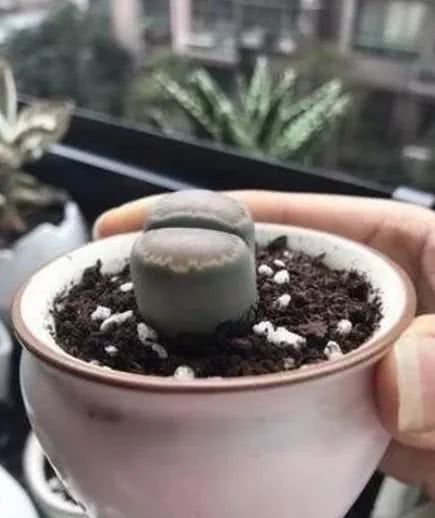
The claim that succulents are toxic does not apply to all succulents. Relatively few succulents are toxic. The common ones are dragon bone (Euphorbia lactea), Kirin palm (Euphorbia neriifolia), pencil cactus (Euphorbia tirucalli), and crown of thorns (Euphorbia milii). These few cause an allergic reaction after contact with the skin and are generally not sold to the public on the market. Most of the remaining succulents are not toxic, and some countries even use them as food, such as South Africans eating Lithops and Koreans mixing them into pickles.
As for succulents protecting against radiation, that is a complete distortion of the facts and merely a gimmick used by merchants. Flower lovers should not be fooled. Succulents are actually not rare; they are just hyped up by exaggerated advertising. Succulents are simply a good choice for ornamental viewing. Using succulents to protect against radiation is truly a bit superfluous. Computer radiation is even directional, so how could a tiny succulent protect against radiation?
The common plants we see can basically all absorb formaldehyde, but the effect is tiny and almost negligible. However, there are several kinds of succulents whose ability to absorb formaldehyde is very good, with absorption even reaching 80%.
For example, Thousand Buddha Hands (Sedum pachyphyllum) and aloe.
Thousand Buddha Hands can purify more than 80% of indoor toxic gases and is also very strong at absorbing formaldehyde, making it a must-have choice for a newly renovated home.
Aloe can purify as long as there is light, and can absorb 90% of toxic gases within one sq m. Aloe's absorption of formaldehyde is mainly reflected in the adsorption effect of its leaves and stems on formaldehyde. The market price of aloe is relatively cheap, so you can buy several pots and place them at home, making them a natural, free purifier.
Whether succulents are toxic still depends on the variety. Most are not toxic, while a small number are toxic and can cause allergic reactions in people; as for protecting against radiation, that is even more absurd.