What are the ways to tell whether a fish has eaten its fill?
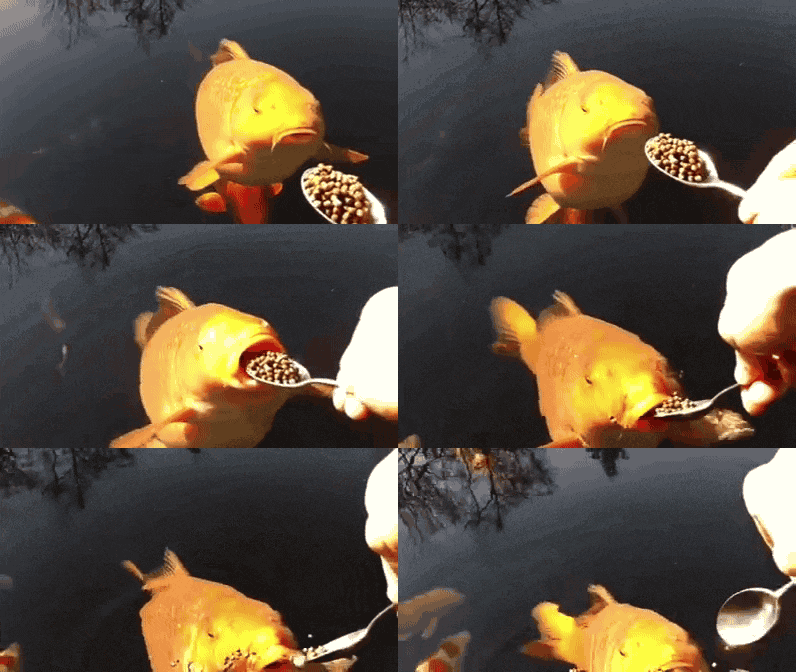
In the process of keeping ornamental fish, I believe a large number of fish keepers cannot correctly judge how much food is appropriate for their fish, so that the fish are sometimes full and sometimes hungry, their growth rate is less than ideal, they are prone to diseases, and the ornamental effect of the fish is also less than satisfactory. So how can you tell whether a fish has eaten its fill?
Fish live in water, so it is not easy to observe how they eat, and some fish are extremely greedy. If you do not master certain scientific methods and do not understand the water environment and the feeding habits of the fish, you cannot correctly determine the feeding amount for the fish you keep. Here are a few suggestions for everyone.
I. Judging whether fish are hungry or full
1
Look at how long it takes them to eat
If the food is finished in about 10 minutes after feeding, that is normal. If the feed is snatched up the moment it is scattered, that only shows it was not enough and some of the fish did not get their fill; you can feed a small amount of feed again, or appropriately increase the amount at the next feeding. If it is extended to 30 minutes and they still have not finished, while the school of fish has already left the feeding spot, you can appropriately reduce the amount at the next feeding. Then scoop out the excess feed. If this excess feed stays in the tank all along, the fish will not really go and eat it. I believe that if it were a person, they would not like to eat food that has already gone bad after a meal, right? Moreover, this leftover feed food will be decomposed and produce some substances that are bad for the fish, and may even turn into toxins, so never let this leftover food pollute the fish's living environment!
2
Look at the size the fish have grown to
Every summer, after young fish start feeding, their food intake increases day by day. In a one-week or ten-day feeding plan, you need to observe the changes in each period. If the amount fed is the same every day, and by the weekend or the end of the ten-day period they finish it within 10 minutes, that shows the fish's body weight has increased, and in general this can also be seen by eye. As young fish grow into big fish, their food intake is also gradually increasing, and you can refer to point 1 above to increase the feeding amount.
3
Look at the movement on the water surface
In particular, if after feeding the fish are not sick but frequently move about on the water surface, this is a sign of hunger; conversely, fish that have eaten their fill will leave and swim about. Especially if young fish or small fish swim wildly in groups only at the water surface, this is a sign of a serious state of hunger, commonly known as "horse-running disease". You must feed immediately and stop the wild swimming, otherwise there will be mass deaths. If they are fat-water fish that mainly feed on plankton, you can observe whether the water quality is rich or lean to judge whether it meets their growth requirements. When the water quality is lean, use fertilization to cultivate plankton; if the water quality is too rich and oxygen deficiency and gasping at the surface appear, then immediately change the water and increase aeration, and when necessary splash insecticides such as trichlorfon to kill zooplankton, which is what benefits their growth.
II. Prevent uneven hunger and fullness, and achieve the four fixeds in feeding
You cannot feed whatever you have, however much you have, and not feed when you have none. As the fish saying goes, "Stop feeding for 1 day, and 3 days of growth are wasted." Some fish keepers may be too busy with work to attend to normal feeding of their ornamental fish, and may stop feeding for as many as several days; or they use an automatic feeder to put feed in a concentrated small area, especially when fish are kept in groups, causing the beloved fish to eat unevenly and grow unevenly, which affects the healthy growth of the fish. Feed that has been opened must be stored tightly and kept in a cool, ventilated place. If the feed has already gone moldy, it must never be fed again, because moldy feed will cause fish to become ill and may even kill them. Therefore, if you want to learn scientific fish-keeping techniques, you must first learn to identify whether fish are hungry or full, and persist with the "four fixeds" feeding method of fixed quantity, fixed quality, fixed location and fixed time. Only in this way can you raise fish well and make a big fortune.
That is all for today's content. I hope it can help everyone. If there are any shortcomings, I welcome everyone's advice.