Detailed explanation of miniature bonsai production methods and key points of each stage
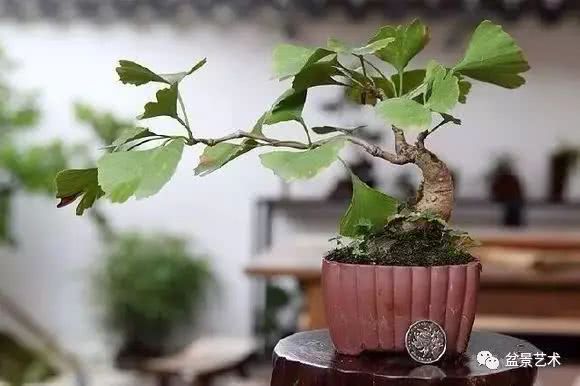
Miniature bonsai is a distinctive type of bonsai made by processing miniature tree stumps or rocks. It is small enough to be placed on the palm, so it is also called palm bonsai. The bonsai has a tiny form, is exquisite and ingenious, lively and varied, and highly flexible in arrangement. It can be paired with tiny stands and placed on a desk for people to admire, or grouped together on a curio shelf to recreate the majestic appearance of nature.
Plant materials
To make a miniature bonsai, the first step is to choose suitable plant materials and pair them with finely crafted, beautifully shaped pots such as purple clay or white marble. The plants in miniature bonsai should not exceed 10 cm in height. The selected plant materials should have characteristics such as small leaves, thick and short trunks, strong adaptability, tolerance to pruning, and ease of shaping, such as Serissa japonica, Ulmus parvifolia, Sageretia thea, Carmona retusa, Gardenia jasminoides 'Radicans', Podocarpus macrophyllus var. maki, Buxus, Caragana sinica, Punica granatum, Berberis, Cycas revoluta, Ficus microcarpa, Bambusa multiplex, small chrysanthemum, Diospyros cathayensis, Pinus thunbergii, Bambusa multiplex 'Alphonse Karr', dwarf Asparagus setaceus, and Adina rubella.
Shaping techniques
The best time to shape the plant is from after the beginning of winter until before the plant buds in the following spring. Before shaping, one should conceive and design according to the characteristics and posture of the planted tree and determine the shaping method. Generally, in a tall cylindrical pot, it is suitable to make a semi-cascade or full cascade style; in a rectangular or oval pot, it is suitable to make an upright trunk or slanting trunk style. The main trunk is the primary part of miniature bonsai shaping. If it is determined to be upright trunk style, then no wiring is applied, keeping the trunk straight and upright and cultivating side branches, such as Ulmus pumila and Acer buergerianum; for slanting trunk style, the main trunk is also only planted at a slant without wiring, such as Sageretia thea and Malus spectabilis; for cascade style, lead wire must be wrapped around the main trunk to bend it into shape, such as Serissa japonica and Caragana sinica.
The branches and leaves of miniature bonsai should not be too dense. Generally, 1 to 2 branches are kept. The shaping should focus on simplicity and smoothness to fully display its natural beauty. For messy branches that hinder the shaping, such as crossing branches, parallel branches, opposite branches, radiating branches, and reverse branches, they should be thinned or shortened so that the branches are orderly in density, clearly layered, and moderate in height. For species with relatively strong root systems, such as Caragana sinica, Jasminum nudiflorum, and Ulmus pumila, the roots can also be exposed above the pot surface when planting to increase the aged appearance of the bonsai.
Rock arrangement
Miniature landscape bonsai often uses stones with beautiful textures and natural forms as materials, such as petrified wood, stalactite, reed tube stone, and pumice. White marble, white jade, and alunite are processed into rectangular or oval shallow pots. The bonsai shaping usually uses the high-distance style, and the flat-distance style is not suitable. Too many rocks should not be placed in the pot, but there should still be a main peak, secondary peak, and accompanying peak. A small accessory of appropriate proportion can be placed to set off the height of the rocks.
The creation of miniature bonsai pays more attention to expressing overall artistic beauty. The decorative pieces in each bonsai group need to have different forms, and attention should be paid to the overall layout.