How to dwarf black pine seedlings? Bonsai teaching methods for you
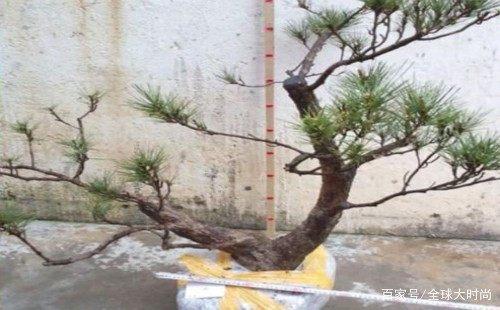
Black pine is not as tall as other tall tree species in the field, but if it is to be made into a bonsai tree, it is often not suitable for the tree's shape to be too tall. However, the ornamental value of black pine bonsai is very high, but as a potted plant, we often need a certain amount of dwarfing treatment, even when it is stacked down, it is no exception. Therefore, the dwarfing treatment of Pinus thunbergii is usually the first problem we deal with.
Wild-quality Pinus thunbergii is rare, especially short stumps suitable for potted plants. Even if a suitable short stump is found, attention must be paid to the methods and techniques during the digging process, otherwise it will affect the survival rate due to improper operation. Therefore, how to ensure the survival rate during the excavation of black pine is also very important. At the same time, digging short stumps is also a way to achieve dwarfing of Pinus thunbergii.
But before digging black pine stumps, we need to choose a suitable excavation time in advance. This is also the primary condition for improving the survival rate of black pine stumps. It is usually carried out in autumn, and if the soil is dug, it is conducive to improving the survival rate. However, mining areas are often affected by the regional environment. Taking the Jianghuai area as an example, it is usually suitable for the cold season and the rainy season. Other areas can grasp it earlier or delay it according to local actual conditions.
Usually the digging time is during the dormant period of Pinus thunbergii, when the tree's growth factors are still in a calm state. But once the temperature rises, the short stump may quickly regain awareness and resume normal growth. This is very unfavorable for wound healing and the sprouting of new roots during the excavation of old stumps.
But if the excavation is carried out early, the old stump has been in deep dormancy for a long time. At this time, the wounds caused by the tree's roots are difficult to heal and will die. Even if the downhill stump is successfully laid in the pot, its survival effect is worrying. Most important branches appear dry and withered, the growth condition is poor, and the cultivation value is lost.
Of course, digging too late is unwise, because the tree's sap circulates normally after the temperature warms, and the stump revives and returns to a normal growth state. At this time, too much damage is caused to the tree's roots, the wounds do not dry, and rot occurs during healing. At this time, it is exactly the active period of pathogens, so it is easy to infect the wounds, and it is also unfavorable for the survival of the stump.
In order to improve the survival rate of downhill stumps, not only must a suitable time be chosen, but caution must also be exercised during the excavation process. It is recommended to use the soil ball excavation method, which is an important factor in improving the survival rate of dwarfed black pine stumps. Of course, if it is sandy soil, we can use no soil ball or less soil. For black pines over 3 years old, if the soil is sticky, even if the soil ball is taken away, it is not easy to survive. Therefore, soil ball excavation is a necessary means to improve the survival rate.
The smooth transport of black pine short stumps is also very important. Usually too many branches need to be cut off to facilitate transport, but at the same time avoid excessive moisture loss. Therefore, usually before transport, we need to wrap the short stump and soil ball with plastic film. If necessary, we also need to wrap the main parts in plastic bags.