Detailed illustrated example of short-needle bud cutting for black pine bonsai, worth saving
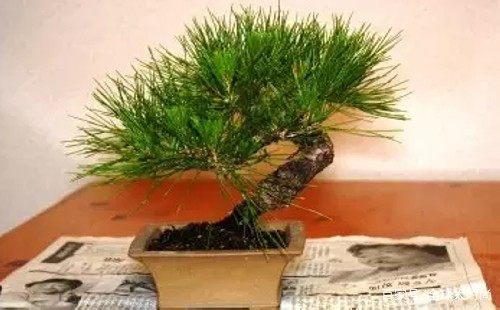
Black pine produces new buds during its spring growth process, but for various reasons, the buds may be uneven, differ from one another, or grow long. Excessive growth is often called a "strong bud," while weak growth is called a "weak bud." In addition, strong seedlings and weak buds show different lengths in later growth, which will seriously affect the beauty of the bonsai. Today, Xiao Bian will share with everyone an example of short-needle bud cutting for black pine.
To make black pine needles neat and beautiful and make the bonsai more ornamental, it is usually necessary to prune it appropriately. Before cutting the buds, we need to classify the buds according to the two different growth states, strong and weak, as well as the intermediate state, and then keep the bud cutting consistent with this.
1. Strong buds: usually there are 4 layers of pine needles around the branch, and each layer usually has 4-6 pine needles.
2. Weak buds: usually only one layer of pine needle buds, generally with 4-5 pine needles, and those showing poor bud development are often the most disadvantageous buds.
3. Intermediate buds: intermediate buds, of course, are the buds between strong buds and weak buds.
However, it should be noted that if multiple buds sprout from one position, buds such as axillary buds are usually classified as strong buds. Therefore, we need to carry out bud treatment in time, but for disadvantageous buds born in one year, buds are usually not cut in that year, but you need to wait until the next year for bud cutting.
We first deal with the intermediate buds, that is, use sharp scissors to cut off the roots of the newly sprouted buds, and pay attention to keeping the cut as much as possible. This is the state after bud cutting.
After the first round of budding, one week later, the two buds begin to fall off. The part at the tip of the scissors is where the two buds emerged.
After confirming that the two buds have basically emerged, we cut buds in the second round, but at this time the target is strong buds.
By first cutting potential buds and then cutting strong buds, while not cutting disadvantageous buds, it can be ensured that the pine needle buds basically reach a balanced state. Because the first growth of the weaker intermediate buds can stimulate the plant to sprout twice quickly, nutrients will not be disrupted by the strong buds. When the dominant buds are cut and sprout two buds, the weak buds begin to maintain normal growth. At this time, the dominant buds have been effectively controlled, while the weak buds return to normal growth. Therefore, it can play a very good role in the whole tree of the black pine bonsai and the length of the bonsai. It not only meets the growth needs of the potted plant, but also improves the ornamental quality of the bonsai.