How do you do bonsai wiring? Methods and techniques explained clearly in one article, worth saving
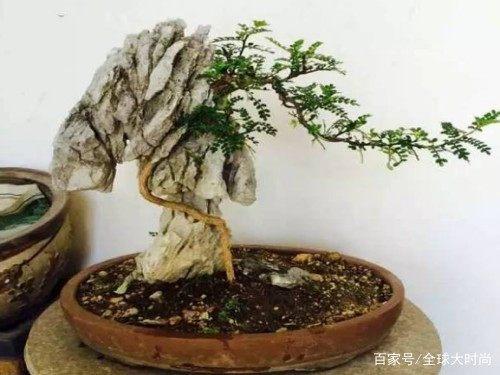
Bonsai of different shapes are the ultimate pursuit of enthusiasts. The unique branches and leaves are climbing and ascending, with a vivid and lively spirit, giving the bonsai different vitality. It is like an old man telling you the twists and turns of his life. Bonsai is an ancient gardening technique. It is both ingenious and complex and varied, with particular methods. Due to differences in materials and methods, wiring is divided into brown silk and metal wire.
1. Brown silk wiring
In ancient times, wiring referred to palm fiber. The use of wire wiring only developed in recent decades. The wire should be soft, elastic, uniform, and of greater length and thickness. The advantages of brown silk binding are: the color of the brown silk is similar to the bark color of many plants, so the traces are not obvious. It can be viewed after the tree has recovered, and it has the characteristics of low cost, no heat conduction, no damage to the tree, and easy dissolution. At present, this method is often used in Yangzhou, Suzhou, Chengdu and other places.
The common methods of palm fiber winding include covering, palm fiber, and palm fiber.
To prevent the trunk from breaking, the bar should be lined with flax tendon and wrapped in flax for protection. Because the trunk is thicker, the required degree of bending cannot be achieved at once, so it can be divided into multiple steps, allowing the plant a process of gradual adaptation. After the first bending, tighten the brown rope, and after about 10 days increase the degree of bending, and so on.
2. Wire tightening
Commonly used wires include iron wire, copper wire, and lead wire. Before use, the wire should be burned in fire to anneal it, making it low in hardness and easy to bend; after burning, place it on the ground and let it cool naturally, without pouring water on it, otherwise the wire will become hard. Before pruning, first prune the tree and remove unnecessary branches for the operation. The following points should be noted for metal wire.
1. Choose thin and suitable metal wire. The thickness of the wire is generally better at 1/3 of the base of the support. If it is too thick, the winding is not flexible, not attractive, and the branches are easy to break; if the rule is insufficient, it cannot be wound into the required bend.
2. Fix the starting point well. When the wire is tied, whether the starting point is fixed or whether the fixing method is appropriate will have a great impact on success. If the starting point is not fixed, the wire will slide on the branch. In addition to bending strength, it will also damage the bark of the active part. The fixing method should be flexibly mastered according to the specific condition of the branch. Commonly used methods include the soil insertion method, the pressure buckle method, the knot method, the hook method, the dead branch method, the double branch method, and so on.
(1) Single wire grounding method (2) Buckle method (3) Knotting method (4) Hook method (5) Dead branch method (6) Double wire soil method (7) Double branch method.
3. Master density and direction. After fixing the starting point, hold the wire and trunk with the thumb and index finger so that the wire and branch form 45 degrees, and wrap the bark tightly with the wire. The density of the winding should be appropriate; too dense or too sparse, or uneven density, will make the winding effect unsatisfactory. At the same time, we should also pay attention to the direction of the wire winding. If you want to bend the branch to the right, the wire should be wound clockwise; for example, to the left, the wire is twisted counterclockwise.
(1) To bend left, the gold wire should be in a counterclockwise direction (2) To twist right, the gold wire should be turned clockwise.
(1) Gold wire winding density (2) Double wire winding (3) Bending after gold wire winding.
4. Double wire winding. In the case of thick branches, if there is no thick metal wire on hand, double wire winding can be used to strengthen the pulling force. Sometimes the trunk is paneled with wire. Two branches close to the trunk are coiled with another wire. The trunks of these two branches are double-wired. The wire in the trunk must be in the same direction as the original wire of the trunk.
5. The order of wiring. In the order of wire coiling, the main trunk and branches should be connected first. The order of branches should be lower branches and upper branches.
6. The method of bending. When the winding is completed, if the trunk needs to be bent, first bend the trunk, then bend the branches, proceeding from bottom to top. When bending, do not apply too much force to prevent the branches from breaking. Make the inner side of the bend without wire, and the outer side exactly on the wire, which can protect the branch, and the bent branch is not easy to break.
7. Full binding and half binding. Full binding is to wrap the trunk and branches together, while half binding is when the tree trunk already has a certain shape and does not need binding.
8. Adjusted wiring. After completing the branch bending, we should proceed from the whole, focus on both near and far, and make some adjustments to unsatisfactory shapes. If the branches are too long and the tree is not attractive, the branches can be bent shorter to achieve the desired effect.
Wire wiring has advantages and disadvantages. Bonsai trees have different perspectives, whether brown silk or wire. If it is easy to master, efficient, and quick to take shape, wire is superior to brown silk.
(1) Easy to master. To master the methods of palm wrapping, hanging, pulling, and hanging, it is impossible to learn in a short period, and it is difficult to do even in a few years or longer. For beginners and amateur bonsai enthusiasts, this would be undesirable. The wire wiring process is simpler than the brown silk binding process. As long as the starting point is fixed, the density and direction of the wiring, the bending force point, and so on can be well mastered, and bending modeling can basically be carried out according to the concept.
(2) High efficiency. Taking a medium-sized bonsai as an example, this process is similar to the wiring process, and compared with the work efficiency of brown silk, it is improved by more than two times. At present, commodity competition is fierce, and low efficiency and high cost are not cost-effective. Therefore, bonsai producers usually use wire to produce goods.
(3) Rapid shaping. Metal wire has great mechanical strength and can be bent freely. The heat conduction of metal wire is harmful to tree growth. But because of its heat conduction, it can accelerate shaping. Therefore, some thin-barked trees should be treated with caution. Small and medium-sized trees are usually formed after one or two years of bonsai wire. The disadvantage of wire wiring is that it is not attractive enough and is more complicated to remove than brown silk.
3. Thick trunk bending method
Most trunks or branches are obviously bent or hardened, and whether brown silk or metal wire is used, the result is mostly unsatisfactory. There are many ways to bend it. It is simple and easy, and the best method is the curved knife. The rotary knife method is to use a sharp knife to cut through the branch at the place where the tree is to be bent. The cut is 3 to 8 cm long (long for the trunk, short for thin branches). First wrap the wound with skin or brown silk, then bend it. This not only makes bending easy, but also makes breakage unlikely. Whether using brown silk, steel wire, or thick bending, the following principles should be followed:
1. Carry out bonsai wiring during the dormant period or slow growth period. For deciduous trees, it is best before budding, usually in early spring or late autumn.
2. Wiring should be carried out when the pot soil is dry. For example, if water has been poured or it has rained, it will be delayed. Because the fixing force of the roots is weakened, root damage is often caused.
3. Wiring is not good for tree growth. Therefore, potted trees that are not growing vigorously or have just been repotted should not be wired.
4. The binding time should be mastered according to different species of trees. For Yingchun, soft-branch trees, June snow, pomegranate, and so on, it should be longer, and should be removed within 2 to 3 years. If the wire is removed too early, the branches will not be fixed and will spring back; although they are bent, the result is not ideal.
Under natural conditions, the bending and tendency of most residual branches cannot be satisfactory. Only by using wiring techniques can comprehensive adjustment be carried out. Brown silk is connected with a certain level of basic skill. Enthusiasts find it very convenient to use wire. It is best to choose wire of suitable thickness, suitable for 1/3 of the base of the branch. Too thick and it is not flexible, and it is difficult to bend or damages the bark of the branch; too thin and it cannot hold the shape.
It is very important to fix the wire at the starting point. It is bad if it rotates on the branch and damages the bark. The bending strength is not fixed; concrete conditions are flexible and easy to apply. Master density and direction, divide the wire and branch at 45 degrees, keep close to the branch, and use appropriate density; too dense or uneven, the effect is unsatisfactory. Sometimes, when the branch is thicker, the wire cannot achieve the bending effect. Double wire winding can be used to strengthen the direction of bending strength. One step.
Wire is easy to master; as long as the starting point is fixed well, the density, direction, and bending force point are well mastered. Basically, the shape can be bent at will, the work efficiency is high, the wiring is in place, and the shaping speed is fast.
Skilled wire wiring techniques can give you more space to create or polish bonsai. The use of binding techniques can change the growth direction of branches or trunks, for example, bending upward-growing branches, or bending the branches of young trees to create a sense of age, or supporting and modifying new branches. Although the best time for wire binding is theoretically at any time, it can be done better in certain seasons.