Bonsai Tutorial: Air Layering Propagation Method for Buddhist Pine (Podocarpus macrophyllus) - Worth Saving
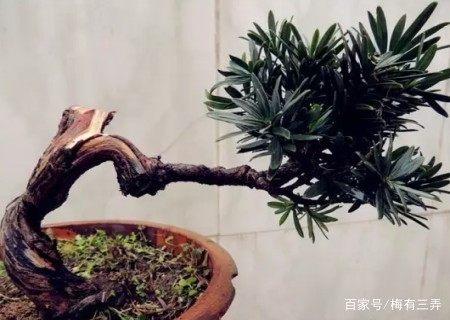
It has a strong spirit of arrogance, as well as the meanings of "longevity" and "keeping wealth and good fortune" in Chinese culture. Owners pursuing high-end garden landscaping often like to plant one or two Chinese pines (Pinus tabuliformis) to create their own "garden style" and add a masterly touch. As a slow-growing tree species, the Chinese pine cannot be propagated quickly, especially large-scale and beautifully shaped specimens. It is understood that on the market, engineering seedlings with a diameter of 10 cm or more mainly rely on imports.
Do Chinese pines need 2 cm rings? In fact, air layering is usually carried out after the high temperatures of spring and after hot weather. It is important to pay attention to the balance of supply and demand in the plant. It is best to use branches of softwood shoots that grow faster, remove most of the branches and leaves, and use a sand bed to cultivate roots faster, and pay attention to shading and moisture retention, and rooting takes about 2-3 months.
Air layering is a good way to obtain material quickly. Compared with cutting propagation, air layering can shorten the time. This is a common choice for ordinary enthusiasts.
The principle of air layering is to use the plant's cambium to produce callus tissue in the damaged or stimulated area. This tissue has regenerative ability and can fill in the missing parts of the plant, such as xylem, phloem, roots, stems and other tissues.
By girdling the branch, the cambium will be damaged to form healing tissue. For the upper part of the plant, there are no roots, so the healing tissue will be triggered to grow roots.
When the plant's water is transported through the xylem, as long as the mother plant at the lower part of the plant grows normally, it can normally supply water to the air-layered plant and will not die, so the success rate is high.
However, there are still some noteworthy problems:
First, the length of the girdling cannot be too small. For those fast-growing varieties, it is easy for the upper and lower parts to heal together, and roots cannot reach the mother.
Second, the higher the upper air-layered plant grows, the more organic matter it accumulates, the more energy it accumulates, and the more energy it accumulates, the faster it roots. Therefore, the upper part usually needs to sacrifice branches, and air layering usually takes place in spring and summer.
Third, the lower part of the mother plant is cut off due to the phloem and cannot obtain organic matter. If the time is too long, it will be exhausted. This will lead to "starvation." In this way, not only will the mother plant die, but the air-layered plant will also not get water and will die. Therefore, the way to solve this problem is to use an independent seedling on the mother plant to provide organic matter, or to provide water with an independent seedling on the air-layered plant.