Pyracantha bonsai pruning and wiring technique tutorial, easy to learn at once
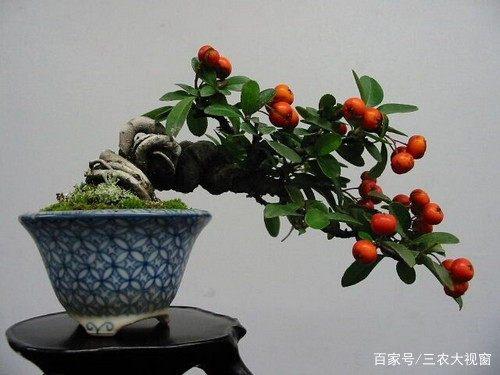
Pyracantha bonsai has very strong vitality; old stumps are collected from the fields. The branches are very strong, but the twigs are weak, that is, almost every bud sprouts in spring, but only 1 to 2 buds can be drawn out into 45 cm long branches. The branches of the year are flexible and can be bent at will. Even if they make a little noise, there will not be a big problem. It is very tolerant of pruning and can be pruned at any time.
Pyracantha cuttings grow at the tip of the bud, and the shoot can reach 1 m. Pyracantha pruning and trimming. The first two years are mainly for thickening.
The new branches of a new stump are not pruned; the growing branches, in order to avoid breaking and flattening the back, can be bent according to the outer shape, then pruned the next year, first branching and then pruning.
The new stake should be regarded as a point; thin twigs are smaller than the main branches, and it is impossible to leave only one new branch.
The appearance of Pyracantha should be characterized by the features of the stump blank and the features of Pyracantha; the branches should not be too dense, too crowded, or opaque.
Pyracantha forms quickly, becoming popular in 3 to 4 years, and can be based on the burl; in spring and summer there is a new branch growing, and in order to make the crown stand evenly, it is often pruned and buds are picked.
When plants that do not bear fruit are pruned in spring, the long branches, weak branches and dense branches are cut off, leaving branches that can bloom, and ensuring that the fruiting branches can enjoy full light.
In late autumn, the tree shape after pruning is equal to the tree shape of the next year. Because when new branches grow the next year, they will bloom and bear fruit; assuming they are not pruned in autumn, next year's flowers will be on the front-end branches, and then the fallen fruiting branches are cut off.
The branches can be cut at any time, the canopy of the plant remains unchanged, and the fruit hanging on the tree is on the outer layer of the crown. After the fruit turns red, the fruit is at its best.