Watering your plants once every three to five days? No wonder your flowers never survive
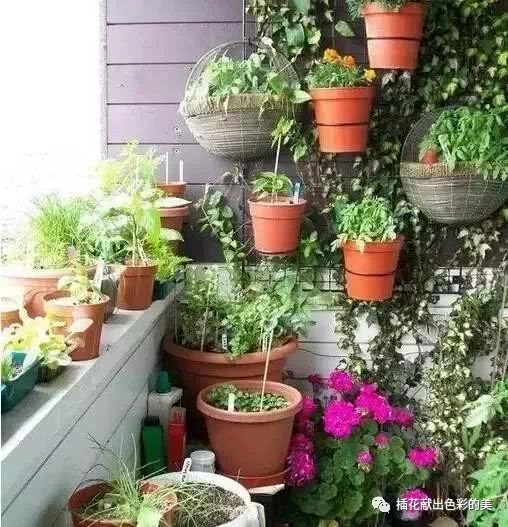
When buying flowers, we love to ask, "How often should this plant be watered?" If the answer is "once every 3-5 days," you can give them a big eye roll, or rather, never mind whether a plant prefers dry or moist conditions, the daily evaporation rate is different in different environments. In summer under the blazing sun you might need to water every day, so when it rains are you still going to water once every 3-5 days?
Let's start with a few questions:
What is evaporation related to
Whether a plant prefers dry or moist conditions
Understanding these two propositions will help you judge when to water.
What factors is evaporation related to?
1、High temperaturesmean a high evaporation rate, and vice versa.
2、Long hours of lightmean a high evaporation rate, while on cloudy days the evaporation rate is low.
3、Strong windalso increases the evaporation rate, while in a windless or lightly windy environment the evaporation rate is low.
4、Potted plantshave a higher evaporation rate than plants grown in the ground; growing on a balcony and placing plants in a courtyard are also different, mainly depending on the contact surface between the plant and the air.
5、The soil mediumalso matters: loose, breathable soil such as peat has a high evaporation rate, while fine, dense soil with a high vermiculite content has a low evaporation rate.
6、The pot also matters.Breathable ceramic pots and purple clay pots have a high evaporation rate; heavy red clay or glazed pots have a low evaporation rate.
Tips
When the evaporation rate is high, the watering frequency should be greater than when it is low. For example, water more often in summer than in winter, and you can water frequently during a run of sunny days, but in the rainy season you should reduce it appropriately.Of course, evaporation rate is an objective measure; different plants also have their own preferences for water.
Whether a plant prefers dry or moist conditions
1. Prefers dry:The classic drought-tolerant, dry-loving plant is the succulent. Succulents are extremely drought-tolerant and can go a long time with little or no watering. There are also many other drought-tolerant plants, such as bougainvillea, geraniums, and bulb plants.
2. Prefers moist:Besides aquatic plants, there are also some plants that prefer moisture, liking relatively humid air and soil conditions. Most shade-tolerant plants are relatively moisture-loving, such as ferns, spiderwort, and hostas.
Most plants are fairly neutral, with no obvious drought tolerance or moisture preference, so how do we water them? In the gardening world there is a popular watering rule: "dry when dry, wet when wet."
Q: How do you tell when it's dry?
A: Learn to observe the signs of water shortage:
Look:Observe whether the leaves are soft, the flower stems droop, or the leaves of succulents shrivel. If so, it's time to give it some water.
Weigh:The flower pot becomes lighter. Most potting media nowadays are peat, which becomes very light once dry. Lifting the pot makes it easy to tell whether the plant is short of water.
Touch:Sometimes heavy ceramic pots are used, and lifting them makes little difference. You can try sticking a finger into the soil to feel whether the soil below is moist.
Tips
You can use a popsicle stick in summer, insert it into the soil and then pull it out to judge whether the soil has dried out completely. It's convenient and you don't get your hands dirty.
Q: How do you tell when it's wet?
A: "Wet" also means watering thoroughly in one go.
A watering mistake: giving just a little water every day. Watering only a little each time only moistens the surface, while most of the soil around the roots is still dry.
So how do you water thoroughly? You can follow the
three-times method:After the first watering, water again a few minutes later, and water at least three or four times, so the soil has a process of slowly absorbing it.
The soak method:Soak the whole pot in water, with the water level at roughly two-thirds of the pot's height, and wait half an hour or longer. The plant will absorb water from the bottom of the pot until it is fully hydrated.
The rain method:This is the simplest. When it rains, put the plant outdoors and let it get thoroughly soaked. Rainwater is the best thing for plant growth.
Tips
When watering, note:
1. The "auspicious time" for watering
Except in winter, water as much as possible in the cool mornings and evenings, and don't water at noon;
2. The water temperature must not differ too much
When the water temperature and air temperature differ too much, especially in the scorching summer and severe winter, it is especially recommended to let tap water sit for half a day before use, otherwise the temperature difference can easily give plants a "cold";
3. Water more for large, soft leaves, and less for small, waxy ones
The larger and softer the leaves, the more easily water evaporates, so water more; for flowers with small, waxy leaves, water evaporates slowly from the leaf surface, so you can water a little less;
4. Water more for sandy soil, less for clay soil
Sandy soil is loose and has poor water retention, so it is suitable to water a little more; clay soil is dense, has good water retention and poor breathability, so it should not be watered too much or too often.
5. Water more during the vigorous growth period, less during dormancy
During the vigorous growth period, flowers need a lot of nutrients and water, so you should water more and more often along with fertilizing; during the dormant period, growth tends to stall, the water requirement is very small, and watering should be strictly controlled.
How do you rescue a wilted plant?
The correct rescue method is: when you notice the leaves wilting, immediately move the pot to a shady spot, spray some water on the leaves, and water a small amount. Then, as the stems and leaves gradually recover and stand upright, gradually increase the amount of water.Never pour too much water at once, as that will cause the plant to die.