What to Do When Succulent Leaves Turn Soft? 6 Major Causes and Solutions Every Beginner Must Know
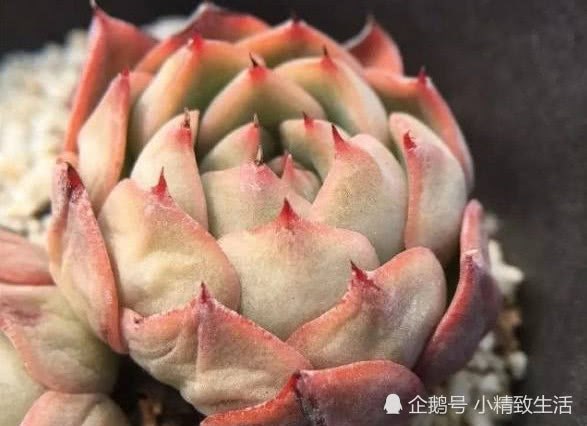
Friends who have just fallen into the succulent rabbit hole almost all stare at their beloved succulents every moment, wanting to see every change in them, and every little fluctuation of the succulents makes them nervous. In this process, friends often find that their succulent leaves have turned soft, so what are the reasons for this phenomenon? Is it serious when the leaves turn soft? Next, Xiaojingzhi Life will analyze the reasons for soft leaves together with you:
1. Succulent leaves turning soft just after potting
Generally, when succulents are newly bought, the roots are trimmed and the wounds are left to dry before potting. Some people do not water them at the early stage of potting; even if watered, the new roots of the succulent have not yet grown out and can hardly absorb water from the potting soil. So they can only rely on the water and nutrients stored in the leaves to maintain their own metabolism. At this time, the leaves will turn soft due to insufficient water. Generally, after new roots grow out one week after potting, they will recover after one watering. So there is no need to worry about this situation.
However, if the succulent stays in this state for a long time and the bottommost leaves are severely dried up, it is still better to repot it and check the growth of the root system, then handle it accordingly.
2. Normal metabolism
During the normal growth of a succulent, as new leaves emerge, old leaves will slowly soften from the very bottom until they dry up. There is no need to worry about this either; it is the normal metabolism of succulent plants. The dried leaves will eventually fall off naturally, and it is best to leave them alone, because when they fall off naturally, the wound between the dried leaf and the stem has already healed. Of course, if you think it affects the appearance of the succulent, you can remove them by hand in time after the leaves dry up, and there is no problem with that either.
If too many fallen old leaves accumulate in the flower pot, they may cause pests and diseases, so the old leaves piled up in the pot should be cleaned up in time.
3. Succulents during the dormant period
Due to the difference in climate and environment from their place of origin, succulents have a dormant period in seasons and environments unsuitable for their growth in order to protect themselves. At this time, succulents completely stop growing and survive by consuming nutrients stored in their bodies, then wake up and grow again when the suitable season or environment arrives. The phenomenon of leaves turning soft, drying up and falling off during this period is also normal, so there is no need to worry.
During the dormant period of succulents, watering must be stopped or reduced to a small amount. In summer, shade and ventilation must be provided, and in winter, warmth and ventilation must be provided.
4. Long-term water shortage causes succulent leaves to turn soft and wrinkled
Succulents generally have a relatively strong drought tolerance, and there is basically no problem if they are not watered for one or two weeks. In a previous article by Xiaojingzhi Life, "Is There a Nationwide Watering Method for Succulents? Watering This Way Suits Most Regions", it was written that soft and wrinkled leaves on a normally growing succulent are a signal of water shortage, and at this time you can water boldly with confidence. Two or three days after normal watering, you will find that the succulent has become more plump and full.
However, if the potting soil is too dry for too long, it may damage the roots of the succulent, so do not blindly over-control water.
5. Potting soil that is too wet causes succulent black rot and turning to mush
If the drainage of the potting soil is poor and watering is frequent, the potting soil will remain too wet for a long time, the roots of the succulent cannot breathe and rot with black rot, and the leaves turn to mush.
If this happens, be sure to remove the mushy leaves in time, remove the black rot parts or directly behead the plant, then sterilize, dry and otherwise treat it before replanting. And afterward, be sure to control water and maintain good ventilation.
6. Succulents with frostbite or sunburn
Frostbite or sunburn on succulents can also cause leaves to turn soft, develop black rot and turn to mush; the treatment method is the same as above.
The above are several common causes of soft leaves in succulents compiled by Xiaojingzhi Life. If the above situations occur, please handle them accordingly in time according to the actual situation.
Compiled and published by Xiaojingzhi Life.