What special manifestations and symptoms does interstitial lung disease have?
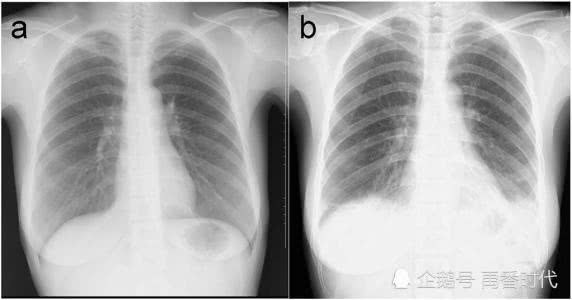
Interstitial lung disease refers to disease that occurs in the pulmonary interstitium, and interstitial pneumonia is one of them. In terms of symptoms, interstitial lung disease first causes an increased respiratory rate, meaning breathing speeds up after even slight activity. If you want to measure it yourself, it is roughly more than 24 times per minute. You may feel it yourself, or through a stethoscope you will hear crackles in both lower lungs, or moist rales that appear or intensify at the end of expiration.
Crackles and moist rales in both lower lungs appear in many cases, such as pulmonary tuberculosis, asthma, and lobar pneumonia in the congestive and resolution stages; when there is only tachypnea with crackles, it is mostly interstitial lung disease. Crackles are characterized by brief, fine, fragmented sounds that are equal in size and persist continuously. This symptom is especially prominent in idiopathic pulmonary fibrosis. However, pulmonary sarcoidosis mostly has no crackles or moist rales.
Pulmonary interstitial lesions
The reason crackles and moist rales occur is that inflammation has infected the alveoli, causing exudate that also sticks the alveoli together. Or capillary mucosal swelling occurs and is adhered to by secretions. But this sticking or adhesion has not yet completely consolidated, so during inhalation the adhered alveoli are expanded, producing a special bursting sound. In medical terminology, this is called crackles.
The sites where crackles and moist rales most often appear are the posterior lower part of the lungs, which can be used in self-assessment and diagnosis. Clubbing of the fingers is a symptom mostly seen in idiopathic interstitial lung disease, indicating chronic hypoxia at the ends of the limbs, or the presence of metabolic disorders, toxic damage, and so on.
Interstitial lung disease
Clubbing of the fingers also easily occurs in lung cancer, chronic lung abscess, bronchiectasis, and so on; among cardiovascular diseases, it may occur in cyanotic heart disease and subacute infective endocarditis; when clubbing of the fingers appears in nutritional diseases, it is mainly cirrhosis and so on.
If you have questions or need help, you can call 01062170649 13269852331