Want your succulents to get through summer safely? Judging whether they are dormant is very important
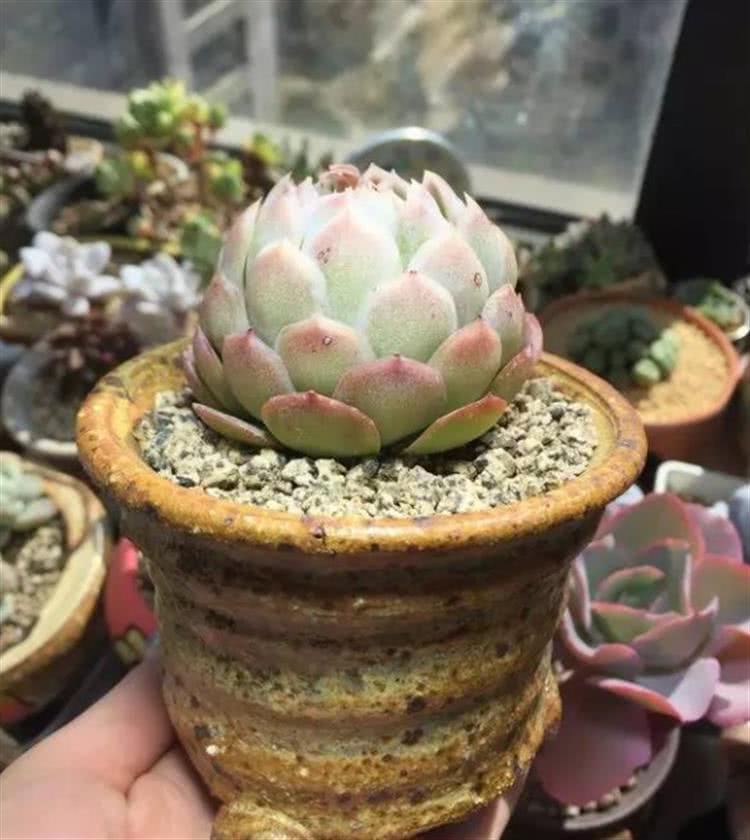
Growers are everywhere, and for growing conditions that differ in climate, environment, personal care habits, soil, pots, and so on, you first need to judge from your succulent's condition whether it has entered the dormant period.
Succulent dormancy is: the phenomenon of life activities temporarily coming to a standstill due to an unfavorable environment; when the environment improves, growth can resume immediately.
Everyone knows that succulents are divided into summer-growing types and winter-growing types, but many people think that summer-growing types must dormancy in winter, while winter-growing types must dormancy in summer. This understanding holds true if you are in a place with an environment similar to their place of origin.
But growers are everywhere, and for growing conditions that differ in climate, environment, personal care habits, soil, pots, and so on, you first need to judge from your succulent's condition whether it has entered the dormant period.
During the dormant period, succulents are very good at "acting spoiled," and they need better care. In fact, they do not like being dormant either; this function evolved to withstand harsh growing environments, and they do not have a specific time to go dormant or wake up. Many growers ask me:
"Editor, is my succulent already dormant now?"
"Editor, my succulent has turned green and does not look perky either. Is that caused by dormancy?
"In May it has stayed in the 20s here, so the succulents must all be dormant, right?"
"Editor, how do you know they are dormant?"
……………………
Next, let's talk about how to judge whether a succulent has already gone dormant. Through observation and discussions with other experts, I have summarized several characteristics of succulents during the dormant period, mainly Crassulaceae~~
1. Color: during the dormant period, the succulent's color will darken and become less vivid. Overall it loses its luster, and new leaves and old leaves blend into one. 2. Shrinking: the leaves wrap up (most obvious in rosette forms), and it feels as if they are short of water, but the leaves are not wrinkled; instead, the whole thing wraps up more compactly and produces a large number of dry leaves around it (Mountain Rose is the most representative).
3. Slow growth: a succulent that has entered dormancy does not stop completely, but grows slowly at a snail's pace. If the environment is good for a few days, it grows a little; if not, then like a snail... rest, rest, take a little rest.
If your succulent shows the above characteristics, then it may be dormant. You need to judge whether the environment you are giving them exceeds the normal range. By the way, succulents that have already entered dormancy need special treatment.
The first spell of high heat at the start of summer may send them into dormancy, but growers also need to know that a succulent waking up is actually much more cautious than going dormant. It takes at least a week or more of good weather to get them to slowly resume growth.
Depending on the plant species, the dormant state will also differ, but taken together it comes down to the points above. Everyone still needs to observe more.
All right, after sharing the useful tips, I cannot help wanting to show off my succulents. No other reason, I just want to brag a little~ hahaha
Beautiful Peach Egg
Three-headed Pink Moon Shadow, considered pretty good condition for Moon Shadow in summer
Destiny -- Peach Egg x Cheese hybrid. I have always stubbornly believed it is not Peach Egg, hahaha!
Rainbow sunburned to a caramel color
Three-headed Nana, hurry up and cluster!
Sea Ice Grey Saxifraga Chester, also a beautiful Moon Shadow, a state that is already satisfying in summer!
A small Peach Egg kept in a controlled form, one year now, and I have never quite believed in the idea of Maruba Peach Egg~
You can vaguely make out how leggy it used to be; now it is getting fatter and more beautiful!
Golden Maria? Not quite sure, my friend says it does not look the same as hers~
Dear experts, can anyone definitively identify what variety this is? Please educate me~