How to grow Bougainvillea? Master comprehensive care knowledge in 10 minutes
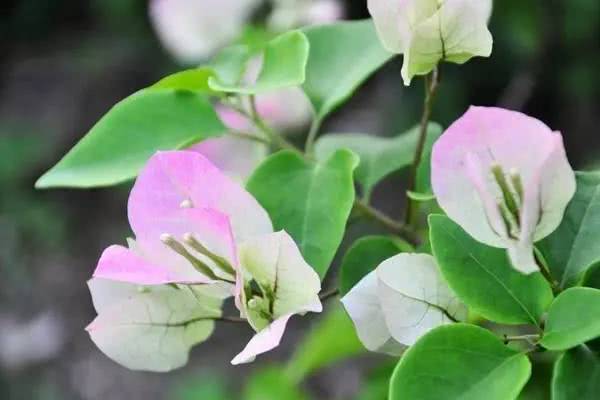
The reason Bougainvillea got this name is that its flower shape is rather peculiar, with only three petals, and these three petals grow in an inverted triangle shape, so it is easy to distinguish from other plum blossoms. At the same time, it has a more brilliant and richer color than ordinary plum blossoms, and its petal shape is unique, something other plum blossoms cannot imitate.
Bougainvillea, also known as: paperflower, three-leaf plum, hairy bougainvillea, spiny rhododendron, triangle flower, leaf flower, leaf plum, paper flower, South American purple jasmine, etc. Bougainvillea prefers a warm and humid climate, loves light, is not cold-tolerant, tolerates high temperatures, and fears dryness. It can only overwinter safely above 3°C, and can only bloom above 15°C.
It loves ample light. It grows well in well-drained, mineral-rich clay loam and well-drained sandy loam. If the soil is too wet, it will cause root rot. It is a perennial climbing flowering shrub and is now widely used. Bougainvillea plants can be cultivated into flower arbors, green corridors, hedges, wall decorations, bonsai, etc. The flower colors are numerous and brilliant, and the flowering period lasts as long as half a year. According to the differences in flowering time among varieties, combined with flowering period regulation techniques, flowers can be enjoyed all year round.
I. Cultivation techniques
1. Soil:Bougainvillea is not strict about soil requirements. It grows well in well-drained, mineral-rich clay loam, is tolerant of poor soil, alkali, and drought, and avoids waterlogging. Slightly acidic soil is most favorable for the growth of Bougainvillea.
2. Watering:Before flowering, attention should be paid to controlling the amount of water. For ordinary watering of Bougainvillea, follow the principle of "do not water until dry, and water thoroughly when watering." But to make Bougainvillea bloom neatly and abundantly, water control must be carried out before flowering. During the spring and summer growing seasons of Bougainvillea, water once a day to ensure the growth of branches and leaves.
From May to June, watering needs to be controlled. The degree of water control is to make the tender shoots and leaves of Bougainvillea slightly wilt. At this time, spray water on the leaves 1-2 times a day, and after 2-3 days water thoroughly once. Repeated water control several times or watering every other day can promote flower bud differentiation in Bougainvillea. When flower buds appear on the new shoots of Bougainvillea, water thoroughly once each morning and evening, and spray water on the leaf surface 1-2 times. After October, water appropriately depending on the degree of dryness and wetness of the soil. After being brought indoors in winter, do not water too much. For watering Bougainvillea, grasp the principle of "do not water until dry, and water thoroughly when watering." Wait until the next spring, when Bougainvillea sprouts and grows leaves, then gradually increase the amount of watering, otherwise it will cause root rot and death.
3. Temperature:Bougainvillea is a tropical plant. The suitable growth temperature is 15-25°C, and the most suitable temperature during the flowering period is 15-30°C. Bougainvillea prefers a high-temperature and high-humidity climate environment, is also relatively tolerant of dry heat, is not tolerant of cold, and avoids frost. In an environment of 10-32°C, Bougainvillea grows normally. The winter temperature must not be lower than 7°C, otherwise it will suffer frost damage or even die, and care must include good warmth protection.
4. Humidity:Bougainvillea prefers a warm and humid climate. Usually keep the air moist. When the weather is dry, spray water on the leaves and into the air to increase air humidity.
5. Fertilizing:Fertilizing should be neither too much nor too little. To make Bougainvillea bloom more, sufficient nutrients must be ensured, and fertilizing should be timely and appropriate, and used reasonably. Generally, during the vigorous growth period from April to July, apply liquid fertilizer once every 7 to 10 days to promote robust plant growth. Fertilizers can be 10% to 20% decomposed soybean cake, rapeseed cake water, or human manure water, etc.
6. Light:Throughout the year, except that newly potted young seedlings should first be placed in semi-shade. In winter, it should be placed by a south-facing window, and the light duration must not be less than 8 hours.
7. Propagation:Selection of cuttings: For Bougainvillea branches, those as thick as an arm or as thin as incense can be used for cuttings; thick branches root late but form quickly; one-year-old lignified green branches easily produce new roots and have a high survival rate. Generally choose compact, sturdy 1-2 year old outer sun-facing branches, (do not use overly thin branches, immature branches, leggy branches, or shaded branches.) Use a sharp knife to cut into sections of 3-4 nodes (about 8-10 cm long), with the lower slanted cut 5-10 mm below the node, remove the lower leaves, and keep the upper two and a half (whole) leaves as cuttings.
8. Pruning:Bougainvillea has strong growth vigor, so it needs shaping and pruning every year. Bougainvillea is commonly propagated by cuttings, and seedling cultivation is easy. In May and June, cut mature lignified branches 20 cm long, insert them into a sand pot, cover with glass, keep moist, and they can take root in about one month. After two years of cultivation, they can bloom. Pruning method: after flowering, prune moderately, cut off the peduncles, shorten the flowering branches by 1/3, and thin out weak branches, short branches, and inner branches. In winter, prune together with repotting and soil changing. Pruning should grasp: short, heavy, thin. Short means short cutting, keeping 1/3 of the branch; heavy means heavily pruning long flowering branches; thin means thinning out weak branches so that strong branches regrow, also called renewal pruning. The cut branches can be kept as cuttings for propagation.
9. Pest and disease control:The common pests of Bougainvillea mainly include leaf beetles and aphids, and the common diseases mainly include tip blight. Usually strengthen loosening the soil and weeding, promptly remove dead branches and diseased leaves, and pay attention to ventilation to reduce the spread of disease sources. Strengthen disease inspection, and deal with it promptly when disease is found. Solutions such as dimethoate and thiophanate can be used for control.
10. Loosening soil and repotting:This point cannot be neglected. Due to long-term watering, fertilizing, and rain washing, the potting soil of Bougainvillea easily becomes compacted. Therefore, the soil must be loosened regularly, and weeds in the pot soil must be removed at the same time, so as to benefit the growth of Bougainvillea. Otherwise, compacted potting soil and water accumulation can easily cause root rot or poor growth of Bougainvillea. In addition, Bougainvillea grows relatively fast, has a developed root system, and has many fibrous roots, so it needs repotting once a year.
II. Care methods
1. Care precautions
During the growth period of Bougainvillea, appropriately ensure the temperature for Bougainvillea. Generally in winter it should be kept above 5°C, and the minimum must not be lower than 3°C.
It relatively loves sunlight, but in summer appropriate shading treatment should be carried out, and in winter 8 hours of light should be ensured.
In terms of soil selection, choose relatively fertile, loose soil with strong drainage performance.
Watering should be moderate. During the plum rain season, certain drainage must be ensured, otherwise root rot will occur.
Before flowering, the pot can be turned and the soil changed appropriately, and appropriate pruning can also be carried out.
In midsummer and winter, because the plant grows slowly or is dormant, fertilizing should be stopped to avoid fertilizer damage.
Do not apply concentrated fertilizer or raw fertilizer (organic fertilizer that has not been fully decomposed) to prevent root damage, which can lead to scorched and fallen leaves, and even death of the whole plant.
In severe winter, it needs to be moved indoors, otherwise it will suffer frostbite.
Placement: Suitable for planting in courtyards or placing in living rooms, balconies, and other places that can receive sunlight.
Loosening soil, weeding, and repotting: Due to long-term watering, fertilizing, and rain washing, the potting soil of Bougainvillea easily becomes compacted. Therefore, the soil must be loosened regularly, and weeds in the pot soil must be removed at the same time, so as to benefit the growth of Bougainvillea. Otherwise, compacted potting soil and water accumulation can easily cause root rot or poor growth of Bougainvillea. In addition, Bougainvillea grows relatively fast, has a developed root system, and has many fibrous roots, so it needs repotting once a year.
2. Cutting propagation method for Bougainvillea
Cuttings:Cut 2-year-old Bougainvillea branches into 10 cm long cuttings, insert them into culture soil (use plain sand soil plus one third humus or sawdust, add an appropriate amount of water and stir evenly), and seal well with plastic film after inserting. At a temperature of 20°C to 25°C, they can take root in 25 days, and can be divided into pots in 2 to 3 months.
Air layering:If you want to obtain relatively ideal new Bougainvillea seedlings, you should use the air layering method for propagation. This method does not affect the growth of the original plant and can also produce complete new seedlings, so it is often used by home flower growers, and the method is simple, the survival rate is high, later transplanting is convenient, and management is easy.
3. Pruning:Cut off excess branches, leaves, and buds that affect the growth and flowering of Bougainvillea.
Growth period.At the end of the Bougainvillea flowering period, carry out medium to heavy cutting on the main branches to stimulate the plant to sprout more vigorous branches. When pruning, the purpose is not to damage the plant shape, ensuring that the branches of the crown are evenly distributed and not lopsided.
Flower induction period.To make potted Bougainvillea bloom profusely, formulate the flowering induction time for the plant according to environmental temperature and light intensity. Generally, with low temperature and low light intensity, the plant's flowering induction lasts longer; conversely, shorter. After treatment, the plant generally enters full bloom in 40 to 50 days.
When inducing flower buds in Bougainvillea, first carry out a comprehensive pruning treatment, perform soft pinching on peripheral branches, and cut off overly long branches that affect the shape. Spray the whole plant with 15% paclobutrazol wettable powder at a concentration of 200 to 500 times solution. Generally, treating the leaves 2 to 3 times is enough. This can make the plant have shorter internodes, a more compact shape, more flowering branches, and dense flower formation. Then carry out water control treatment on the plant to promote the formation of flowering branches. To make Bougainvillea produce beautiful and abundant flowers, when small flower buds are visible at the front ends of the induced flowering branches, perform the final soft pinching to promote the formation of more flowers.
4. Pest and disease control:
Leaf spot disease. On the leaves, the spots are initially yellow-brown, and later small black dots appear on the spots. Control method: the disease is relatively severe from July to August. When a small number of spots are found, cut off the branches with more disease, and increase the air humidity around the leaves. Generally, 50% carbendazim wettable powder 500 times solution or 70% thiophanate-methyl 800 times solution can be used for control, spraying once every 7 days, for 2 to 3 consecutive times.
Tip blight. It harms the buds, leaves, tips, and branches of the plant, causing tip blight, and can also harm the rhizome causing rot. In severe cases, the disease spots girdle the stem, and the branches below the diseased part shrink and die. Control method: in autumn and winter, thoroughly cut off diseased and dead branches and burn them centrally. Strengthen cultivation management. During the dormant period, spray 25% carbendazim wettable powder 600 times solution, or 50% chlorothalonil wettable powder 500 times solution. Pests
Scale insects. They pierce and suck the sap of young Bougainvillea stems and young leaves, causing poor plant growth. They are mainly induced by high temperature and high humidity, poor ventilation, and insufficient light. Control method: during the nymph hatching period, spray 1000 times solution of Supracide, or spray 50% fenitrothion 800 times solution.
Aphids. They mainly gather on buds and young leaves to suck sap. In open-field cultivation, the period of frequent occurrence is early spring and early summer. Control method: during the initial hatching period and before egg laying, spray 40% omethoate 1000 times solution or 80% dichlorvos 500 times solution and other chemicals for control.
Nettle caterpillars. Mainly the larvae harm young leaves. Control method: grasp the early stage of larval occurrence (spraying at the 2nd instar stage is suitable) and promptly spray 90% crystal trichlorfon 800 to 1000 times solution or 2.5% deltamethrin emulsifiable concentrate 2500 to 3000 times solution, both of which have good effects.
5. Transplanting and repotting
Transplanting:For seedling potting and transplanting, generally choose March to April each year. When potting, first prune the plant, cutting off overly dense and aged branches and excess roots. When planting, first soak the roots of Bougainvillea in prepared red soil mud slurry, so that the roots are fully coated with red soil mud slurry, which can increase the degree of combination between the root system and the substrate. Then place the plant root system in a pot already filled halfway with substrate, straighten the root system, gradually fill the pot with substrate, and compact the substrate while adding it. Then tie the plant to the pot with rope to fix the plant. Finally, water the substrate heavily until thoroughly watered.
Repotting:Repotting is the removal of roots and replacement of soil for old potted plants that have been grown for many years. For plants that have already bloomed, the potted root system has grown for many years in a limited container, and the aged roots become tangled around the entire root ball, restricting the growth and development of new roots, while the substrate becomes hard and compacted. At this time, in order for the plant to recover its vitality, the pot should be changed once after the flowers fade each year. Repotting is best done in early spring before the plant starts growing. When repotting, it is best to coordinate with post-flowering pruning. First cut off overly dense and aged branches, then pull the plant out of the container together with the root ball, knock off all the old substrate tangled with the old root system, cut off dead and aged roots and heavily prune the thicker roots, keep the remaining roots, and then repot the plant with good substrate. For the first 1 to 2 weeks after repotting, it should be placed in a cool place to accelerate the recovery of the plant's growth vigor, and then moved to a place with sufficient light.
III. Further extension
1. Why Bougainvillea drops flowers
Human causes:Frequently moving it during the Bougainvillea flowering period, or heavy wind and rain, will cause flower drop. So during the flowering period, fix the pot in place and move it to a place sheltered from wind and rain with sufficient sunlight.
Improper watering: Try not to water Bougainvillea when it is blooming, so the flowering period will last longer. Watering during the flowering period will cause the flowers to drop quickly, so be careful not to water when Bougainvillea is blooming. If the branches and leaves wilt, you can spray appropriately to increase humidity.
The normal flowering time of Bougainvillea is October-November, and flower bud differentiation is generally completed in August-September. To make Bougainvillea produce more beautiful flowers, you can promote flower bud differentiation through appropriate water control, and during its flowering period you can apply more phosphorus fertilizer, which helps prolong the flowering period of Bougainvillea.
Fertilizer burning roots: Applying too much fertilizer to Bougainvillea or choosing the wrong fertilizer will cause root burn in Bougainvillea, making the whole plant wilt, leaves turn yellow, and flowers drop.
Insufficient light: Bougainvillea loves sunlight. More than 9 hours of light per day must be ensured to keep its branches lush and flowers abundant. If light during the flowering period does not meet the requirement, the growth condition of Bougainvillea will become abnormal and cause flower drop.
2. What to do if Bougainvillea drops leaves
Supplement light:Bougainvillea is a sun-loving plant. If it is kept in a shaded environment for a long time, leaf drop will inevitably occur. At this time, move the plant to a sunny place promptly, and after a period of time Bougainvillea will gradually recover.
Control watering: Insufficient water supply in hot seasons or excessive watering in winter can easily cause leaf drop. Therefore, water Bougainvillea moderately. In summer, water once each morning and evening. In winter, appropriately reduce the watering frequency to once every 3-5 days, which can avoid Bougainvillea leaf drop caused by improper watering.
Control temperature and fertilize: The suitable growth temperature for Bougainvillea is 20-30°C. Too low or fluctuating temperatures will cause leaf drop. Especially in winter, if it is brought indoors too late, leaves will drop all over the ground. When fertilizing, choose decomposed organic fertilizer and adhere to the principle of frequent application of thin fertilizer to avoid root burn and leaf drop.
Prune dead leaves: When Bougainvillea drops leaves, the plant will show yellow leaves to varying degrees. At this time, cut off the yellow leaves, but keep the branches. After it sprouts again, cut off the dead branches. If leaf drop occurs during the seedling recovery period or in winter, it is normal. Just place it in a cool place, promptly clean up the fallen leaves, and it will be fine after a period of time.
3. How to grow Bougainvillea so it blooms easily
Appropriate drought:Appropriate dryness can make it produce more flowers. Of course, it must not be too dry, as that will make the soil compact and cause the plant to be suffocated (not breathable).
Regular fertilizing:Bougainvillea of course loves fertilizer. Frequent application of thin fertilizer is key. Too frequent fertilizing will cause excessive growth of branches and leaves. Appropriate dryness can make it produce more flowers. Of course, it must not be too dry, as that will make the soil compact and cause the plant to be suffocated (not breathable). Also note not to fertilize randomly. If you apply concentrated fertilizer, it can easily kill Bougainvillea. Also do not use only high-phosphorus fertilizer. The best is of course organic fertilizer or slow-release fertilizer, which have the best effect.
Appropriate pruning:Bougainvillea pruning is generally post-flowering pruning and winter pruning. The purpose of post-flowering pruning is to adjust the plant shape and promote earlier opening of the next batch of flowers, so spent flowers should be cut off as early as possible, and the whole plant should be pruned so that it blooms simultaneously next time. For Bougainvillea grown on balconies, generally all new branches of the current year are cut off from the old branches of the previous year.
4. How to make Bougainvillea bloom continuously
Control water to promote flowering:Bougainvillea especially loves strong light and high temperature, is not afraid of direct sun exposure, has low water requirements, and the potting soil only needs to remain moist. In autumn and winter, be sure to control water for 1 month and keep it half dry and half wet. It does not matter even if green leaves drop. Water control is instead beneficial for flowering. This is why home-grown Bougainvillea "does not bloom when frequently watered, but blooms continuously when neglected."
Root pruning and rejuvenation require water control:Bougainvillea is vigorous, has strong sprouting ability, and is especially tolerant of pruning. Frequent pruning and shaping can make its branches numerous and flowers abundant. It should be reminded that it has the special habit of first sprouting buds and growing branches and roots. When repotting and pruning roots of old potted plants, do not water immediately. Water thoroughly once after two days. After that, keep moisture moderate. After the new buds and stems have basically grown, gradually switch to normal watering, and place it in a place with sufficient sunlight and a temperature of about 25°C.
Overwintering requires warmth protection and water control:Bougainvillea prefers warmth, is not cold-tolerant, and avoids waterlogging, so attention must be paid to winter warmth protection and water control. In winter, maintain a temperature above 7°C, otherwise it will freeze and die. Once the temperature drops sharply, the plant will drop a large number of leaves. At this time, absolutely do not water too much. It should be placed in an environment of 10°C to 15°C, watered once about every 10 days, and after it sprouts and grows leaves in the coming spring, gradually increase the amount of watering. Otherwise, it will cause root rot and death.
Support and guiding:Bougainvillea will not grow in the direction you want by itself, so a good gardener must guide them. This support should follow the growth of Bougainvillea and be carried out over time. Do not try to pull up seedlings to help them grow. Make good supports, whether to let it climb a wall or grow with tangled roots! Also pay attention to combining this with pruning!
5. How to regulate the flowering period:Mainly regulate the flowering period by controlling water to promote flowering. Select individuals with a full crown and moderate growth, apply a growth fertilizer once half a month in advance, and then begin water control. Generally after 2 to 3 days, the leaves will wilt and droop due to lack of water. At this time, sprinkle water to protect the leaves and keep the surface of the potting soil moist. After lasting for 2 to 4 weeks, begin loosening the soil, watering, and fertilizing, and maintain a moist state, supplemented by appropriate pruning, and then normal management can be resumed. When side branches emerge from the leaf axils of the branches, if the new branches and leaves have thorns in the axils and young tender bracts at the tips, it indicates success. Of course, to keep Bougainvillea blooming all year round, light and temperature must also be well regulated, and sufficient fertilizer must be applied.
In addition, Bougainvillea is a short-day plant. If you want it to bloom on National Day, you can start shading treatment in early August, that is, 40 to 50 days in advance, and place the plant in a dark room. Shading must be strict; if light leaks through, the effect will not be achieved. Shade from 5 p.m. to 8 a.m. the next day, continuously for 45 days, without interruption. When the room temperature is high, spray water on the ground to cool it down. During the shading period, add 1 foliar fertilizer application of 0.2% to 0.3% monopotassium phosphate once a week.
If you also like growing flowers, follow us!