Grafted watermelons are prone to bacterial fruit blotch on rainy days; keep these control methods handy
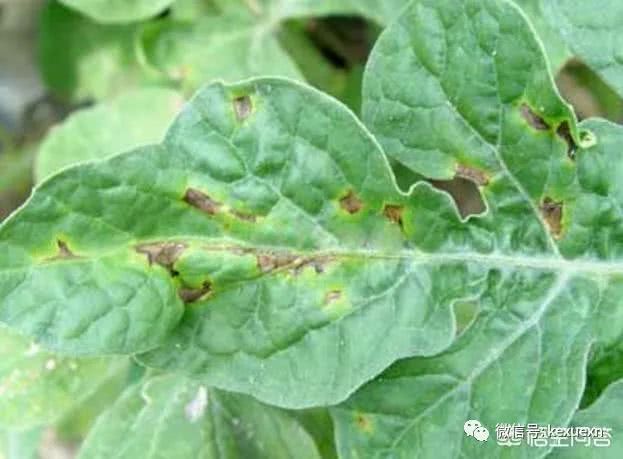
Bacterial fruit blotch of watermelon is a disease with a high incidence rate at the seedling stage; symptoms begin to appear at the seedling stage, and at transplanting time, because of wounds and high field humidity, the disease is also difficult to control. After infection, obvious symptoms can appear on watermelon leaves, petioles and even stems and vines.
Under rainy weather conditions, how can the incidence of bacterial fruit blotch be reduced? In fact, this is a rather contradictory problem: rainy weather with high air humidity is more conducive to the occurrence of bacterial fruit blotch, and these are favorable conditions for breeding the disease. Therefore, under such conditions, even spraying pesticides to eliminate bacterial fruit blotch is no small challenge.
Bacterial fruit blotch is a typical seed-borne disease, favors acidic environments, can attach to the seed surface, and can also invade the inside of seeds, rapidly invading the plant after the seeds germinate. Even in farmland, it can parasitize in the soil for many years. After watermelon plants are injured, the bacterial fruit blotch pathogen invades along with the wound.
For grafted watermelons, wounds are unavoidable during seedling grafting, and under such conditions infection with bacterial fruit blotch is very likely; for greenhouse watermelons and in rainy regions, high air humidity can also trigger bacterial fruit blotch on a large scale.
In view of the above, try as much as possible to avoid infection with bacterial fruit blotch, with prevention as the main approach and control as the supplement. Here are a few small suggestions.
First, pay attention to the tools used for grafting watermelons; for example, try to disinfect the blades, and also wear gloves during the operation and change them frequently. Rootstocks with the pathogen should also be removed, and grafting should not be done with them.
Second, if it is greenhouse watermelon, some quicklime can be placed inside the greenhouse to reduce air humidity.
Third, for seeds, try to choose seeds resistant to pests and diseases. For locally prevalent diseases, be sure to choose tolerant and resistant seeds, and do a good job of seed coating or seed soaking before sowing. Rinse the seeds with 2% hydrochloric acid, or soak them with 2% kasugamycin diluted 200 times for half an hour.
Fourth, clear field weeds in time to reduce sources of disease transmission.
Fifth, in production, a method of spraying after dilution at a low rate can be used to curb the spread of the disease. The bacterial fruit blotch pathogen is an acidophilic bacterium, and baking soda is weakly alkaline, breaking the environment that breeds the disease and achieving the purpose of treatment or prevention. Moreover, baking soda is not a drug, so there is no need to worry about pesticide residue issues.
The above is a brief sharing of a few suggestions, and I hope they can be of some help to you.