What harm does year-after-year rotary tilling with a rotary tiller do? Only when you understand it can your crops grow well
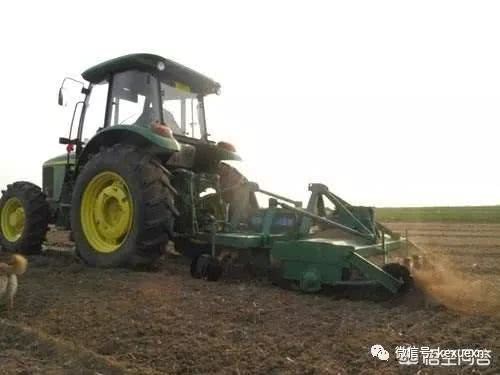
The rotary tiller is also a new working method born along with the spread of agricultural mechanization in China in recent years. As to whether rotary tiller operation helps agricultural production, the answer is definitely yes, but rotary tiller operation also brings quite a few problems. The rotary tiller's working depth is insufficient, and its ability to break through the plow pan is inadequate. But this is not absolute; a rotary tiller can also achieve deep tillage, only the depth is still somewhat shallow, and this also triggers a series of problems. Let me introduce them below.
Causing soil compaction
This is a typical hidden danger brought by rotary tiller operation. Usually plowing depth can reach 30 cm or even more, while the working depth of a rotary tiller is basically around 20 cm. Of course, this is not to say that a rotary tiller cannot work deeper; it can. In current agriculture, operations are basically smallholder farming, and when plowing, people directly look for machine owners who have rotary tillers. For cost reasons, such plowing will not be adjusted to go deeper, causing the plow layer to directly become shallower. Therefore, as the plow layer gradually becomes shallower, it also causes the fertile surface soil to deteriorate and become compacted.
Not conducive to the further release of fertilizer efficiency from farmyard manure
Applying farmyard manure is a commonly used measure in agricultural production, but if the plow layer is too shallow, it will affect the further decomposition of farmyard manure, especially the straw return technology promoted in current agricultural production; because the straw cannot decompose deeply, its fertility is difficult to bring into play.
Causing soil-borne diseases and pests
One reason deep plowing is advocated in production is the hope that through deep plowing, pathogens and soil-borne insect eggs can be buried deep, reducing harm to crop roots as well as pathogen and pathogenic damage, but the insufficient working depth of the rotary tiller means these hidden dangers cannot be eliminated.
At present, many regions are promoting agricultural machinery subsoiling tillage technology, and provide a subsidy of 20-50 yuan per mu to agriculture with subsoiling tillage machinery and operations. The hope is that through subsidies, farmers will be encouraged to adopt subsoiling tillage to improve the soil and achieve sustainable agricultural production based on the soil fertility of China's cultivated land.
This is Science for Agriculture; welcome to follow, and let us grow our knowledge together.